How to Capitalize on Gen Z & Millennial Furniture Preferences: A Strategic Guide for Distributors, Showrooms & Designers
The younger consumer revolution is reshaping furniture demand faster than ever. Learn how to source, stock, and position inventory that meets Gen Z and millennial expectations — and watch your sales velocity increase while maintaining healthy margins.
Why Your B2B Furniture Business Can’t Ignore This Shift
The Market Reality You’re Facing
Here are the numbers that should be reshaping your inventory decisions right now.
Gen Z and millennials together drove nearly 70% of all furniture purchases in recent purchasing cycles, despite representing only 45% of the adult population. Gen Z buyers are purchasing at a rate 1.7 times higher than their share of the population; millennials are purchasing at 1.5 times their share. These are not emerging trends — they are current buying patterns that are already determining which distributors, showrooms, and design firms are growing and which are stagnating.
Millennials spend an average of $1,771 per year on home décor — more than any other generation, including Baby Boomers at $1,359. Of that, $770 goes specifically to furniture. Meanwhile, 60% of millennial homeowners planned to renovate in 2025, with sofas, area rugs, and lighting leading their buying categories.
The sustainable furniture dimension adds a further layer of urgency. The global eco-friendly furniture market was valued at USD 53.7 billion in 2025 and is projected to reach USD 133 billion by 2035, growing at an 8.64% CAGR. In the US alone, the sustainable furniture market hit USD 12.72 billion in 2025. The B2B and project channel within that market is growing at 5.58% annually — which means the design professionals and interior architects who source from your showroom or distribution network are receiving more sustainability briefs from their clients every quarter.
Why Traditional Inventory Strategies Are Costing You Sales
The furniture businesses losing market share to this demographic shift are not necessarily stocking bad products. They are stocking the wrong selection for the wrong buyer — high-ornamentation pieces designed for a Baby Boomer taste profile, heavy traditional suites that do not photograph well, synthetic materials with no sustainability story, and price structures that were built for a different era of consumer expectation.
The companies gaining share are moving deliberately: auditing their product mix against the specific preferences of younger buyers, building sourcing relationships with manufacturers who can deliver sustainable credentials at competitive price points, and training their sales teams to communicate design value in the language that younger clients — and the interior designers who serve them — actually use.
This guide provides the strategic and operational framework to make that transition without abandoning the customer base you have already built.
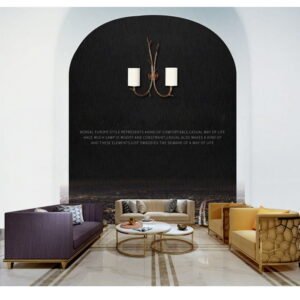
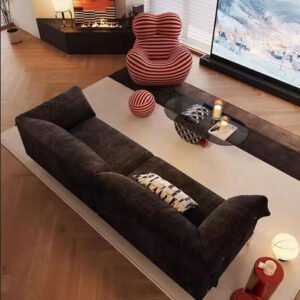
 The space that Gen Z and millennial buyers are showing their interior designers: organic curves, natural materials, neutral versatility, and pieces that photograph as well as they live in.
Understanding the Gen Z & Millennial Furniture Buyer: What Actually Drives Their Decisions
The Psychology Behind Their Purchasing Behavior
Understanding why these buyers make the specific furniture decisions they do is more valuable than understanding what they buy — because the “why” gives you the framework to predict the next purchase, not just the current one.
Gen Z is the first generation to have grown up with the internet as infrastructure, not novelty. They research purchases exhaustively before engaging with a showroom or designer, cross-reference claims against independent sources, and have finely calibrated radar for marketing language that does not match product reality. A claim about sustainability that cannot be substantiated with a certification number will not move a Gen Z buyer. It will move them to a competitor.
Millennials, now aged approximately 28–44, are in full acquisition mode. They are buying first homes, furnishing family spaces, managing renovation projects, and working with interior designers for the first time. Their furniture decisions are driven by a combination of aspiration (they want spaces that reflect an evolved sense of taste) and pragmatism (they are managing real budgets, and they remember the financial instability of the 2008–2012 period). The combination produces a buyer who wants premium aesthetics but is acutely sensitive to value — not just price, but the relationship between quality, longevity, and cost.
Why “Sustainable” Isn’t Just a Marketing Buzzword — It’s a Deal-Breaker
The statistics on this are now unambiguous. According to Mordor Intelligence data, 71% of Gen Z buyers have purchased from sustainable companies — compared to 60% of the broader US consumer population. More significantly, 97% of all furniture buyers show interest in certified sustainable products. And 77% of young consumers deliberately avoid brands perceived as environmentally irresponsible — meaning sustainability is not just a sales driver, it is an active disqualifier for brands that cannot demonstrate it.
The practical business implication is direct: if your inventory does not include a meaningful proportion of certified sustainable pieces, you are not competing for 71% of Gen Z buyers. You are leaving them to find a distributor or designer who can provide what you cannot.
How Budget Consciousness Shapes Their Loyalty (And How You Profit From It)
Gen Z is statistically more price-sensitive than millennials, spending an average of $430 annually on furniture compared to the millennial average of $770. But price sensitivity does not mean they buy cheap — it means they are ruthlessly value-focused. They will spend more on a piece with a clear quality and sustainability story than on a discounted piece that feels disposable.
The profit opportunity for B2B businesses is in understanding this distinction. A $450 dining chair with an FSC-certified ash frame, an OEKO-TEX certified fabric, and a design that will still look relevant in seven years is not competing on price with a $200 chair from a fast-furniture operation. It is competing on value — and in that conversation, you have significant advantages if you have sourced correctly and can articulate the story clearly.
The Instagram Effect: Aesthetic-Driven Purchasing as Your Competitive Advantage
What “Instagram-Worthy” Actually Means for Your Showroom Floor
The term “Instagram-worthy” is not about filters. It is about whether a piece or a space creates a desire to share — which is a specific compositional quality that translates directly into buying intent.
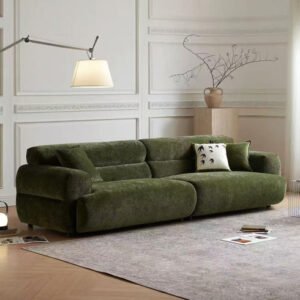
Gen Z design preferences in 2025 centre on curved, organic silhouettes (rounded sofas, boucle upholstery, arched mirrors), earthy tonal palettes (terracotta, sage, warm greige, dusty rose), textural layering (natural weaves, rattan, linen alongside smooth stone or matte plaster), and visible material honesty (solid wood legs, exposed natural grain, unfinished or lightly finished surfaces). These preferences are not arbitrary — they represent a systematic rejection of the high-gloss, uniformly-scaled, synthetic-material interiors that dominated the 2010s.
For showrooms and distributors, this means that pieces with these visual characteristics will generate social media attention from designer clients and their followers — which is free marketing for the products and, by extension, for your business. A boutique hotel lobby furnished with curved velvet seating, organic stone surfaces, and curated vintage accents will generate guest photographs that act as constant advertisement for the designer and their suppliers.
How Design Versatility Increases Order Frequency and Customer Lifetime Value
Younger buyers move more frequently than previous generations, change their tastes more actively, and expect their furniture to adapt. A piece that only works in one specific style context will be replaced when the client’s space or aesthetic evolves. A piece that works in five different style contexts will be kept, complemented with additional purchases, and recommended to friends.
Design versatility — the ability of a piece to function across multiple style contexts — is therefore a commercial driver, not just an aesthetic preference. A neutral-palette modular sofa that works in a minimalist apartment, a maximalist creative studio, and a boutique hotel suite lobby is generating commercial value every time a designer specifies it for a new project. Tracking which pieces in your inventory appear across the widest variety of project types in your client orders is one of the most direct data points for identifying your highest-commercial-value products.
Sustainable Materials Your B2B Clients Actually Want to Stock (Not Just Talk About)
Beyond Greenwashing: Which Sustainable Materials Have Real Market Demand
Greenwashing — using vague, unverified environmental language to imply sustainability without substantiating it — has created a credibility problem across the entire furniture market. The response from sophisticated buyers (including the interior designers and showroom managers who are your direct clients) is not to disengage from sustainability. It is to require proof.
The certifications that carry genuine credibility in the B2B furniture market are:
| Certificación | Qué cubre | Who Recognises It | Verification Method |
|---|---|---|---|
| FSC (Consejo de Administración Forestal) | Responsible forest management for timber | Interior designers, hospitality procurement, commercial spec | Búsqueda de certificados FSC |
| Norma OEKO-TEX 100 | No harmful substances in textile components | Upholstery buyers, hospitality FF&E teams | OEKO-TEX Label Check (QR code or certificate number) |
| GREENGUARD Gold | Low chemical emissions from furniture components | Commercial, healthcare, and educational spec | UL Prospector database |
| Cradle to Cradle (C2C) | Full product circularity — material health, reutilisation, renewable energy | Corporate sustainability procurement | C2C certified product directory |
| GOTS (Global Organic Textile Standard) | Organic fibre content + responsible textile processing | Sustainable upholstery spec | GOTS database |
FSC-Certified Wood, Recycled Metals & Fabrics: Sourcing Strategies That Improve Your Margins
FSC-certified and reclaimed wood accounts for 34.60% of US sustainable furniture sales — making it the dominant material category in sustainable procurement. For distributors, this translates into a clear sourcing priority: your timber-frame furniture should carry FSC documentation as a baseline requirement, not an optional credential.
The margin opportunity here is counterintuitive. FSC-certified timber from responsibly managed forests typically adds 5–12% to the raw material cost compared to uncertified equivalent timber. However, it enables retail pricing that reflects the quality and provenance of the piece, which means the markup applied to a certified piece can be higher in absolute terms — not because the certification is being charged for, but because the certification is part of a quality story that justifies premium positioning.
Recycled metals — powder-coated recycled steel for frame construction, reclaimed brass for hardware and detailing — add a secondary sustainability layer to pieces that can be communicated to design clients with minimal specification effort. For upholstery, recycled polyester fabrics (made from post-consumer PET plastic) are now available in commercial grades achieving 40,000+ Martindale rub counts, which means they meet hospitality durability standards without compromising the sustainability story.
How to Verify Sustainability Claims Without Becoming a Compliance Expert
The simplest verification framework for a distributor evaluating supplier sustainability claims: demand the certificate number, not just the certification logo. Every legitimate FSC, OEKO-TEX, GREENGUARD, and GOTS certification produces a specific certificate number that can be independently verified through the certifying body’s public database. A supplier who can provide the logo but not the certificate number has a marketing story, not a compliance record.
Positioning Sustainability as a Profit Center, Not a Cost
Pricing Sustainable Pieces to Reflect Quality While Remaining Competitive
Consumers show an average willingness to pay a 9.7% premium for sustainable furniture, and 70% of consumers are open to paying more for certified pieces. For a distributor or showroom, this means that a sustainable piece priced 8–10% above a non-certified equivalent is actually within the buyer’s willingness-to-pay range — you do not need to discount sustainability to sell it.
The margin arithmetic: if a sustainable piece costs you 8% more to source than a comparable non-certified piece, and you price it 10% above your standard equivalent, you have maintained or slightly improved your margin while positioning the piece in a market segment with 8.64% annual growth and 70% consumer price acceptance. That is a commercially favourable trade-off that most distributors have not yet fully captured.
How Interior Designers and Showrooms Use Sustainability as a Selling Point
Interior designers working with Gen Z and millennial residential clients increasingly lead with sustainability as a design credential, not as an add-on. When a designer can say to a client: “This dining table is FSC-certified ash, manufactured by a facility that runs on 80% renewable energy, and the upholstered chairs use OEKO-TEX certified fabric — and the total for the set is $3,200” — the conversation is not about whether to buy. It is about delivery timing. Providing your designer clients with specification sheets that include this language pre-formatted is one of the most commercially effective things a distributor can do to increase reorder frequency.
The Affordability Challenge: How to Source Budget-Friendly Options Without Sacrificing Quality
Rethinking “Affordable”: Sourcing Strategies That Work for Distributors
Affordability in the B2B furniture context is not about selling cheap furniture. It is about accessing quality at the cost structures that allow your design professional clients to build compelling collections at price points their younger clients can engage with — without your margins collapsing in the process.
Direct manufacturing partnerships that reduce your cost-per-unit are the primary lever here. Every intermediary in the supply chain adds cost without adding value to the end product. A direct manufacturer relationship — particularly with producers in Southeast Asia who combine lower labour costs with genuine design capability and improving sustainability infrastructure — eliminates those intermediary layers.
The critical discipline in direct manufacturing partnerships is not finding the lowest price; it is finding the lowest price at a defined quality floor. Specify your quality requirements explicitly in the sourcing brief: frame construction standards, foam density specifications, fabric performance minimums, and finish quality requirements. Manufacturers who can meet these specifications at competitive prices are your strategic partners. Those who offer lower prices by reducing specifications are a liability.
Identifying Emerging Suppliers Who Offer Quality at Lower Price Points
The most commercially interesting suppliers for distributors targeting the Gen Z and millennial market are not the established names — their price structures reflect their brand premium. The emerging manufacturers who have invested in design capability, quality infrastructure, and sustainability certification in the past five to seven years represent the supply chain opportunity.
Specific search criteria: manufacturers with existing FSC chain-of-custody certification, OEKO-TEX certified fabric sourcing relationships, in-house design teams (not just production facilities), and references from European or North American design professionals. These manufacturers exist in Vietnam, Malaysia, Portugal, Poland, and Romania, and they are producing at price points that create meaningful margin opportunity for distributors who find them before their competitors do.
Building a Tiered Inventory Strategy That Captures Multiple Market Segments
Premium, Mid-Range & Budget Lines: How to Stock Strategically Without Overextending
A tiered inventory approach prevents you from either overextending into inventory that does not sell or underpositioning your range so that design professional clients cannot find anything relevant for their premium projects. The structure:
| Tier | Price Point (Retail) | Inventory Allocation | Core Appeal | Margin Target |
|---|---|---|---|---|
| Premium | Top 25% of category | 20–25% of stock | Authenticated sustainability, exclusive design, certified materials | 45–55% gross margin |
| Mid-Range | Middle 50% | 55–60% of stock | Quality-to-value ratio, strong design, FSC/OEKO-TEX credentials | 38–45% gross margin |
| Entry / Budget | Bottom 25% | 20–25% of stock | Accessible design, neutral versatility, modular/multi-functional | 30–38% gross margin |
The commercial insight on this structure: the mid-range tier carries the highest margin dollars in aggregate because it moves the most volume. The premium tier generates the highest per-unit margin and the most design credential conversations with professional clients. The entry tier drives traffic and new client relationships that convert upward over time.
How Your Showroom Can Position Budget Options as “Intentional Design Choices”
The framing that works: budget pieces should be presented as the versatile foundation layer of a mixed-price collection, not as the compromise alternative to pieces the client cannot afford. A $195 side table in solid mango wood with a natural oiled finish is not a cheap alternative to a $480 handcrafted piece. It is the piece you use four of in a design scheme where the investment goes into the statement sofa. This framing positions your entry-tier inventory as a strategic design tool rather than a fallback, and it creates natural upselling to higher-margin pieces in the same specification.
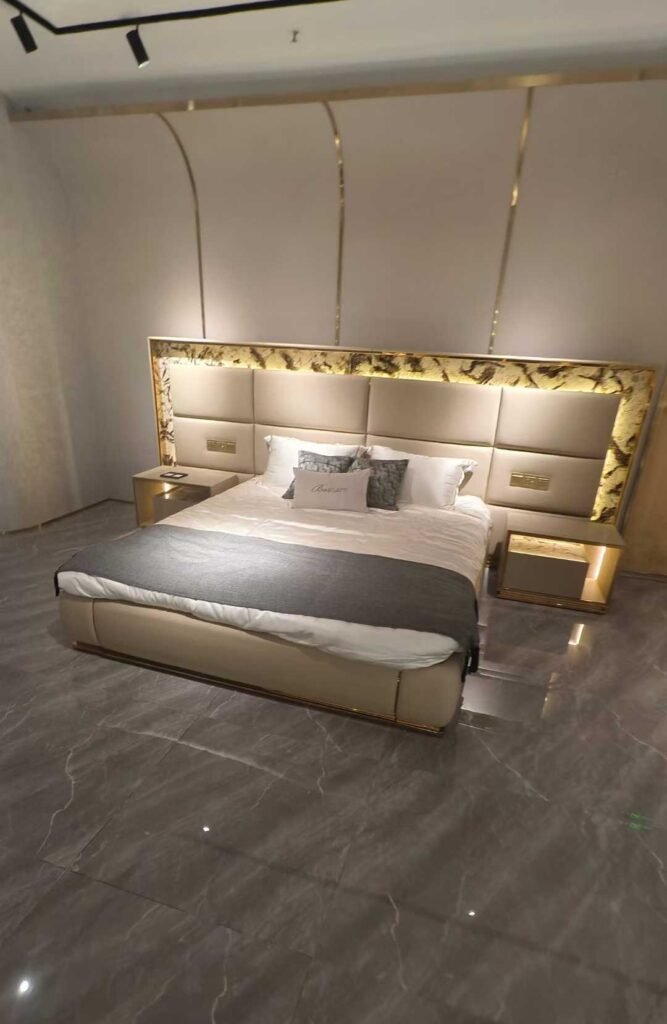
 A boutique hotel room built on sustainable specification: FSC-certified timber, natural rattan, organic-weave textiles — the kind of space that earns sustainability credentials and five-star reviews in equal measure.
Design Versatility as a Product Selection Framework
What “Versatile Design” Means in Today’s Market
Design versatility, in a procurement context, means a piece that can be specified across multiple project types, aesthetic directions, and client profiles without requiring a different sourcing relationship for each. A walnut-finished dining chair with clean proportions and a fabric seat in a warm neutral works in a residential dining room, a boutique hotel restaurant, a co-working space café area, and a corporate boardroom. A highly ornamented baroque-influenced piece works in one specific project type.
The commercial value of versatility is compounding. A piece that your design professional clients can specify in multiple project types is a piece they are likely to reorder multiple times. A piece that only works in one project type is ordered once and replaced with something more flexible when the next project requires a different direction.
Modular Systems, Neutral Palettes & Multi-Functional Pieces: The Categories Younger Buyers Gravitate Toward
Gen Z design preferences specifically favour: modular and reconfigurable seating (sectionals that can be rearranged, modular sofas that add or subtract components), multi-functional pieces (storage ottomans, extendable dining tables, sofa beds with intentional design rather than utilitarian compromise), and pieces with neutral palettes that serve as canvases for personalisation through textiles and accessories.
The commercial driver behind modular systems is particularly strong. A client who purchases a modular sofa today will add a section in twelve months when they move to a larger apartment. They will reorder the same fabric for a replacement cushion after three years. They will specify the same system for a second property five years from now. The initial sale is the beginning of a multi-year revenue relationship — which is a fundamentally different business case than a single-purchase transaction.
Curating Collections That Appeal to Gen Z & Millennial Designers and Showroom Owners
Building Cohesive Ranges That Mix-and-Match Across Price Points and Aesthetics
The most commercially effective collection architecture for a distributor targeting younger design professionals is one where pieces from different price tiers can coexist in the same project specification. An $1,800 upholstered armchair and a $280 side table should share enough visual and material language — similar tonal palette, compatible proportions, shared material notes — that a designer can specify both in the same room without the result looking like an inconsistent budget decision.
Achieving this requires deliberate curation decisions at the sourcing stage. When evaluating new pieces for your inventory, ask not just “is this piece good?” but “which existing pieces in my inventory does this work with, and does adding it strengthen or fragment my collection’s coherence?”
Training Your Sales Team to Communicate Versatility Benefits
The sales language that works: frame versatility as a business benefit for the designer, not as an aesthetic observation. “This sofa has been specified in hotel lobbies, residential living rooms, and co-working social spaces by designers in our network — it’s consistent enough to work across different brief types, distinctive enough to read as designed rather than generic.” That sentence gives the designer a buying rationale that extends beyond their current project.
Strategic Inventory Planning: What to Stock and How Much
Data-Driven Selection: Which Pieces Actually Sell to Your Target Customers
Order pattern analysis from your interior designer and showroom clients is the most reliable demand signal available to you — more reliable than trade show trends, more reliable than magazine features, and more reliable than supplier recommendations. Pull your order data quarterly and answer four questions: Which pieces sold in the highest quantity? Which pieces were specified across the widest variety of project types? Which pieces generated the highest reorder frequency? Which pieces were specified alongside each other most often?
The answers to these four questions define your core inventory — the pieces you maintain consistent stock of, negotiate volume pricing for, and feature in your sales materials. Everything outside these categories is either supporting inventory (complementary pieces that support the core) or experimental inventory (new pieces being tested against your client base).
Using Market Trends to Predict Demand Without Overbuying
The most common inventory planning mistake for distributors is buying volume of trend-forward pieces before demand has been confirmed. A design trend visible in Instagram content and trade press in January will generate product orders in March-April, hit peak residential specification in June-September, and begin declining by Q4. Ordering deep inventory of a trend piece in January, before order patterns confirm actual demand from your specific client base, creates the dead stock problem that erodes margins and occupies warehouse capacity.
The professional approach: take smaller initial positions on trend-forward pieces (30–40% of your projected demand), monitor velocity for 6–8 weeks, and reorder aggressively when sell-through confirms demand. You will occasionally miss volume on a piece that sells faster than anticipated. The cost of that miss is far lower than the cost of being stuck with 60 units of a trend that your specific client base did not ultimately respond to.
Seasonal and Trend Cycles: Staying Ahead Without Getting Stuck With Dead Stock
How to Adjust Inventory for Q1 Design Projects vs. Q4 Hospitality Fit-Outs
The seasonal demand pattern in B2B furniture procurement is distinct from retail and follows the project calendar of your design professional clients. Q1 (January–March) sees peak residential project initiation — designers are briefed by clients who received design consultations as gifts or who are beginning post-holiday renovation projects. Q2 (April–June) is the execution phase for these projects and the initiation phase for hospitality refurbishments planned for summer. Q3 (July–September) is peak hospitality fit-out delivery — hotel operators want refurbishments complete before autumn occupancy peaks. Q4 (October–December) sees commercial office and corporate fit-out projects close-out.
Inventory planning aligned to this calendar means: your highest-versatility contemporary and mid-century pieces should be at maximum availability in Q1 and Q3; your hospitality-grade pieces (fire-rated, higher durability specification) should be at maximum availability in Q2-Q3; and your accessories, lighting, and finishing pieces — which drive Christmas and New Year gifting behaviour even in B2B contexts — should be maximised in Q4.
Positioning Your Distribution Business for the Sustainable, Affordable, Aesthetic-Driven Market
How to Communicate Your Value Proposition to Interior Designers and Showroom Owners
Creating Sales Materials That Highlight Sustainability, Affordability & Design Credentials Simultaneously
The most effective sales material format for a distributor or showroom targeting design professionals is not a product catalogue. It is a specification sheet: a one-page document per product (or per collection) that includes the retail price, the trade price, the material composition with certification details, the key dimensions, the lead time, the minimum order quantity, the available finish and fabric options, and a high-quality photograph in a styled context.
This format serves the interior designer’s actual workflow. When a designer receives a brief that includes a sustainability requirement, they open your specification sheet, confirm the FSC and OEKO-TEX credentials, pull the dimensions for the CAD drawing, and place the order. The sale happens because you made the specification process frictionless, not because you sent a beautifully designed catalogue that required a follow-up conversation to extract the technical data.
Building Trust With Design Professionals by Proving You Understand Their Clients’ Expectations
The fastest way to build trust with a design professional is to demonstrate that you understand the end client they are serving — not just the designer’s aesthetic preferences. A distributor who can say: “Sixty percent of the residential projects we supply go to designers working with millennial clients in urban apartments under 80m² — so we’ve built our collection around modular systems, neutral palettes, and pieces with genuine sustainability credentials at accessible price points” is speaking to a designer’s business reality, not just their taste profile.
Muebles Jade Ant has built its B2B trade offering around precisely this client intelligence — sourcing collections that serve the specific brief that design professionals receive from their younger residential and hospitality clients, at trade pricing structures that allow professional margins without requiring volume commitments that small practices cannot sustain.
Strengthening Relationships Through Educational Content
Hosting Showroom Workshops That Help Designers Understand Gen Z & Millennial Preferences
A quarterly workshop — held in your showroom, attended by 15–25 interior designers and showroom buyers from your client network — builds more durable commercial relationships than any amount of product marketing. The format: 45-minute presentation on your latest market data on younger buyer preferences, 30-minute walkthrough of your new collection with design rationale explained, 30-minute networking and product exploration. No hard selling.
The commercial result of this format is indirect but powerful. Designers who attend your workshops develop confidence in your market intelligence, trust your curation judgment, and bring their most strategically significant client briefs to you rather than to competitors. You become a strategic partner rather than a commodity supplier — and that relationship generates pricing power that no promotional discount can replicate.
Providing Specification Sheets and Sourcing Guides That Make Designers’ Jobs Easier
Every hour you save an interior designer in their specification and procurement workflow is an hour they spend specifying more products or developing new client relationships — both of which generate more business for you. Invest in the supporting documentation: product specification sheets with certification details, material and finish sample libraries (physical, mailed to design practices on request), care and maintenance guides formatted for end-client delivery, and lead time and logistics documentation that integrates with standard design project management workflows.
Watch: Gen Z vs. Millennial Interior Design Trends — What Every Furniture Professional Needs to Know
Understanding the specific differences in design preference between Gen Z and millennial buyers is the intelligence that allows you to segment your inventory and sales messaging effectively. This video breaks down the key differences in practical, showroom-applicable terms.
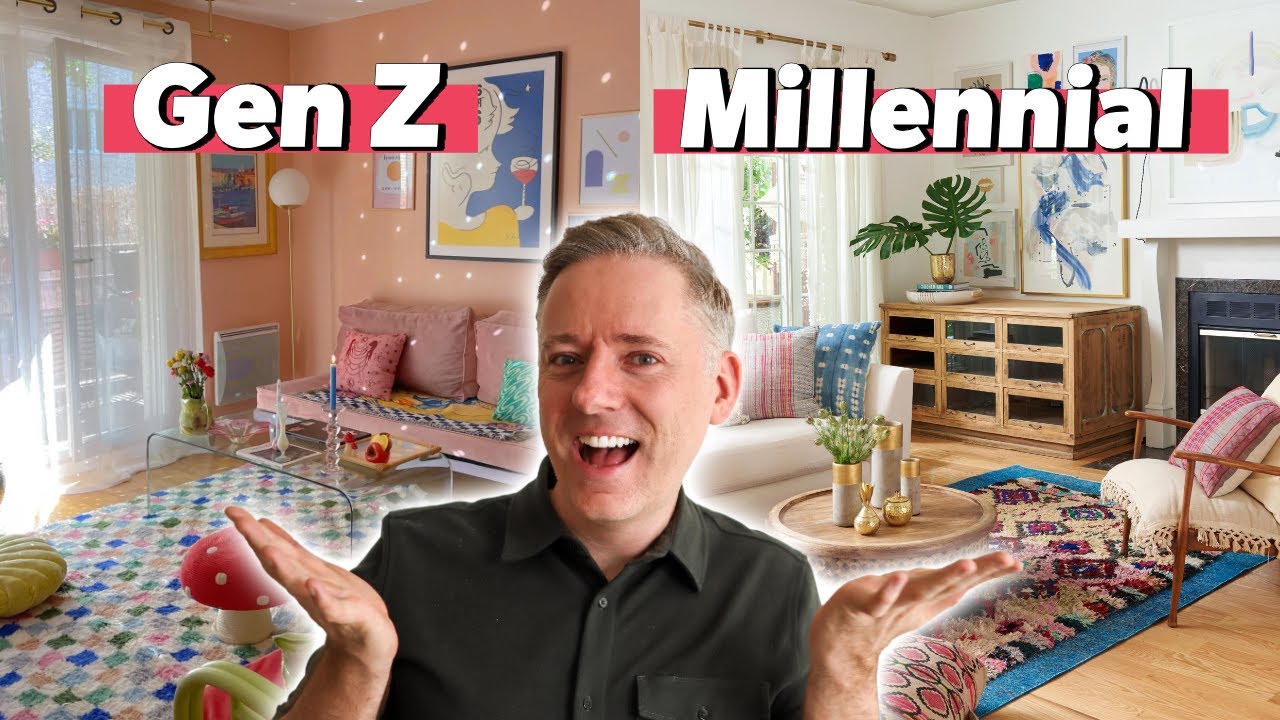
A practical breakdown of the generational design preference differences that are reshaping furniture demand — directly applicable to showroom merchandising and distributor inventory strategy.
Pricing Strategy: How to Remain Competitive While Protecting Your Margins
The Margin Squeeze: Why Traditional Markups Don’t Work Anymore
The traditional furniture distribution model — source at wholesale, mark up 40–50%, absorb all client-facing costs within that margin — is under pressure from multiple directions simultaneously: direct-to-consumer brands bypassing wholesale entirely, online comparison shopping compressing perceived price differentiation, and younger buyers who are more willing to wait for the right piece than to pay a premium for convenience.
A sustainable gross margin for a furniture retail operation remains 40–55%, with net margins of 8–12% in well-run businesses. The shift required to maintain this margin structure against current competitive pressure is not to discount — it is to increase the value density of what you offer per dollar of client investment.
Understanding Your Customers’ Pricing Pressure and Responding Strategically
Interior designers working with younger residential clients face a specific pricing tension: their clients want spaces that look premium but have budgets that reflect the reality of urban housing costs, student debt, and the economic uncertainty that has characterised the formative decades of both Gen Z and millennials.
Your response to this pressure as a distributor is not to reduce prices across the board. It is to provide a wider range of price points within a consistent quality and design language, so that a designer can build a room that reads as cohesive across pieces at different price tiers. A $1,400 feature sofa can coexist with $240 side tables if both share the same material and tonal language. Your job is to curate those relationships proactively rather than leaving designers to discover them by chance.
Transparent Pricing Models That Build Confidence With Your B2B Clients
How to Justify Premium Pricing for Sustainable Pieces
The most effective premium pricing conversation for sustainable pieces uses total cost of ownership rather than unit price. An FSC-certified solid ash dining table at $1,800 trade price is not expensive compared to a veneered MDF equivalent at $680 — because the ash table will still be in service in fifteen years while the MDF equivalent will have been replaced twice. That second and third replacement has a cost: procurement time, delivery, installation, disposal of the old piece. Calculated across the full lifecycle, the sustainable premium piece is often the lower-cost option.
Offering Volume Discounts and Loyalty Programs That Drive Repeat Business
Volume commitments and loyalty structures should be calibrated to your client’s actual purchasing patterns, not to an aspirational minimum that they cannot sustain. A design practice that places four orders per year averaging $12,000 each generates $48,000 in annual business — enough to justify a dedicated account relationship, priority lead times, and a 7–10% volume discount that both protects your margin and creates a meaningful switching cost for the designer.
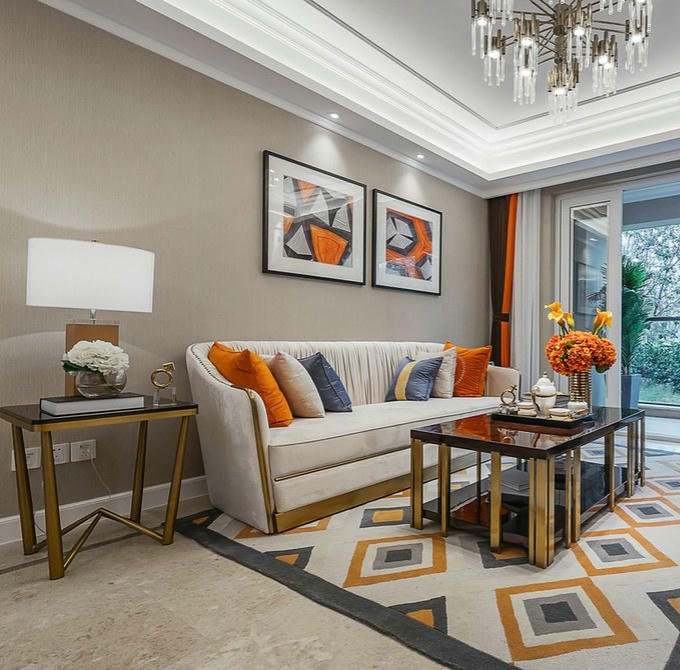
 Modular bouclé seating, solid oak dining, sustainable accessories — when a designer’s space generates this level of organic social engagement, the sourcing conversation starts again before the installation is even complete.
Overcoming Common Obstacles: Real Challenges Your Business Faces
“Our Suppliers Don’t Offer Sustainable Options at Our Price Points”
This is the most frequently cited obstacle by distributors transitioning toward sustainable inventory — and it is real, but it is also a lagging indicator of where the supplier market was twelve months ago, not where it is now. The supply side of sustainable furniture manufacturing has been responding to demand growth since 2022, and the range of FSC-certified, OEKO-TEX compliant pieces available at mid-range price points has expanded significantly.
How to Evaluate and Negotiate With Suppliers on Sustainability Credentials
Start every supplier evaluation with a sustainability credential audit: request FSC chain-of-custody certificate numbers, OEKO-TEX certification numbers for any upholstered components, and any additional certifications they hold. If a supplier cannot provide these on request, they do not have them — regardless of what their marketing materials say. Then negotiate: if you are committing to a meaningful volume of annual purchasing, you have leverage to request that a supplier pursue FSC or OEKO-TEX certification within a defined timeline as a condition of preferred supplier status.
Building Relationships With Emerging Manufacturers Who Prioritize Both Sustainability and Affordability
The emerging manufacturer profile that represents the greatest opportunity for distributors in 2025: production facilities with fewer than ten years of trading history, located in Vietnam, Malaysia, Portugal, or Poland, with existing FSC chain-of-custody certification and at least one major European or North American design house on their client list. These manufacturers have invested in design capability and sustainability infrastructure simultaneously because they entered the market at a time when both were baseline requirements for the clients they were targeting. They are not retrofitting sustainability onto an existing industrial model — they built around it.
“Our Showroom Customers Don’t Know How to Sell These Trends to Their End Clients”
This is a training and content problem, and it is one you can solve without a significant budget investment. The design professionals who source from your showroom need two things to confidently sell sustainable, affordable, aesthetically-driven furniture to younger end clients: the language to explain why a specific piece is worth its price, and the evidence to back that language up.
Creating Point-of-Sale Marketing Materials That Help Designers Communicate Value
For every sustainability-relevant piece in your showroom, provide: a one-page product story card (material composition, certifications, manufacturer story, durability specifications), a lifestyle image showing the piece in a context that reflects the aesthetic preferences of younger buyers, and a comparison framework (how does this piece compare in longevity and design quality to a non-certified equivalent at a lower price?). When designers walk into your showroom and are able to pick up physical documentation that tells the full product story, they leave equipped for their next client conversation.
“We’re Competing Against Online Retailers and Direct-to-Consumer Brands”
This is true, and it will remain true. The response is not to try to out-price online retailers on commodity furniture — that competition cannot be won. The response is to make the areas where you have structural advantages so valuable that they outweigh the price or convenience differential for your target client base.
Leveraging Your B2B Relationships to Offer Services That Online Retailers Can’t
A DTC brand offers a website, a shopping cart, and a delivery service. You offer: design consultation that helps a designer select the right piece for a specific brief, flexible ordering for custom specifications that DTC brands cannot accommodate, project-level inventory management for large hospitality or commercial fit-out projects, product knowledge that comes from having held and specified the pieces in real projects, and a human relationship that means when something goes wrong (and in a $200,000 hotel fit-out, something always goes wrong), there is a person to call who will solve the problem.
That is not a commodity offering. It is a strategic service, and it justifies both a price premium and a loyalty investment from design professional clients who understand what they are getting.
Building a Community Around Your Distribution Business That Creates Switching Costs
The distributors who are most insulated from DTC competition are those whose clients feel they belong to a professional community, not just a supplier relationship. This means: hosting design events in your showroom, curating educational content that helps designers serve their clients better, facilitating introductions between designers in your network who could collaborate on projects, and providing market intelligence that is genuinely valuable to their business planning. When switching to a competitor means losing access to this community, the competitive value of a marginally lower price elsewhere is significantly diminished.
Measuring Success: KPIs That Matter for Your Distribution or Showroom Business
Beyond Revenue: Tracking Metrics That Predict Long-Term Growth
Revenue is a lagging indicator. By the time revenue growth slows, the cause is usually twelve months old. The KPIs that predict future revenue allow you to identify and address problems before they become financial events.
Product Velocity: Which Items Are Moving and Which Are Sitting
Inventory velocity — the rate at which a specific piece sells through and requires replenishment — is the most direct measure of how well your product selection matches your client base’s actual demand. Calculate velocity per SKU quarterly: units sold per month divided by average units held in inventory. A velocity ratio above 1.5 means a piece is selling significantly faster than your stock replenishment — you are likely missing sales and should increase your order quantity. A velocity ratio below 0.3 means the piece is sitting in inventory for more than three months on average — examine whether the issue is pricing, display, sales team communication, or fundamental client demand.
| Velocity Ratio | Interpretation | Action |
|---|---|---|
| > 2.0 | Demand significantly exceeds supply | Increase reorder quantity; negotiate priority production |
| 1.0 – 2.0 | Healthy velocity, well-managed stock | Maintain current order levels; monitor seasonality |
| 0.5 – 1.0 | Slow movement; investigation required | Review pricing, display, and sales team messaging |
| < 0.5 | Dead stock risk | Consider repricing, bundling, or sourcing exit |
Customer Concentration: Are You Building Loyalty or Chasing One-Off Orders?
A healthy B2B furniture distribution business has its top 20% of clients generating no more than 50% of its revenue. Above that concentration, you have a structural vulnerability: the departure of a single large client creates an immediate revenue crisis. Monitor the distribution of revenue across your client base quarterly, and actively develop second and third-tier clients into the top tier by investing relationship time and value-added services in accounts that show growth potential.
Feedback Loops: Using Your Customers’ Sales Data to Refine Your Inventory Strategy
Building Relationships With Interior Designers So They Share What Their Clients Actually Buy
The most valuable market intelligence for a furniture distributor is not a trend report — it is knowing what the interior designers in your client network are selling successfully to their end clients. This information is freely available if you ask for it in the right context: a quarterly review conversation with your top 10 clients, framed as a strategic planning discussion rather than a sales call, will reveal which of your pieces are performing in their market, which specifications their clients are asking for that you are not currently stocking, and which DTC or competitor pieces are appearing in their briefs.
This intelligence, aggregated across your client network, is a real-time demand signal that no market research report can replicate. It tells you what buyers in your specific geographic market and client segment are actually purchasing — not what buyers nationally or globally are trending toward.
The Opportunity in Front of You
Your business sits at a genuinely favourable inflection point. The furniture market is experiencing a structural shift toward younger consumers who spend more, purchase more frequently, and have specific preferences that you can learn, source for, and serve — if you act deliberately.
The distributors, showroom owners, and design firms who are capturing disproportionate market share in the current environment share three characteristics. First, they have invested in understanding the psychology and purchasing behaviour of younger buyers deeply enough to make inventory decisions based on evidence rather than intuition. Second, they have built direct manufacturing relationships that give them access to sustainable, well-designed pieces at price points that create professional margins. Third, they have trained their client-facing teams to communicate design value in language that resonates with the design professionals they serve — and, through them, with the Gen Z and millennial end clients who are actually making the final purchase decisions.
The market will not wait for late adopters. The distributors and showrooms that make this transition in 2025 and 2026 will be the ones with the supplier relationships, the client trust, and the brand positioning to capture the next decade of growth.
Ready to Future-Proof Your Furniture Business?
Explore Jade Ant Furniture’s B2B trade collections — curated specifically for distributors, showrooms, and design professionals serving Gen Z and millennial clients. Pieces with genuine sustainability credentials, versatile design language, and professional trade pricing structures that protect your margins.
Browse Jade Ant Furniture’s Trade Collections →
Quick Reference: Key Industry Terms
| Término | Definition | Why It Matters to Your Business |
|---|---|---|
| FSC (Consejo de Administración Forestal) | Independent certification that timber comes from responsibly managed forests | The baseline sustainability credential required by most design professional briefs |
| Norma OEKO-TEX 100 | Certification that textile components contain no harmful substances | Required for upholstery specified into residential and hospitality contexts with health-conscious end clients |
| GREENGUARD Gold | Low chemical emission certification for furniture components | Required for educational, healthcare, and LEED-certified commercial projects |
| Cradle to Cradle (C2C) | Full product circularity certification covering material health, reutilisation, and renewable energy | Increasingly required in corporate sustainability procurement briefs |
| Product Velocity | The rate at which a specific SKU sells through and requires replenishment | The most direct measure of whether your product mix matches client demand |
| Customer Concentration | The percentage of total revenue coming from your top clients | A concentration above 50% in the top 20% of clients signals structural vulnerability |
| Tiered Inventory Strategy | Stocking premium, mid-range, and entry-level pieces within a coherent collection architecture | Allows you to capture multiple client segments without fragmenting your brand position |
| «Greenwashing» | Using vague, unverified environmental language without third-party certification backing | A credibility destroyer with Gen Z and millennial buyers who research claims independently |
| DTC (Direct-to-Consumer) | Brands that sell directly to end consumers, bypassing trade channels | Your primary competitive pressure in the affordable furniture segment — compete on expertise and service, not price |
 A solid walnut dining table with sustainable leather seating and artisan lighting: the investment furniture purchase that millennial buyers research for three months, specify with a designer, and photograph for the next ten years.
Preguntas frecuentes
1. How do I know if a furniture piece is truly sustainable, or is it just marketing?
Require a certificate number, not a certification logo. Every legitimate FSC, OEKO-TEX, GREENGUARD, and GOTS certification produces a specific number that can be independently verified through the certifying body’s public database — FSC certificates are searchable at info.fsc.org; OEKO-TEX certifications can be verified with the label check tool on the OEKO-TEX website. A supplier who provides the logo but cannot produce the certificate number does not have a valid certification. For your B2B clients — the interior designers and showroom owners who source from you — provide these certificate numbers pre-formatted in your product specification sheets, so they can communicate verified sustainability to their end clients without additional research.
2. Can I source affordable, sustainable furniture without sacrificing quality?
Yes, but it requires direct manufacturer relationships rather than distributor-layer sourcing. Emerging manufacturers in Southeast Asia (Vietnam, Malaysia) and Eastern Europe (Portugal, Poland) are producing quality pieces at competitive price points precisely because they have invested simultaneously in design capability, quality infrastructure, and sustainability certification — rather than retrofitting these onto an existing industrial model. The key is vetting suppliers with the same rigour as any quality-critical supplier relationship: request samples, require certification documentation, ask for references from other distributors, and start with smaller orders before committing to volume. Quality at an accessible price exists — it requires sourcing effort to find.
3. What design styles are Gen Z and millennials actually specifying for their spaces in 2025?
The dominant Gen Z preferences in 2025 are organic curved silhouettes (rounded sofas, arched mirrors, curved tables), earthy tonal palettes (terracotta, sage green, warm greige, dusty rose), and textural layering with natural materials (boucle, rattan, linen, stone). Millennials are more likely to specify clean-lined minimalism with warm material accents — Japandi-influenced interiors, mid-century modern pieces with natural finishes, and maximalist textural expressions in statement upholstery. The common thread across both demographics is material honesty: solid wood rather than veneer, natural textiles rather than synthetic equivalents, and finishes that age gracefully rather than requiring replacement when they show wear.
4. How do I explain “design versatility” to my sales team so they can communicate it to design professionals?
Frame versatility as a business benefit for the designer’s practice, not as an aesthetic quality of the piece. The commercial argument is: a piece that works across multiple project types reduces the designer’s sourcing effort per project (they already know it works), increases their order frequency from you (they specify it in every project where it fits), and reduces their design risk (they have seen it work in real spaces). Train your team to ask designers: “What are the three most common project briefs you’re currently managing?” Then identify which of your versatile pieces solve specification challenges across all three. That conversation closes sales because it is about the designer’s business outcomes, not the product’s aesthetic qualities.
5. Should I completely overhaul my inventory to pursue this market?
No — a gradual, data-driven transition is both lower risk and more strategically defensible. Start by analysing your existing order data to identify which pieces are already attracting younger designers and which categories are generating the highest reorder frequency. Then allocate 20–30% of your new inventory budget toward sustainable, versatile, aesthetically-aligned pieces and monitor velocity closely for 6–8 weeks before committing to deeper stock positions. This approach lets the market tell you what is working rather than requiring you to predict it in advance. Within 9–12 months, the velocity data from this initial allocation will give you the evidence base to make more confident and larger inventory decisions.
6. How much should I mark up sustainable furniture to protect my margins?
Sustainable pieces do not require higher markups — they require smarter sourcing. If a certified piece costs you 8–10% more than a non-certified equivalent due to FSC certification, responsible manufacturing, and ethical supply chain costs, price it at 9–11% above your equivalent non-certified price. Research confirms that consumers show an average willingness to pay a 9.7% premium for sustainable furniture, so you are within the market’s acceptance range while maintaining your margin structure. The volume uplift from capturing the Gen Z and millennial market — which is growing at 8.64% annually — often compensates for any per-unit margin reduction, making sustainable inventory a net positive for total margin dollars even when per-unit margin is similar.
7. My interior designer clients say their end clients want affordable furniture that still looks expensive. How do I source for this?
This is a design sophistication question, not a materials cost question. Furniture that reads as premium at a mid-range price shares specific characteristics: precise proportions (pieces that are correctly scaled to the typical room dimensions their target buyer occupies), clean lines (no ornate detailing that dates the piece), quality material expression (solid or quality-veneered timber, natural fabric, honest metal finishes), and design coherence (a piece that looks like it came from a considered design direction, not a catalogue fill). Work with suppliers who have invested in in-house design teams rather than those who produce to generic market briefs. The result is furniture that looks like it costs more than it does — because it was designed rather than manufactured.
8. How do I compete with direct-to-consumer brands that sell affordable furniture online?
You compete on expertise, curation, and the services that an algorithm cannot deliver. A DTC brand offers a website and a checkout. You offer: specification consultation that helps a designer select the right piece for a specific brief, flexibility for custom and special orders that DTC brands cannot accommodate, project-level procurement management for hospitality and commercial fit-outs, and a human relationship that means when a problem occurs mid-project, there is a person with authority to solve it. Train your team to articulate these advantages explicitly rather than assuming clients understand them. The designer who knows exactly what they get from you that they cannot get from Article or West Elm is a designer who will bring their highest-value projects to you.
9. What is the difference between greenwashing and genuine sustainability, and how do I spot it?
Greenwashing uses directional language (“eco-friendly,” “natural,” “sustainable”) without independent third-party verification of specific practices. Genuine sustainability commitments include: specific certification numbers from recognised third-party bodies (FSC, OEKO-TEX, GREENGUARD), transparent supply chain documentation (mill-of-origin for timber, yarn sourcing for fabrics), measurable manufacturing practices (renewable energy percentage, waste reduction data), and honest acknowledgement of areas still being improved. When evaluating suppliers, ask one question: “Can you provide the certificate number for the sustainability claims on this product, and which database can I verify it in?” The answer to that question separates genuine sustainability from marketing.
10. How often should I review and refresh my inventory to stay current with younger buyer preferences?
Review quarterly; refresh selectively. A quarterly inventory velocity review identifies which pieces are performing and which are slow-moving, allowing you to make data-informed restocking and clearance decisions. For trend-forward pieces — those purchased specifically because they reflect a current aesthetic direction — budget 15–20% of new inventory spend on refreshing these categories per quarter. However, do not chase every micro-trend that appears in Instagram content. Focus the majority of your new purchasing on foundational versatile pieces that have design staying power across multiple trend cycles, and reserve trend-forward purchases for pieces that complement your core collection rather than replacing it.
11. How can I help my showroom customers sell sustainable furniture if their end clients don’t specifically ask for it?
Train your showroom partners to lead with design and value, then introduce sustainability as confirmation of quality rather than as a primary sales argument. The sequence that works: “This dining table is in solid FSC-certified ash, which is why it has this grain quality and will hold its finish for decades — and it’s actually priced similarly to the comparable piece in engineered wood.” Many younger clients don’t ask for sustainability because they assume premium furniture comes at a premium sustainability cost. When you present sustainable credentials as evidence of quality rather than as an ideological position, they become a buying confirmation rather than an ethical conversation. Provide your showroom partners with talking points in this format — not “we care about the environment” but “this is what responsible sourcing looks like in practical terms for this piece.”
12. What is the realistic ROI of transitioning toward sustainable, Gen Z and millennial-aligned inventory?
Based on market data and distributor case studies: businesses that have repositioned their inventory toward sustainable, versatile, aesthetically-aligned collections typically see inventory turnover improvement of 15–25% within 6–12 months, driven by higher product velocity on the new pieces. Customer lifetime value increases when design professionals who trust your curation judgment bring progressively larger and more complex projects to your sourcing network. Markdown frequency decreases when your inventory consists of versatile, timeless pieces rather than trend-forward pieces with short commercial cycles. And competitive differentiation improves in a specific, durable way: once you have established yourself as the distributor that understands what younger design clients actually want, that positioning compounds through every client referral and every new account that comes to you specifically because of it.
13. How do I identify which emerging suppliers are reliable versus a sourcing risk?
Start with small orders and clear quality standards. Request physical samples before committing to any volume, and evaluate them against your defined quality specifications rather than against the supplier’s marketing claims. Ask for references from other distributors in non-competing markets, and contact those references with specific questions: “Did they deliver on the stated timeline? Was the quality of the production run consistent with the sample? How did they handle a problem when it occurred?” Look for existing third-party certifications (FSC, OEKO-TEX, ISO) as evidence of operational systems rather than just marketing investment. The red flags: vague responses about material sourcing, inability or unwillingness to provide documentation, and pressure to commit to large initial orders before you have seen production quality. Reliable suppliers welcome scrutiny; risky ones resist it.
14. Should I position myself as a “sustainable furniture distributor” or integrate sustainability into a broader brand?
Integration is the more commercially robust strategy. A “sustainable-only” positioning limits your market to explicitly sustainability-motivated buyers and can feel ideologically exclusive to clients who have multiple priorities. A broader positioning — “we source furniture that meets today’s expectations for design quality, material integrity, and responsible production” — captures the sustainability-motivated segment while also serving design-led buyers, quality-focused buyers, and commercially-minded buyers who respond to durability arguments rather than environmental ones. Your messaging should communicate the full value equation: beautiful, well-made, responsibly sourced, and professionally supported. Sustainability is one dimension of that value, not the entire story.
Fuentes de datos: Sustainable Furniture Demand Statistics — First Chair, Gen Z and Millennial Furniture Purchase Research — Design News Now, Millennial Home Decor Spending Statistics — First Chair, US Sustainable Furniture Market — Mordor Intelligence, Generational Shopping Trends — Home Furnishings Association, Eco-Friendly Furniture Market — Grand View Research.