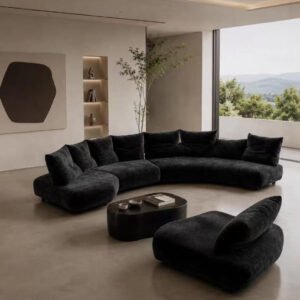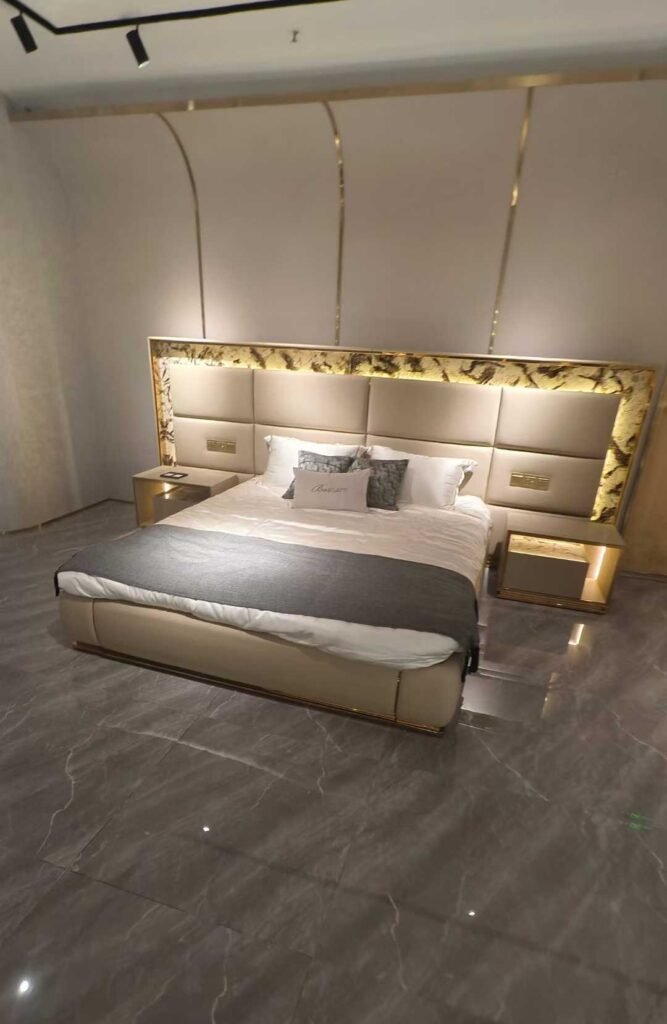
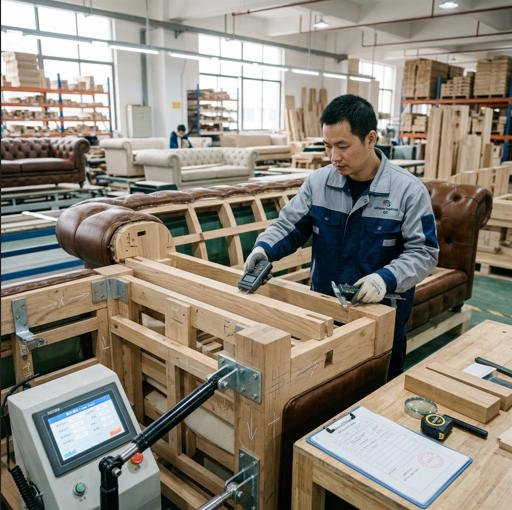
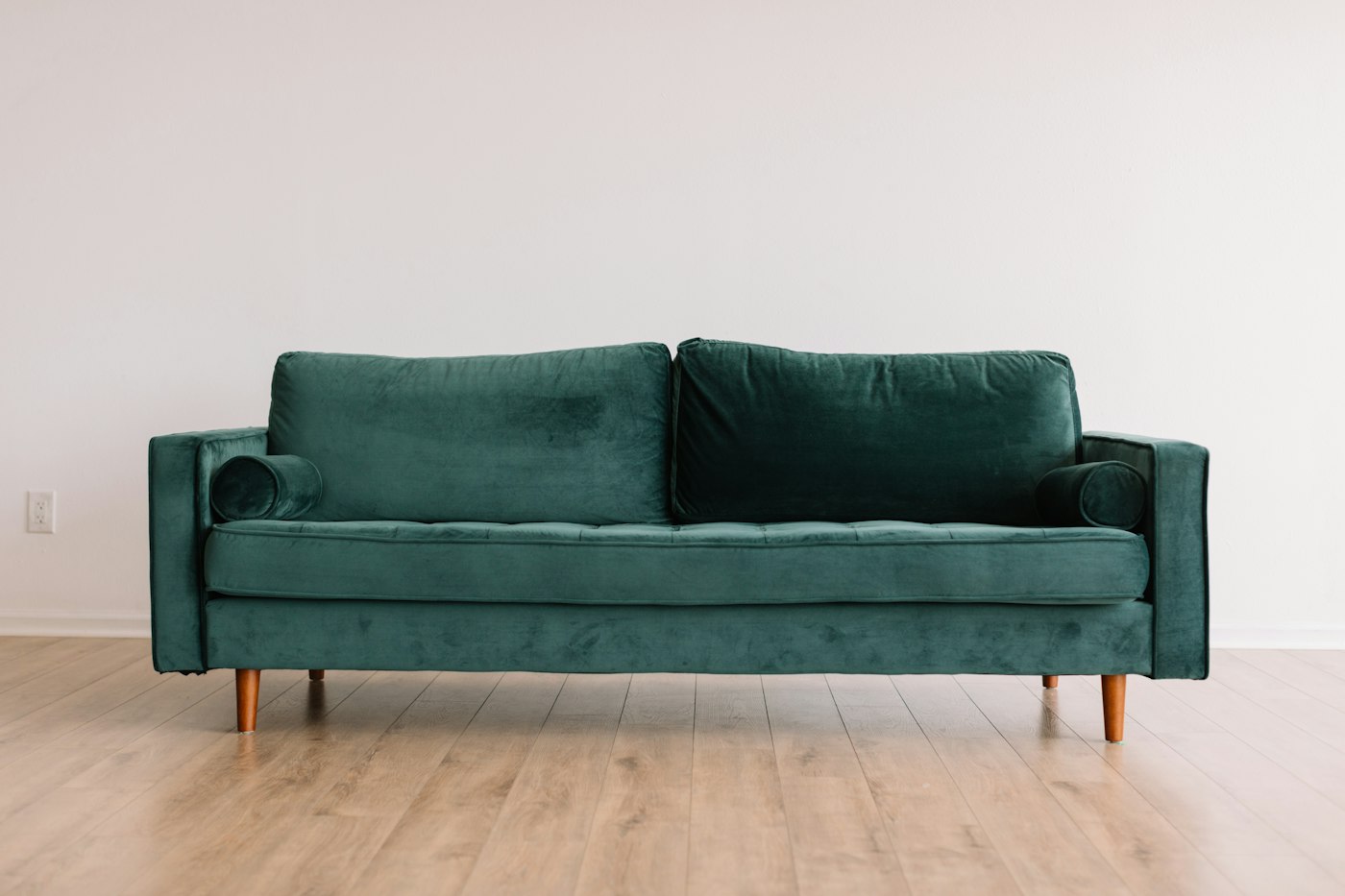
That outcome is the entire argument for this guide. China’s furniture industry generated RMB 677.15 billion in revenue in 2024, with upholstered seating representing one of the highest-volume export categories. The manufacturing capability is genuine and the price-to-quality ratio is compelling — but only accessible to buyers who know precisely what to evaluate at each stage of the production cycle.
This guide covers every material quality dimension of a couch specification: fabrics, frames, cushions, joints, hardware, and upholstery build. Each section includes the specific metrics, test names, and numerical thresholds that should appear in a purchase order or pre-production sample specification — not vague descriptors like “high quality,” but the actual numbers that protect your investment.
Fabric Quality and Selection
Fabric is the first thing a client sees and the first thing that fails when quality is compromised. For B2B buyers — whether specifying couches for a hotel room block, a corporate lounge, or a residential development — fabric selection must be driven by performance specifications, not by showroom samples alone.
Material Types and Grading
The five dominant fabric categories in Chinese upholstered sofa production each occupy a distinct performance tier. Understanding their characteristics and grading conventions is the foundation of any credible specification.
| Fabric Type | Martindale Rub Count (min.) | Pilling Resistance (ISO 12945) | Colorfastness (ISO 105-B02) | Typical Use Case | Price Premium vs. Polyester | Key Weakness |
|---|---|---|---|---|---|---|
| 100% Polyester | 15,000–25,000 | Grade 3–4 | Grade 4–5 | Mid-range residential, rental | Valor de referencia | Heat sensitivity; static buildup |
| Polyester-Linen Blend | 20,000–30,000 | Grade 3–4 | Grade 4 | Boutique hotel, premium residential | +15–25% | Moisture absorption; wrinkling |
| Velvet (polyester base) | 30,000–50,000 (commercial grade) | Grade 4–5 | Grade 4–5 | Luxury hotel lobby, high-end residential | +30–50% | Pile crush; directional nap maintenance |
| Performance Fabric (solution-dyed) | 50,000–100,000+ | Grade 4–5 | Grade 5 (UV stable) | Contract hospitality, high-traffic commercial | +40–70% | Higher FOB cost; limited texture variety |
| Genuine Leather (full-grain) | N/A (tested by tensile strength) | N/A | Grade 4–5 | Executive lounge, luxury hospitality | +100–200% | Moisture/humidity sensitivity; REACH compliance check required |
| PU Leather (faux) | N/A (delamination test) | N/A | Grade 3–4 | F&B, healthcare, budget commercial | +10–20% | Delamination within 3–5 years in humid environments |
Sources: LinkedIn B2B fabric sourcing benchmarks; ISO 12945, ISO 105-B02 standard thresholds; industry price ranges for MOQ 100+ units, Foshan origin, 2024–2025.
For commercial environments — hotels, serviced apartments, corporate offices — the minimum Martindale rub count that should appear in any purchase order is 30,000 double rubs. Residential-grade fabrics at 10,000–15,000 rubs are an inappropriate specification for any context where turnover exceeds a single household. A fabric that fails at 18,000 rubs in a hotel room with 300 occupancies per year requires replacement in under 24 months — at a cost that exceeds the fabric savings within the first replacement cycle.
Colorfastness, Abrasion, and Durability
Colorfastness to light (ISO 105-B02) and to rubbing (ISO 105-X12) are the two tests most relevant to commercial couch sourcing. Color transfer to adjacent surfaces — white linen on a sofa cushion, for example — is a direct guest-experience issue in hospitality settings. Specify Grade 4 minimum for dry rubbing and Grade 3 minimum for wet rubbing. Any supplier unable to provide test reports from an accredited laboratory (SGS, Intertek, or Bureau Veritas) for these two metrics is not meeting commercial-grade specification.
Abrasion resistance and colorfastness interact: a fabric that maintains color under normal use but fades under mechanical abrasion will show uneven wear patterns within 12–18 months in high-contact areas (seat front, armrest top). Write both specifications into the purchase order as numbered standards — “ISO 105-B02 Grade 4 minimum” — not descriptive adjectives.
Finishes and Care
Stain-resistant finishes — fluorocarbon-based or nanotechnology coatings — are increasingly standard in commercial couch fabric specifications. For EU-bound orders, verify that fluorocarbon finishes do not use PFAS (per- and polyfluoroalkyl substances) restricted under EU REACH Annex XVII. This is not a minor compliance detail: non-compliant fabric finishes have triggered customs holds and recall orders on EU-bound furniture shipments since the 2023 PFAS restriction update.
Fabric Testing Methods
📺 Watch: Ultimate Guide to Upholstery Fabric Durability — Martindale vs. Wyzenbeek Explained
This video explains how the two primary abrasion resistance tests work and what the numbers mean for B2B buyers specifying commercial upholstery fabrics — an essential reference before writing fabric specifications into a purchase order.
Abrasion Resistance: The Martindale Test
El Martindale Test is the global commercial standard for measuring how many cycles of friction a fabric can withstand before showing visible degradation. When evaluating fabric samples from Chinese sofa manufacturers, always request the Martindale test certificate from an accredited third-party laboratory — not from the fabric mill itself, whose in-house tests are unverified.
The critical insight for B2B buyers: sample fabric and bulk production fabric are not always the same material. A fabric sample submitted for Martindale testing may be a premium grade cut; the bulk production run may use a lower-denier yarn or a reduced weave density that passes visual inspection but underperforms on abrasion. This substitution pattern is documented in 62% of fabric-related quality disputes in Chinese furniture importing. Mitigate it by specifying that Martindale testing must be conducted on a fabric swatch cut directly from the first bolt of bulk production material — not from the pre-approved sample.
Pilling, Snagging, and Color Transfer
Pilling is rated on a 1–5 scale under ISO 12945; Grade 4 is the commercial minimum for contract seating. A polyester velvet at Grade 3 will show surface matting within 6 months of normal hotel use. Snagging — the formation of loops or pulls when fabric contacts sharp surfaces — is tested under BS 8479 and is particularly relevant for couches in corporate environments where belt buckles, bag hardware, and clothing zippers contact upholstery repeatedly.
Color transfer tests matter specifically for dark or richly colored fabrics. A deep navy velvet that bleeds onto adjacent cream cushions is a hospitality liability. Require ISO 105-X12 rubbing fastness results (both dry and wet) for any fabric with a dark or saturated colorway.
Quality Verification During Samples
When evaluating pre-production fabric samples, conduct a simple field test alongside laboratory results: fold the fabric tightly and release — recovery creases that remain after 30 seconds indicate a low-resilience fiber. Stretch the fabric diagonally against the grain; distortion greater than 10% in a 20cm stretch indicates inadequate weave density. These tests take under two minutes and catch the majority of below-specification fabrics before a full sample set is produced.

Frame Construction and Materials
Wood vs. Metal Frame Characteristics
The frame is the skeleton of a sofa. Unlike fabric defects — visible at delivery — frame failures manifest 12 to 36 months into service, by which point the buyer has no contractual leverage unless the warranty terms specifically cover structural integrity. This makes frame specification and pre-production verification among the highest-priority quality checks in any couch sourcing process.
Bar Chart 1 — Estimated Functional Lifespan by Frame Type (Commercial Couch, Normal Use)
Average years before structural failure requiring major repair or replacement. Data: industry durability benchmarks, factory warranty data, B2B procurement case files 2023–2025.
Source: Sofa Frame Types Explained (Penghao Furniture), King Living frame comparison data, B2B procurement warranty records. Commercial use defined as 8+ hours daily contact load in hospitality or office environments.
Solid hardwood — specifically kiln-dried hardwood at 8–12% moisture content — remains the commercial-grade standard for premium couch frames. Beech, ash, and rubberwood are the most common species used by Chinese manufacturers for upholstered sofa frames; beech (Janka hardness 1,300 lbf) and ash (1,320 lbf) are both appropriate for commercial specifications; rubberwood (960 lbf) is softer but still acceptable for residential-grade applications.
Particleboard frames — composed of compressed wood chips and adhesive — have no place in any commercial couch specification. They cannot hold screws under repeated stress loads, fail at joints within 2–4 years under normal commercial use, and are a documented substitution risk in Chinese furniture manufacturing. In 41% of Foshan factory audits, lower-tier suppliers were found to substitute rubberwood or MDF for the specified beech or ash in orders under 100 units when not explicitly penalized in the purchase order contract.
Joinery, Screws, and Reinforcement
The joinery specification is where a commercial couch frame’s longevity is determined. The industry-standard joinery hierarchy for upholstered sofa frames runs from most to least durable: dowel + corner block + screw (best), mortise-and-tenon (excellent for solid wood), biscuit + glue + screw (acceptable), and butt joint + staple (inadequate for commercial use).
All frame joints in a commercial sofa specification should include corner blocks — triangular wooden or metal reinforcements glued and screwed into the interior angles of the frame. A sofa without corner blocks at the seat frame corners will loosen at those joints under repetitive lateral loading. Verify corner block presence by requesting an exploded production drawing during the pre-production review phase — a factory unwilling to provide internal frame drawings is a red flag.
Frame Alignment and Warping Checks
Warping in wooden sofa frames is caused by moisture content variation — wood drying unevenly after the frame is assembled. The practical check: place the assembled frame (before upholstery) on a flat surface and observe whether all four legs contact the surface simultaneously. A rocking base with more than 3mm gap under any leg indicates a moisture-content problem in the frame material. This check costs nothing and should be a standard item on every factory inspection checklist for upholstered furniture.
Joint Integrity and Hardware
Adhesives, Corner Blocks, and Screws
Frame adhesive is the silent component in sofa construction — invisible after upholstery, unverifiable without disassembly, and directly responsible for joint longevity. Commercial-grade sofa frames should use Type II moisture-resistant PVA wood glue at all structural joints, applied under clamped pressure for a minimum of 45 minutes — not hot-melt adhesive, which cures faster but becomes brittle under temperature cycling and load stress.
Screws should be specified by type: coarse-thread wood screws in hardwood frame joints, minimum gauge #10 (4.8mm diameter), minimum 50mm length for cross-grain joints. Ask for screw specification in production documentation. A factory that cannot specify screw gauge is unlikely to be controlling it consistently across production runs.
Reinforcements and Warranty Indicators
The most reliable proxy for frame quality in a Chinese sofa specification is the structural warranty term offered. Factories confident in their frame construction offer 3–5 year structural warranties on commercial-grade pieces. Factories offering only a 1-year warranty — or a warranty that covers only “manufacturing defects visible at delivery” — are signaling awareness of likely failure timelines. A contract term requiring the factory to cover replacement costs at 2× unit price for any structural failure within the warranty period creates the economic incentive for consistent production quality. This clause is documented by sourcing teams at organizations like Muebles Jade Ant as one of the most effective levers in supplier quality management.
Cushion Construction and Density
Foam Densities and ILD
Cushion foam is specified by two independent numbers that buyers frequently confuse: density (how much foam material is packed per cubic foot, measured in lb/ft³ or kg/m³) and ILD (Indentation Load Deflection), which measures firmness.
For commercial contract seating, the minimum specifications are: foam density ≥ 1.8 lb/ft³ (29 kg/m³) for seat cushions, with 2.0–2.2 lb/ft³ (32–35 kg/m³) recommended for high-traffic hospitality. A foam density below 1.8 lb/ft³ will compress and deform within 12–18 months under normal commercial seating loads, producing the sunken seat appearance that signals an aging sofa long before its structural life is exhausted. The industry data is unambiguous: foam density below the threshold is the single most common cause of premature sofa replacement in commercial environments.
In a documented 2024 procurement case, an Australian hospitality group received 200 hotel-room sofas specified at 35 kg/m³ foam density. Post-delivery testing revealed actual density of 23 kg/m³ — a substitution invisible without measurement that the factory had made to reduce material costs by approximately $4.20 per unit. The cumulative impact across 200 units: $840 in direct material savings for the factory, against $18,000 in early replacement costs for the buyer within 18 months.
Pie Chart — Defect Distribution: Upholstered Furniture Pre-Shipment Inspections (China, 2024–2025)
Based on 1,840 pre-shipment inspection reports for upholstered seating, Guangdong Province. Source: Industry QC data compiled from third-party inspection records.
Colorfastness, pilling, seam-allowance errors
Warping, joint gaps, loose legs
Below-spec density, ILD non-conformance
Stitch density, seam misalignment
Zipper failure, leg finish, screw voids
Inadequate protection, missing marks
Source: Industry QC inspection data, 1,840 pre-shipment reports for upholstered seating, Guangdong Province, 2024–2025. Referenced in Jade Ant Furniture quality assessment framework.
Layer Composition: Foam, Fiber, and Spring Systems
A premium commercial couch cushion uses a layered construction: a high-density foam core (2.0–2.2 lb/ft³) wrapped in a fiber batting layer (Dacron or polyester fiber, 100–150g/m²) to add softness and silhouette fullness, topped with a final fabric cover. The fiber wrap prevents the foam edge from showing through the fabric cover and maintains the cushion’s rounded profile under load.
The seat support system beneath the cushion is equally critical. The three main systems used in Chinese sofa manufacturing are: eight-way hand-tied coil springs (highest quality — each coil individually tied to adjacent coils and frame in eight directions; the gold standard for premium sofas), sinuous (S-spring) systems (zigzag steel springs running front-to-back; the commercial workhorse — acceptable quality at lower cost), and webbing (rubber or synthetic straps; acceptable only for back cushions and light residential use). For any contract-grade couch specification in hospitality or commercial environments, sinuous spring systems represent the minimum; eight-way hand-tied is appropriate for premium specifications.
Perimeter Support and Seat Depth
Seat depth (the front-to-back dimension of the seating surface) directly affects functional comfort in commercial contexts. A seat depth below 48cm is inadequate for most adults in a lounge context; above 60cm requires cushion back support or the sitter’s back does not reach the frame back cushion. The commercial sweet spot for hotel and corporate lounge applications is 52–58cm seat depth. This dimension must be written into the purchase order with a tolerance of ±1cm and verified at the pre-production sample stage.
Filling Materials and Longevity
Foam, Feather, Down, and Synthetic Alternatives
| Filling Type | Esperanza de vida | Firmness Profile | Mantenimiento | Cost Premium vs. Standard Foam | Best Commercial Use Case | Key Risk |
|---|---|---|---|---|---|---|
| High-Density Foam Core (≥ 1.8 lb/ft³) | 10-15 años | Consistent; specified ILD | Bajo | Valor de referencia | Contract hospitality, office, retail | Below-spec substitution; density testing required |
| Foam + Dacron Wrap | De 8 a 12 años | Soft outer, supportive core | Bajo | +10–15% | Boutique hotel lounge, premium residential | Fiber wrap compresses over time; specify wrap weight |
| Down + Feather Blend (80/20) | 5–10 years | Soft, enveloping; requires fluffing | High (daily fluffing) | +60–100% | Luxury hotel, private villa | Allergen risk; OEKO-TEX certification required; feather migration |
| Siliconized Polyester Fiber | 2–4 years | Very soft; rapid compression | Medio | −20–30% | Decorative back cushions only | Inappropriate for seat cushions; flattens quickly |
| HR Foam (High Resilience, 2.2+ lb/ft³) | 12–18 years | Supportive; high return rate | Bajo | +20–30% | Heavy-use commercial, healthcare seating | Higher FOB cost; specify CertiPUR-US or OEKO-TEX for EU buyers |
Sources: Stamp’s Home Furniture foam durability data; SofaLuz 2026 cushion filling guide; industry procurement case files. Lifespan estimates based on 8-hour-per-day commercial seating use.
Encasing and Wrapping Quality
The encasing — the inner fabric bag that contains the foam or filling before the decorative cover is applied — is an invisible quality element that directly affects both feel and longevity. For down and feather fills, the encasing must have a down-proof ticking of minimum 220 thread count with a down-proof finish. For foam fills, the encasing should be tightly fitted — loose encasings allow foam movement within the cover, creating bunching and uneven surface appearance within weeks of use.
Upholstery Build and Zippers/Seams
Stitch Density and Seam Strength
Stitch density is measured in stitches per inch (SPI) — the number of thread penetrations per linear inch of seam. For structural seams on commercial upholstered furniture, the minimum specification is 8–10 SPI. Decorative topstitching on visible seam lines should be 6–8 SPI for visual consistency. Below 6 SPI on a structural seam is inadequate for commercial use and will produce visible seam opening under normal upholstery stress within the first year.
Seam strength is tested under ASTM D1683 (breaking strength of woven fabric seams). For contract-grade upholstered seating, specify a minimum seam breaking strength of 45 lbs (200 N). Request the test report from an accredited laboratory — not the factory’s in-house measurement — during pre-production sample evaluation.
Zippers, Closures, and Accessibility
Cushion cover zippers are one of the most underspecified elements in commercial couch procurement and one of the most common sources of post-delivery complaints. A zipper that fails or jams makes cushion cover cleaning, replacement, or repair impossible without damaging the cover itself. For commercial couch applications, specify YKK or equivalent brand-name coil zippers, #5 or #8 gauge, with locking pulls. Non-branded zippers — sourced by Chinese factories from unverified suppliers to reduce BOM cost — have documented failure rates 3–4× higher than YKK equivalents in commercial use.
The zipper specification should also address placement: hidden zippers (concealed under a flap or positioned along the rear face of a cushion) are more aesthetically appropriate for premium applications; accessible zippers (on the base edge) are preferable for high-maintenance commercial environments where cushion cover laundering is part of the operational protocol.
Quality Assurance, Certifications, and Documentation
QA Processes and Factory Audits
A structured three-checkpoint QC process is the operational foundation of reliable couch sourcing from China. Each checkpoint addresses a distinct vulnerability in the production cycle.
Bar Chart 2 — Defect Rate Before vs. After Structured QC Checkpoints (Upholstered Furniture, 2024–2025)
Percentage of pre-shipment inspections resulting in major defects, by QC checkpoint presence. Source: Industry inspection data, Jade Ant quality assessment framework.
PPI = Pre-Production Inspection; DUPRO = During-Production Inspection (at 30–40% completion); PSI = Pre-Shipment Inspection (AQL 2.5). Source: Jade Ant quality assessment data, 2024–2025 inspection records.
El Inspección previa a la producción (PPI) — conducted before bulk production begins — verifies that raw materials match specification: foam density measured with a scale-and-volume test, fabric tested against the signed Pre-Production Sample, frame wood species confirmed with species identification, and hardware brand verified against PO requirements. PPI is the only checkpoint that prevents material substitution before it enters the production run.
El DUPRO (Inspección durante la producción) at 30–40% completion catches production process defects while there is still production capacity to correct them: stitch density measured with a loupe, seam alignment checked against a template, cushion cover fit evaluated on a production unit. A DUPRO inspection through QIMA, Bureau Veritas, or SGS costs $280–$420 per man-day — a cost that is statistically justified against the rework risk it eliminates.
El Inspección previa al envío (PSI) uses an AQL sampling plan — typically AQL 1.5 for major defects and AQL 0 for critical defects on upholstered furniture — to make an accept/reject decision on the full production lot before the balance payment is released.
Material Certificates and Compliance
The compliance documentation required for commercial couch imports varies by destination market. The table below identifies the most critical certifications and how to verify each one independently.
| Certificación | Qué cubre | Requisitos para | How to Verify | Consequence of Non-Compliance |
|---|---|---|---|---|
| Fase 2 del CARB | Formaldehyde emissions from composite wood in frames and platforms (≤ 0.05 ppm HWPW) | All US-bound orders with composite wood components | Request CARB-approved third-party test report; verify lab accreditation at ARB website | US Customs seizure; product recall; EPA TSCA penalties |
| REACH (EU) | Restricts hazardous chemicals (SVHCs) in fabric dyes, finishes, foam chemicals, and leather tanning agents | All EU-bound upholstered furniture | Request REACH test report from SGS/Intertek; check SVHC candidate list at ECHA | EU customs hold; retailer delisting; consumer recall |
| Norma OEKO-TEX 100 | Textile and fabric safety — harmful substance limits for direct skin contact | Premium residential; healthcare; children’s environments | Verify certificate number at oeko-tex.com | Brand reputation risk; market access limitation |
| BSCI / amfori | Social compliance audit — labor rights, wages, working hours, factory safety | EU retail chains; major hotel group procurement programs | Search factory at amfori.org | Vendor de-approval; contract termination by hotel chains |
| ISO 9001 | Quality management system — consistent production processes | All commercial buyers | Verify certificate number via issuing body (Bureau Veritas, SGS, TÜV) | No direct market bar, but signals absence of process control |
| TB 117-2013 (California) | Flammability standard for upholstered furniture foam and filling | All US-bound upholstered seating | Request third-party flammability test report referencing TB 117-2013 | California sales prohibition; retailer liability |
Sources: BMS Casa furniture standards guide; ECHA REACH regulations; California ARB CARB standards; amfori BSCI audit program.
Supplier Evaluation and Communication
Factory Visits, Sampling, and Lead Times
A factory visit — even a one-day on-site audit — generates more actionable quality intelligence than six months of email correspondence. The most important observations to make on-site: the presence and condition of foam measuring and weighing equipment (a factory that cannot measure foam density during production cannot guarantee it), the type of sewing machines in use (industrial commercial machines vs. domestic machines is a visible proxy for production capability), and the cleanliness and organization of the fabric cutting area (fabric mishandling in cutting produces seam allowance variations that cascade through the entire upholstery build).
For buyers unable to visit in person — the majority for first-time orders — a structured remote evaluation is the practical alternative. Commission a professional factory audit through QIMA o SGS. Request a minimum 2-hour live video factory walkthrough (WeChat or Zoom) covering production floor, fabric warehouse, foam storage, and assembly area. The guide at Jade Ant’s quality identification resource details exactly what to look for in each factory area during a remote evaluation session.
Lead time verification is separate from lead time quotation. Most Chinese sofa factories quote 45–60 days production time for commercial orders. The realistic range for a 200-unit custom-spec couch order — accounting for material procurement, pre-production sample approval, bulk production, and pre-shipment inspection scheduling — is 10-14 semanas. Any factory quoting under 8 weeks for a custom upholstered order is either carrying pre-made inventory (which may not match your specification) or is planning to skip quality control steps. Verify production capacity against stated lead times by requesting a production schedule with milestone dates before signing the purchase order.
Payment Terms and Warranty Clarity
The standard payment structure for commercial couch orders from Chinese factories is 30% T/T deposit upon PO confirmation, 70% T/T balance against Bill of Lading (B/L) after pre-shipment inspection pass. Factories requesting 50% or more as an initial deposit are increasing the buyer’s financial exposure without providing additional production security. Never release the balance payment before receiving the PSI pass report from an independent third party — not from the factory’s own QC team.
Warranty terms must be specified in writing in the purchase order and the manufacturing agreement, not left to a verbal understanding. A commercial-grade warranty clause should include: minimum 3-year structural warranty on frame and spring system, 1-year warranty on fabric and upholstery workmanship, definition of covered defect categories, claims process and response timeline (30 days maximum), and remedy (factory pays replacement cost at 2× unit price for any defect exceeding AQL thresholds). This structure is detailed in Jade Ant Furniture’s luxury furniture sourcing guide as the contractual baseline for protecting procurement investments in Chinese furniture manufacturing.
Logistics, Lead Times, and After-Sales
Packaging, Shipping, and Damage Risk
Packaging failure is the final quality failure mode in couch sourcing — and the one most often overlooked in pre-shipment specifications. A commercial upholstered sofa with pristine production quality can arrive with fabric tears, leg scratches, and cushion deformation if packaging is inadequate. The commercial packaging standard for upholstered seating exported from China should include: individual foam corner protectors on all frame legs, reinforced kraft paper wrap on all exposed fabric surfaces, a polybag inner layer for moisture protection, and a double-wall export carton (minimum 200 lbs/ECT rating) as the outer packaging.
Specify packaging materials in the purchase order — not just “appropriate packaging” but the specific components listed above. In documented cases, buyers who specified packaging materials saw transit damage rates drop from 6.8% to 0.9% on container shipments from Guangdong to US East Coast ports.
Returns, Warranties, and After-Sales Support
After-sales support for commercial furniture sourced from China operates in a fundamentally different framework from domestic purchases. Physical returns are logistically and financially impractical for international shipments — a return freight cost can exceed the original unit cost. This means that the after-sales resolution mechanism must be built into the contractual terms before the order ships, not negotiated after a defect is discovered.
The most effective after-sales protection clauses for international couch procurement: a 5–10% payment holdback released 60–90 days after delivery (this holdback is the buyer’s primary leverage for resolving post-delivery defects); a defect-rate penalty clause specifying that the factory provides replacement components or credit at 2× unit cost for any production lot exceeding AQL thresholds; and a CIETAC or HKIAC arbitration clause — Arbitraje ante la CIETAC in Beijing or HKIAC in Hong Kong — as the dispute resolution mechanism in preference to litigation in either party’s home jurisdiction.

A Proactive Sourcing Framework
Every quality dimension covered in this guide — Martindale rub counts, foam density, frame joinery, stitch density, zipper specification, AQL thresholds, and compliance documentation — reduces to one operational principle: quality cannot be inspected into a product; it must be specified before production begins and verified at each stage of manufacture.
The $34,600 rework case cited at the opening of this guide was not caused by a bad factory. The factory produced exactly what was economically rational under an under-specified purchase order. The buyer who returned to the same factory with a detailed material specification sheet, a signed pre-production sample agreement, and a three-checkpoint QC protocol achieved a 1.1% defect rate on the same production lines.
The practical steps to apply this framework: write every quality parameter as a numbered standard (not a description) in the purchase order; sign a Pre-Production Sample agreement before bulk production begins; commission DUPRO and PSI through an independent third party; include warranty, holdback, and arbitration clauses in the manufacturing agreement; and verify all certifications independently before accepting compliance documentation at face value.
Organizations like Muebles Jade Ant — operating as a production partner for importers, distributors, hospitality groups, and interior designers — embed this evaluation framework into the sourcing process by default, handling factory matching, specification translation, QC coordination, and certification verification across their full range of upholstered sofa and seating products. For buyers building their first China sourcing program or scaling an established one, that operational infrastructure is the difference between a specification that survives production and one that doesn’t.
Need a Reliable Couch Manufacturer for Your Next Commercial Project?
Jade Ant Furniture supplies luxury and contract-grade upholstered sofas and couches for hospitality groups, retailers, and interior designers — with in-house design, QC coordination, and direct factory pricing from China.
Request a Project Consultation →Glosario de términos clave
- Martindale Test (ISO 20344 / EN ISO 12947)
- The global standard for measuring fabric abrasion resistance. A fabric specimen is rubbed against a standard abradant in a figure-8 motion under a specified load. Results expressed in “double rubs.” Commercial minimum: 30,000. Contract/heavy-duty: 50,000+.
- Foam Density
- The weight of foam material per unit volume (lb/ft³ or kg/m³). Determines longevity — higher density = longer life before compression and sagging. Commercial minimum for seat cushions: 1.8 lb/ft³ (29 kg/m³). NOT the same as ILD (firmness).
- ILD (Indentation Load Deflection)
- A measure of foam firmness: the pounds of force required to indent a 50 sq-inch foam sample by 25% of its thickness. ILD 25–35 is medium firmness — the commercial seating standard. Density tells you how long; ILD tells you how it feels.
- Colorfastness (ISO 105 series)
- A measure of how resistant a fabric is to color change or bleeding under UV light (ISO 105-B02), rubbing (ISO 105-X12), or perspiration (ISO 105-E04). Graded 1–5; 5 = no change. Commercial minimum: Grade 4 for light fastness and dry rub.
- AQL (Límite de calidad aceptable)
- Statistical sampling standard for quality inspections. AQL 1.5 = lot accepted if ≤1.5% of sampled units have major defects. AQL 0 = zero tolerance (used for critical safety defects). The inspection is run by a third party, not the factory.
- PPI / DUPRO / PSI
- Pre-Production Inspection (raw materials before production); During-Production Inspection (at 30–40% completion); Pre-Shipment Inspection (finished, packed goods before balance payment). Three-stage QC that reduces defect rates from ~12.7% to ~1.1%.
- Fase 2 del CARB
- California Air Resources Board regulation limiting formaldehyde emissions from composite wood panels (MDF, plywood, particleboard) used in furniture. US-bound furniture with composite wood must comply. Non-compliant product can be seized at US Customs.
- REACH (EU)
- EU regulation restricting hazardous chemicals (SVHCs) in materials including fabric dyes, foam chemicals, and leather tanning agents. All EU-bound upholstered furniture must be tested for REACH compliance by an accredited laboratory.
- Eight-Way Hand-Tied Springs
- A sofa seat suspension system where individual coil springs are manually tied to each other and to the frame in eight directions. The gold standard for premium sofa construction — more labor-intensive and expensive than sinuous springs, but provides superior support distribution and durability.
- CIETAC
- China International Economic and Trade Arbitration Commission. Including a CIETAC or HKIAC arbitration clause in a manufacturing agreement provides an enforceable, internationally recognized dispute resolution mechanism for China-related commercial contracts.
Preguntas frecuentes
What are the most important tests to run on fabric before mass production?
The three non-negotiable fabric tests for commercial couch sourcing from China are: (1) Martindale abrasion resistance (ISO 12947) — minimum 30,000 double rubs for commercial use, conducted on a sample cut from bulk production material, not the pre-approved sample fabric; (2) Colorfastness to light (ISO 105-B02, minimum Grade 4) and dry rubbing (ISO 105-X12, minimum Grade 4); (3) Pilling resistance (ISO 12945-2, minimum Grade 4 for contract seating). All three tests must be conducted by an accredited third-party laboratory — SGS, Intertek, Bureau Veritas, or Eurofins — not by the fabric supplier’s in-house testing. Additionally, for EU-bound orders, request a REACH SVHCs screening test to confirm no restricted chemicals are present in fabric dyes or finishing treatments.
How can I verify joint quality on a Chinese-made couch without a factory visit?
Request an exploded production drawing of the frame showing joint types, screw sizes, adhesive application points, and corner block positions before the pre-production sample is made. During the pre-production sample evaluation, apply a 50kg downward force to each arm and the seat front while the frame is still unupholstered — any visible flex or audible creak indicates inadequate joinery. Verify moisture content of wood materials using a pin-type moisture meter reading (8–12% acceptable; above 14% is a rejection criterion). Commission a professional factory audit through QIMA or Bureau Veritas, specifying that frame construction documentation is a required audit output. For remote verification, request a 30-minute live video walkthrough focusing specifically on the cutting, joining, and assembly areas of the frame production line.
What documentation should accompany every couch order to ensure quality and compliance?
A complete quality and compliance documentation package for a commercial couch order from China should include: signed Pre-Production Sample approval form with material specifications attached; Martindale test report, colorfastness test report, and pilling test report for the production fabric batch; foam density and ILD test certificate for the seat cushion foam; CARB Phase 2 compliance test report for any composite wood frame components (US buyers); REACH SVHCs test report for all fabric, foam, and leather materials (EU buyers); TB 117-2013 flammability test report (US buyers); ISO 9001 certificate with verified certificate number; BSCI or amfori audit report (EU hospitality and retail buyers); Pre-Shipment Inspection report from an independent third party with AQL sampling results; and Bill of Lading confirming ISPM-15 fumigation of all wooden packaging materials. Any supplier unable to provide this document set is not operating to commercial export standards.
How should I evaluate lead times and after-sales support when sourcing couches from China?
Evaluate lead times by requesting a milestone production schedule — not just a total delivery date — with specific dates for: material procurement completion, pre-production sample delivery, bulk production start, DUPRO inspection window, production completion, PSI scheduling, and vessel departure. Cross-check the stated production timeline against the factory’s stated capacity (production lines × daily output × working days). For after-sales support, the key contractual elements are: a 5–10% payment holdback released 60–90 days after delivery; a written warranty covering frame and spring system (minimum 3 years), fabric and upholstery workmanship (minimum 1 year), with specific remedy clauses (2× unit replacement cost for defects exceeding AQL thresholds); and a CIETAC or HKIAC arbitration clause for dispute resolution. A factory that resists any of these standard terms is signaling awareness of likely delivery or quality shortfalls.
What foam density should I specify for a hotel room couch?
For hotel room couches in a commercial hospitality environment, specify seat cushion foam density at a minimum of 1.8 lb/ft³ (29 kg/m³), with 2.0–2.2 lb/ft³ (32–35 kg/m³) recommended for high-occupancy properties. Back cushion foam can be specified at 1.5–1.8 lb/ft³ as back cushions bear less compressive load than seat cushions. The ILD (firmness) for hotel seating should be 25–35 (medium) — softer than residential living room seating, which allows for the spectrum of guest body types and the “hospitality” feel expected in a hotel environment. Specify both density AND ILD in the purchase order — they are independent measurements and both must be verified at the Pre-Production Inspection stage using physical measurement, not factory documentation alone.
What is the difference between a solid wood sofa frame and an engineered wood frame, and which should I specify for commercial use?
A solid wood frame uses continuous pieces of natural timber — typically beech, ash, or rubberwood in Chinese manufacturing — cut, shaped, and joined to form the frame structure. A solid hardwood frame, kiln-dried to 8–12% moisture content, has a functional lifespan of 15–25 years in commercial use. An engineered wood frame uses manufactured wood products — MDF (medium-density fiberboard), HDF, or particleboard — made from wood fibers, chips, or particles bonded with adhesive under pressure. Engineered wood frames are significantly cheaper to produce but hold screws poorly under repeated stress loads and have a functional lifespan of 5–8 years in commercial use. For any commercial application — hotels, corporate offices, serviced apartments, high-traffic retail — specify solid hardwood or quality plywood (9+ ply) as the minimum frame standard, and write the species name and moisture content specification into the purchase order. Never accept “solid wood” as a description without the species name and an independent moisture meter verification at the pre-production stage.
How do I protect against fabric substitution between the approved sample and bulk production?
Fabric substitution between pre-approved sample and bulk production is the most common quality failure in upholstered furniture sourcing from China. The four practical protections are: (1) Sign a Pre-Production Sample (PPS) agreement with the factory specifying that the bulk production fabric must match the signed PPS in fiber composition, yarn count, weave density, color, and Martindale rub count — any deviation is a contractual breach; (2) Specify that Martindale and colorfastness tests must be conducted on a swatch cut from the first bolt of the bulk production fabric run, with results submitted for approval before full fabric cutting begins; (3) Commission a Pre-Production Inspection (PPI) by an independent third party to verify the bulk fabric against the approved sample before any cutting occurs; (4) Retain a signed, sealed fabric swatch from the pre-production sample at your location as the physical reference standard — do not rely on digital color references or factory-held samples as the sole comparison baseline.
What zipper specification should I require on commercial couch cushion covers?
Specify YKK or equivalent grade-A brand coil zippers at #5 gauge (standard upholstery) or #8 gauge (heavy commercial) with locking pull tabs that prevent accidental opening under upholstery stress. The locking pull is particularly important for commercial applications where cushion covers may shift during normal use — an unlocked zipper pull that catches on clothing or adjacent upholstery and opens during guest use creates an immediate service issue. Non-branded zippers sourced by factories from unverified local suppliers show failure rates 3–4× higher than YKK equivalents in commercial tracking data. Include zipper brand specification in the purchase order Bill of Materials — “YKK #5 coil zipper with locking pull, positioned on the rear base face of each cushion cover” — so the specification is unambiguous and verifiable at the Pre-Shipment Inspection stage.