
Master the art of supplier negotiation to secure better pricing, tighter quality standards, and flexible customization — without burning bridges or wasting deposits.
A furniture distributor based in Dubai once told us he lost $34,000 on his first direct China order — not because the factory was dishonest, but because he never negotiated a written quality standard, no pre-shipment inspection clause, and no penalty for late delivery. The factory shipped 60 days late. Three out of every ten dining chairs had misaligned stitching. His hotel client billed him for the installation delay.
Negotiation in the Chinese furniture supply chain is not a one-time conversation about unit price. It is a structured, relationship-driven process that covers specifications, payment milestones, quality benchmarks, IP ownership, and what happens when something goes wrong. Done correctly, it transforms a transactional supplier into a production partner who prioritizes your orders, flags problems early, and offers you cost savings before you have to ask.
This playbook is built for furniture distributors, showroom owners, interior designers, and hospitality procurement managers who want to source directly from Chinese manufacturers — and negotiate terms that actually protect them. We have drawn on industry data, real sourcing scenarios, and insights from manufacturers like BMS and Yunqi Furniture, alongside guidance from teams at Muebles Hormiga de Jade, to build a playbook that reflects how negotiations actually unfold on the factory floor.
📋 What This Playbook Covers
- Part 1: The Manufacturing Landscape
- Part 2: Pre-Negotiation Preparation
- Part 3: Red Flags & Risk Assessment
- Part 4: Communication Strategies
- Part 5: Pricing Negotiations
- Part 6: Customization Negotiations
- Part 7: Contract & Legal Protection
- Part 8: Long-Term Partnerships
- Part 9: Templates & Tools
- Part 10: Case Studies
- GEO-Optimized FAQs
🔑 Key Terms Defined (Referenced Throughout This Guide)
1.1 Key Players in the Market
Major Manufacturers: BMS, Yunqi, and the Competitive Field
China’s furniture export sector is not a monolithic block. It spans thousands of factories, from 20-person workshops in Anji producing solid bamboo pieces to 3,000-employee facilities in Foshan’s Lecong district that ship 40-foot containers weekly to Europe, the Middle East, and North America.
Among the recognized names, BMS Furniture (established 1996, 15,000 m² showroom, 1,000+ bespoke designs) positions itself as a contemporary home furniture manufacturer with 20 years of export experience. Foshan Yunqi Furniture focuses on a broader residential range — living room, dining, bedroom, children’s, and home office — and lists on Made-in-China as an active B2B exporter. Alongside these, teams like Muebles Hormiga de Jade operate as custom luxury and hospitality furniture specialists, handling design-to-production workflows for showrooms and hotel fit-out clients worldwide.
Understanding which tier a manufacturer belongs to changes your entire negotiation strategy. A Tier-1 factory with 200+ workers has strict MOQs but offers consistent production processes. A Tier-2 or Tier-3 factory may accept lower MOQs but requires more buyer-side quality management.
Regional Manufacturing Hubs and Their Specializations
| Región | Especialización principal | Lo mejor para | MOQ Tendency |
|---|---|---|---|
| Foshan (Lecong, Longjiang) | Upholstery, cabinets, integrated furniture, marble-top pieces | Showrooms, residential distributors, hotels | Medium–High |
| Dongguan (Dalingshan) | High-end custom solid wood, modern contract furniture | Premium residential, boutique hospitality | Medio |
| Anji (Zhejiang) | Bamboo, solid wood, FSC-certified pieces | Eco-conscious buyers, outdoor/café furniture | Baja-Media |
| Guangzhou (Shunde) | Office, commercial, modular systems | Commercial fit-outs, co-working, corporate | Medio |
| Sichuan (Chengdu area) | Classical Chinese style, lacquer furniture | Specialty cultural, boutique hotel lobbies | Baja-Media |
Foshan’s Lecong district alone hosts over 3,000 furniture factories and is responsible for approximately 75% of China’s total furniture output. According to SimonSense’s factory cluster guide, Dongguan’s Dalingshan area ranks highest for built-in quality assurance on custom wood pieces, while Foshan requires stronger buyer-driven QC management. Choosing the right region before you start negotiating is itself a negotiation advantage.
1.2 Custom vs. Off-the-Shelf: Core Differences
Price Implications and Volume Requirements
Off-the-shelf (OTS) products from Chinese factories typically come at 15–30% lower unit cost than equivalent custom pieces, because tooling is already amortized, materials are bulk-purchased, and production workers are trained on familiar workflows. The trade-off is that you may be selling the same sofa as twenty other distributors in your market.
Custom furniture — different dimensions, exclusive fabrics, branded hardware, bespoke finishes — commands a pricing premium at retail, but requires investment upfront. That investment comes in the form of tooling fees ($500–$50,000+ depending on complexity), sample costs ($200–$2,000 per prototype), longer lead times, and tighter specification management.
Lead Times, MOQs, and Flexibility
| Dimensión | Off-the-Shelf | Custom (Minor Mod.) | Full Custom Design |
|---|---|---|---|
| Plazo de producción | 2–4 weeks | 4–7 weeks | 8–16 weeks |
| MOQ típico | 20-50 unidades | 50-150 unidades | 100-500 unidades |
| Sample Cost | Often free or nominal | $200–$800 | $800–$2,500+ |
| Tooling / Setup Fee | Ninguno | $500–$3,000 | $5,000–$50,000+ |
| Price Negotiability | Moderate (volume-based) | Moderate–High | High (at volume) |
| Exclusivity Possible? | No | Parcialmente | Yes (with NNN + contract) |
1.3 The B2B Advantage in Direct Negotiations
Leveraging Your Distributor or Showroom Status
Chinese manufacturers think in terms of consistent, repeatable volume — not one-off transactions. When you present yourself as a distributor with a network of 8 showrooms across three cities, or a procurement manager responsible for a 300-room hotel rollout, you immediately shift the power dynamic. Factories want preferred customers. Your job is to position yourself as one.
Building Long-Term Partnerships vs. One-Off Transactions
A one-off buyer typically pays 5–12% more per unit than a repeat client who commits to two containers per quarter. One hotel fit-out team that works with Jade Ant furniture documented a 9% unit-price reduction after their third consecutive order — without renegotiating. The factory simply adjusted pricing to reflect reduced transaction risk on their end. That is the power of relationship-based sourcing, and it begins at the negotiation table.
2.1 Market Research and Competitive Intelligence

How to Identify Comparable Products and Pricing Benchmarks
Before you contact a single manufacturer, you need a price anchor. Without one, the factory’s opening quote becomes your baseline — and that is exactly where they want you. Instead, use the following sources to establish independent benchmarks:
- Browse comparable products on Alibaba.com to see the market price range for similar furniture by category
- Check the CIFF Furniture Fair (China International Furniture Fair) exhibitor listings for factory-direct pricing signals
- Request quotes from at least 3–5 verified manufacturers simultaneously — use identical specification sheets to compare like-for-like
- Review landed-cost calculators to understand total import cost, not just FOB price
- Check published wholesale markup data: according to Jade Ant’s price-quality comparison guide, retail markups in Western markets range from 1.8× to 3.5× FOB cost, depending on category
Tools and Resources for Evaluating Manufacturer Capabilities
Cross-reference any manufacturer on China’s national business registry via GSXT (China’s National Enterprise Credit Information Publicity System). This lets you verify registration date, legal representative, registered capital, business scope, and any recorded violations — in under five minutes.
2.2 Define Your Requirements Clearly
Technical Specifications, Materials, and Finishes
Vague briefs produce vague quotes. A manufacturer cannot give you a meaningful price if your specification says “grey sofa with gold legs.” A professional specification sheet for a custom sofa should include:
- Overall dimensions (W × D × H in mm or cm)
- Frame material: solid wood species (e.g., beech, rubberwood), engineered board grade (e.g., E1 MDF)
- Foam density and compression rate (e.g., 35 kg/m³ seat foam, 25 kg/m³ back foam)
- Upholstery: fabric composition, Martindale rub test minimum (e.g., 30,000 rubs for commercial use)
- Leg material, finish, and height (e.g., brushed brass-coated metal, 18 cm)
- Stitching detail, seam width, and pattern direction
- Finish: Pantone color reference or physical swatch
- Packaging: export carton, foam corners, wooden crate requirement
Volume Projections and Delivery Schedules
Even if you are not ready to commit to 200 units today, sharing a 12-month volume projection significantly changes how a factory treats your inquiry. A buyer who says “We need 40 units now, with plans to reorder 80 units in Q3 and Q4” is far more attractive than one who says “We’ll see how the first order goes.” Projected volume is leverage — use it.
2.3 Assess Your Negotiating Position
Calculating Your Leverage: Order Volume, Payment Terms, Repeat Business
Your leverage is not just your order size. It includes:
- Volume: Orders above 200 units typically unlock tiered discounts of 8–22%
- Payment speed: Offering 50% deposit instead of the standard 30% can secure a 3–5% price reduction
- Repeat commitment: A 12-month supply agreement with guaranteed quarterly orders gives you preferred-customer status
- Flexibility on lead time: Accepting an extended lead time during a factory’s quiet period can reduce cost by 4–8%
- Reference value: Being willing to provide a case study or factory reference adds non-monetary value that factories genuinely want
Understanding Your BATNA
Your BATNA is your strongest negotiating asset. Before entering any serious negotiation, identify your next-best supplier option. If Factory A won’t move on price, you should already know that Factory B can fulfill the same spec within 10% of the target cost. According to Harvard’s Program on Negotiation, negotiators who know their BATNA concede 23% less than those who don’t.
📺 RECOMMENDED WATCH: How to Negotiate with Chinese Manufacturers — Tactics, Cultural Tips & Real Scripts
This video covers the cultural dynamics, tactical approaches, and practical scripts that separate buyers who get stuck at the first price point from those who build long-term production partnerships.
3.1 Quality and Manufacturing Red Flags
3.2 Communication and Reliability Red Flags
3.3 Contractual and Compliance Red Flags
Missing Certifications, Safety Standards, and Export Documentation
Every serious exporter can provide: a valid business license (营业执照), export registration number, product-specific test reports (e.g., EN 71 for children’s furniture, California TB117-2013 for flammability), and a certificate of origin. If a supplier resists providing these, treat it as a dealbreaker — not a minor administrative inconvenience.
Intellectual Property Concerns and Design Protection
If you share custom design drawings with a factory that has not signed an Acuerdo NNN, you are essentially making your design public. Several distributors have discovered their exclusive furniture designs being sold to competing showrooms within 6 months of production. For guidance, see Evergocasa’s NNN Agreement guide.
3.4 Pricing Red Flags
Unrealistic Quotes That Signal Hidden Costs Later
A quote that excludes packaging, inland freight, export handling fees, and third-party inspection costs looks attractive — until you calculate the real landed cost and realize it exceeds the more transparent competitor by $80 per unit. Always request itemized quotes that break down: unit cost, tooling amortization per unit, packaging cost, inland freight to port, and export documentation.
Sudden Price Increases Mid-Contract or After Samples
This is the single most common complaint from first-time China buyers. The solution is a written, signed price lock in your purchase order or supply agreement. If a supplier agrees verbally but refuses to put the price in writing, that refusal tells you everything you need to know.
4.1 Bridging Cultural and Language Gaps
Working with Translators and Liaison Officers Effectively
A professional translator who understands furniture industry terminology (e.g., mortise-and-tenon joints, Martindale rubbing cycles, edge-banding, high-gloss lacquer) is worth every dollar of their fee. General translators who convert words but miss technical nuance are more dangerous than no translator at all — because they create a false sense of mutual understanding that only becomes apparent during production.
Understanding Communication Preferences
WeChat is the dominant business communication platform in China. Most factory managers, production leads, and sourcing teams will respond faster to WeChat messages than emails. Establish a WeChat connection with both your commercial contact and a production-side contact (not just the salesperson) from day one. This gives you direct visibility into production progress without depending on a sales intermediary who may soften bad news.
Guanxi (关系) means relationships built on trust and reciprocity. Chinese manufacturers prioritize buyers they know over buyers who offer slightly higher volume. Investing in the relationship — a factory visit, sharing your company background, consistent communication — consistently yields better pricing and production priority than aggressive price-only negotiation. Mianzi (面子) means “face” — public reputation and respect. Never embarrass a supplier in a group meeting or public email thread. Raise problems privately, and you will get solutions faster. According to Harvard Business Review’s analysis of Chinese negotiation, negotiators who respect mianzi resolve disputes 40% faster than those who escalate publicly.
4.2 Building Trust and Rapport
The Importance of Face-to-Face Meetings and Factory Visits
A two-day factory visit to Foshan costs a fraction of what a failed container will cost you. Beyond the financial argument: in Chinese business culture, a buyer who visits in person signals long-term intent, not a spot transaction. Factory managers will typically reveal more — production challenges, upcoming capacity issues, material lead times — during a face-to-face meeting over dinner than in six months of email exchanges.
Establishing Credibility as a Serious B2B Buyer
Arrive with a company profile, a product specification binder, reference photos, and a 12-month volume projection. Bring samples of finishes, fabrics, or hardware you want to match. This level of preparation signals that you are a professional buyer, not a first-time importer, and that changes your price from day one.
4.3 Documentation and Written Confirmation
Why Every Agreement Must Be in Writing
Verbal agreements — even enthusiastic ones over a WeChat call — have no legal standing when a dispute reaches contract enforcement. Every agreement on price, specification, lead time, packaging, payment milestone, quality standard, and delivery date must be confirmed in a written purchase order or supply agreement, signed by an authorized representative of the factory.
4.4 Negotiation Tone and Approach
Being Firm Without Being Aggressive
The most effective negotiators we have observed in Chinese furniture sourcing share a consistent style: they are well-prepared, specific in their asks, patient in their timeline, and warm in their interpersonal manner. Aggressive tactics — ultimatums, public pressure, dramatic walk-outs — sometimes produce a short-term concession but always cost you in long-term relationship quality and production priority. As Harvard’s negotiation program notes, Chinese negotiators expect to negotiate — they do not take it as offensive. What they do find offensive is disrespect to hierarchy or public embarrassment.
5.1 Understanding Chinese Pricing Structure
Breaking Down FOB, CIF, and DDP Pricing Models
🏭 EXW (Ex Works)
- You collect from factory gate
- Lowest quoted price
- You bear all risks from factory onwards
- Best only if you have China-based logistics team
⚓ FOB (Free on Board)
- Seller covers export clearance and port loading
- Most common for B2B furniture buyers
- You cover ocean freight, insurance, import duties
- Clear risk transfer point: when goods cross the ship’s rail
🚢 CIF (Cost, Insurance & Freight)
- Seller covers freight and minimum insurance to destination port
- Risk transfers when goods are loaded (same as FOB)
- Convenient but reduces your freight cost visibility
- Seller’s insurance is often minimal — add your own
🏠 DDP (Delivered Duty Paid)
- Seller delivers to your warehouse, all costs included
- Highest quoted price — but fully landed cost visible
- Best for buyers new to import logistics
- Limited control over freight and customs routing
For a detailed breakdown of how each Incoterm affects your actual landed cost, see Jade Ant’s FOB vs. CIF vs. EXW import cost comparison.
Hidden Costs: Tooling, Setup Fees, and Quality Inspections
| Cost Item | Typical Range | Negotiable? | How to Reduce |
|---|---|---|---|
| Tooling Fee (new moulds/jigs) | $500 – $50,000+ | Yes | Amortize over order volume; request cap at 200 units |
| Sample Cost | $200 – $2,500 | Partial | Negotiate refund against first order if volume confirmed |
| Inland Freight (factory to port) | $150 – $600 per container | Yes | Request FOB price inclusive of inland freight |
| Pre-Shipment Inspection | $280 – $600 per man-day | Partial | Your cost — budget $400–600 via SGS or QIMA |
| Export Documentation | $80 – $250 | Yes | Bundle into FOB quote |
| Packaging Upgrade (from standard) | $8 – $45 per unit | Yes | Specify packaging standard upfront, get quote itemized |
5.2 Leverage Points for Price Reduction
Volume Commitments and Long-Term Contracts
When negotiating with manufacturers like those in Foshan’s Longjiang district, a signed 12-month supply agreement — even at moderate monthly volumes — unlocks priority production scheduling, which has real monetary value during peak season (typically September–November before Chinese New Year). According to CBM Living’s sourcing cost guide, buyers with committed annual contracts pay 8–15% less per unit than spot buyers purchasing identical products in the same factory during the same quarter.
Payment Terms, Advance Deposits, and Cash Flow Incentives
Offering 50% upfront instead of 30% is often worth a 3–5% price reduction — because it reduces the factory’s working-capital risk for your order. Conversely, asking for a 20/80 split (lower deposit) typically costs you 2–4% more per unit. Know the value of your deposit before the conversation starts.
5.3 Negotiation Templates and Scripts
Opening Offer Template with Justification
Subject: [Company Name] — Formal Inquiry: [Product Name] — [Quantity] Units

Dear [Contact Name],

Thank you for your product catalog and initial quote. We have reviewed the specifications
and are comparing quotes from three verified manufacturers for this order.

Based on our market research and comparable FOB pricing for equivalent products:

  • Our target FOB unit price: $[X] (vs. your quoted $[Y])
  • Order quantity: [N] units (with planned reorder of [N×1.5] units in Q[X])
  • Payment terms: 30% deposit, 70% before shipment (negotiable for right partner)
  • Required delivery: [Date]

Our pricing target reflects:
  1. Volume commitment across 2 orders within 12 months
  2. Full payment via T/T (no LC delay cost to you)
  3. Our willingness to provide a testimonial and referral for your export portfolio

If you can meet our target or come within [5-8]%, we would like to move to
sample approval within 10 business days.

Please confirm your revised quote by [Date].

Best regards,
[Your Name, Title, Company]
Counter-Offer Framework and Walking-Away Strategy
Subject: Re: Quote for [Product] — Counter Proposal

Dear [Contact],

Thank you for your revised quote of $[Y2]. We appreciate the reduction.

We remain committed to this partnership, but our final approved budget is $[X+margin] per unit.

To bridge the gap, we propose:
  • We increase deposit from 30% to 40%
  • We commit to a second order of [N×1.5] units within 90 days of delivery
  • You absorb inland freight cost to port (currently quoted separately at $[Z])

If this structure works, we can sign the purchase order this week and
provide the deposit by [Date].

If your minimum acceptable price is above $[X+margin], please let us know
so we can explore alternative product specifications that fit within our budget.

We value the quality and capability we have seen in your facility, and
our preference is to move forward with you.

Best regards,
[Your Name]
5.4 Managing Price Negotiations Over Time
Annual Price Reviews and Inflation Adjustments
Build an annual price review clause into all long-term supply agreements. The clause should specify: (1) the review date (typically 30 days before contract renewal), (2) the acceptable adjustment range (typically ±3–5% tied to raw material indices, not manufacturer preference), and (3) the notification period required for any price change (minimum 60 days). This protects you from arbitrary increases while still being fair to the manufacturer if raw material costs genuinely rise.
6.1 Defining Custom vs. Minor Modifications
Understanding Tooling Costs and Setup Requirements
Not every design change is a “custom order.” Minor modifications — changing a fabric, swapping leg finish from brushed gold to matte black, adjusting seat height by 3 cm — typically cost nothing extra or carry a small setup fee ($100–$400). True custom work that requires new moulds, jigs, or assembly tooling is a different financial conversation entirely.
When a factory quotes you tooling at $8,000 for a new sofa arm mould, ask: Is this mould owned by me or the factory? Can I take it to another factory if needed? Will the cost be refunded if we order more than 300 units? These three questions alone can save you thousands of dollars on complex custom programs.
Which Customizations Are Cost-Effective and Which Aren’t
| Customization Type | Tooling Cost | MOQ Impact | Cost-Effectiveness | Recommended? |
|---|---|---|---|---|
| Fabric/leather change | None – $200 | Ninguno | Alto | ✅ Always worth doing |
| Finish color change | None – $300 | Mínimo | Alto | ✅ Low risk |
| Dimension adjustment (±10%) | $200 – $800 | +10–20% | Bien | ✅ At 100+ units |
| New hardware design | $800 – $3,000 | +20–30% | Moderado | ⚠️ At 200+ units |
| Fully new frame structure | $5,000 – $20,000 | +50–100% | Low (entry) | ⚠️ Only if exclusive product justified |
| New mould (cast metal/stone) | $15,000 – $50,000+ | Major | High risk | ❌ Only for flagship branded products |
6.2 Customization Negotiation Strategy
Phased Customization Approach for Risk Mitigation
The smartest customization strategy for B2B buyers is phased: start with an off-the-shelf base product from a proven manufacturer, then progressively introduce customization across 2–3 order cycles. This lets you test the factory’s process capability without the full financial exposure of a large fully-custom order on your first engagement.
A showroom operator in Germany successfully sourced a custom dining collection using this method through Jade Ant’s dining furniture manufacturing program: first order used stock chair frames with custom fabric; second order introduced a modified leg design; third order combined both changes with a proprietary table base. By the third order, the factory had already absorbed learning curve costs, and the showroom owner negotiated a 12% lower unit price than the opening quote.
Sample Approvals and Design Iteration Process
Always budget for at least two iterations: (1) a prototype or “first sample” to confirm dimensions and construction, and (2) a revised sample (“counter sample” or pre-production sample) to confirm final materials, finish, and packaging. Trying to skip to mass production after a single sample approval is the most common cause of large-scale defect discoveries after arrival.
6.3 Timeline Negotiations for Custom Orders
Realistic Lead Times from Design to Production
| Fase | Duración habitual | Negotiation Point |
|---|---|---|
| Technical drawing confirmation | 3–7 business days | Can be shortened with clear spec sheet from buyer |
| Prototype / first sample production | 7–21 days | Rush available for +15–25% fee |
| Buyer approval + revision cycle | De 5 a 15 días | Faster approval = faster production start |
| Material purchasing (fabrics, hardware) | 7–21 days | Negotiate pre-approved material list to shorten |
| Mass production (per 100 units) | 15–30 days | Priority slot negotiable with annual commitment |
| QC inspection + packaging | De 3 a 7 días | Schedule third-party inspection concurrently |
| Port loading + vessel departure | De 3 a 7 días | Build 5-day buffer for vessel availability |
| Total (custom order, best case) | 8-12 semanas | Add 2 weeks buffer for any project |
6.4 Quality Control for Custom Products
Inspection Protocols and Third-Party Quality Checks
For custom orders above $15,000 FOB value, a pre-shipment inspection (PSI) conducted by a firm like SGS o QIMA costs $280–$600 per man-day — and typically prevents defect-related losses that average $15,000–$80,000 per container. The ROI is not a close call. Request that your inspection uses AQL 2.5 for major defects and AQL 4.0 for minor defects.
7.1 Essential Contract Elements for B2B Furniture Orders
Specifications, Pricing, Payment Terms, and Delivery Schedules
A purchase order or supply agreement for Chinese furniture should include, at minimum:
- Exact product description with drawings or reference photos attached
- Confirmed unit price (FOB, CIF, or DDP — stated explicitly), currency, and exchange rate lock if relevant
- Total order value and payment milestone schedule (with bank details confirmed in advance)
- Required delivery date and consequences for late shipment (e.g., 1% discount per week of delay, max 10%)
- Quality standard reference (AQL level, inspection checklist attached)
- Defect resolution process: rework timeline, replacement shipment, or credit terms
- Packaging specification and labeling requirements
- Governing law and dispute resolution mechanism
Quality Standards, Inspection Rights, and Dispute Resolution
Negotiating inspection rights into your contract means you are not asking permission every time you want to send a third-party auditor. The contract should state: “Buyer reserves the right to conduct pre-shipment inspection at any time during production and prior to shipment, at buyer’s cost, with 48 hours’ notice to the supplier.” Without this clause, some factories treat inspections as optional — especially when production is running behind schedule.
7.2 Protecting Your Intellectual Property
Design Confidentiality Agreements and Non-Disclosure Clauses
Standard Western NDAs are difficult to enforce in China. The more effective instrument is a China-specific Acuerdo NNN (Non-Disclosure, Non-Use, Non-Circumvention), drafted in Chinese and filed under Chinese law. As Easy Imex’s IP protection guide explains, an NNN agreement covers not just disclosure but also prevents the factory from using your design for competing customers, and from introducing you directly to their other buyers (circumvention).
Preventing Unauthorized Reproduction and Knockoffs
Beyond the NNN agreement, consider these structural protections: share design drawings on a need-to-know basis within the factory (not the full design to the sales team); split complex products across two suppliers (e.g., frame production at one factory, upholstery at another); register design trademarks in China via the China National Intellectual Property Administration (CNIPA) before placing a significant custom order.
7.3 Managing Risk Through Contract Terms
Force Majeure Clauses and Supply Chain Disruptions
Post-2020, most professional manufacturers accept force majeure clauses covering port closures, raw material shortages, factory accidents, and government restrictions. However, the clause should specify: (1) the notification period required (typically 48–72 hours after the event), (2) the buyer’s right to cancel if the delay exceeds a set threshold (e.g., 30 days), and (3) deposit refund terms in the event of cancellation.
Source: Aggregated from sourcing community forums, inspection firm post-claim data, and B2B buyer surveys, 2024–2025.
8.1 Moving Beyond Transactional Relationships
Establishing Yourself as a Preferred Customer
In Foshan’s factory ecosystem, “preferred customer” status is real — not a sales term. It means your order goes into the production schedule ahead of spot buyers during peak season. It means the factory QC manager personally reviews your batch rather than delegating to a line supervisor. It means you receive early warnings when a fabric is delayed or a hardware component is short, so you can adjust your client timeline instead of discovering it at shipment.
Preferred status is typically earned through: consistent payment (no late deposits, no disputes over legitimate charges), clear and organized specifications (factories lose hours decoding vague briefs), respectful communication, and an honest feedback loop that helps the factory improve rather than only criticizing problems.
Exclusive Arrangements and Priority Production Slots
Once you reach consistent two-container-per-quarter volume with a single manufacturer, it becomes rational to negotiate a partial exclusivity arrangement: the factory commits not to sell your custom designs to your direct market competitors, and you commit to a minimum annual volume. This is standard practice among professional distributor relationships and is the kind of arrangement that Jade Ant’s supplier selection guide specifically recommends buyers work toward from the second order cycle.
8.2 Regular Communication and Performance Reviews
Quarterly Business Reviews and Feedback Sessions
A quarterly review does not need to be a formal meeting. It can be a structured 60-minute video call where you review: on-time delivery rate (target: 90%+), defect rate per batch (target: below AQL 2.5), response time to inquiries (target: same business day), and packaging damage claims received from your end customers. Share the data honestly — including positive performance — and the factory treats these sessions as valuable rather than threatening.
8.3 Growth and Scaling Together
Negotiating Better Terms as Your Order Volume Increases
Build volume-tiered pricing into your supply agreement from the start. A well-structured clause might read: “Unit price at 100 units = $X. Unit price at 200 units = $X × 0.88. Unit price at 300+ units = $X × 0.82. All adjustments effective from the order date of the qualifying batch.” This removes the need to renegotiate with every order increase — and incentivizes both parties to grow together.
8.4 Managing Supplier Transitions and Diversification
When to Diversify Suppliers for Risk Management
A practical rule: no single supplier should account for more than 60% of your sourcing volume for any critical product category. If your primary sofa manufacturer has a fire, a labor dispute, or a Chinese New Year production halt, you need a capable backup who already knows your specifications, has approved samples on file, and can activate production within 30 days. For guidance on building a diversified shortlist, see Jade Ant’s guide on choosing reliable furniture suppliers in China.
9.1 Pre-Negotiation Checklist
- Completed detailed specification sheet for each product (dimensions, materials, finish, packaging)
- Identified 3–5 comparable products on Alibaba or CIFF for pricing benchmarks
- Verified manufacturer’s business license on GSXT registry
- Confirmed whether supplier is factory, trading company, or hybrid
- Calculated your BATNA (your best alternative supplier and their price)
- Defined your target unit price, walk-away price, and opening offer
- Estimated total landed cost (FOB + freight + insurance + duties + local delivery)
- Prepared 12-month volume projection to share as leverage
- Drafted NNN agreement for IP-sensitive custom designs
- Identified your pre-shipment inspection partner (e.g., SGS, QIMA, Bureau Veritas)
9.2 Specification Sheet Template
| Field | Example Entry | Notas |
|---|---|---|
| Product Name | 3-Seater Chesterfield Sofa – Mod. CS03 | Include internal SKU |
| Dimensions (W×D×H mm) | 2,200 × 900 × 780 mm | ±10 mm tolerance acceptable |
| Frame Material | Kiln-dried beech hardwood, min. 40×60 mm cross-section | No finger-jointed pine substitution |
| Seat Foam | 35 kg/m³ HR (High Resilience), 160 mm thick | Min. 60% compression retention after 50,000 cycles |
| Upholstery Fabric | Velvet (80% polyester, 20% nylon), Pantone 19-3536 TCX | Martindale ≥ 30,000 rubs — certificate required |
| Leg Material/Finish | Solid brass, brushed antique gold finish | No electroplated zinc substitution |
| Stitching Detail | Double-row topstitch, 8mm seam, matching thread | Provide Pantone thread reference |
| Packaging | Double-wall carton, foam corner protectors, pallet base | Drop-test to ISTA 1A standard |
| Lead Time Required | Max 10 weeks from PO date | Written production schedule required |
| Cantidad mínima de pedido | 50 units (100 units preferred for tiered price) | — |
9.3 Price Negotiation Email Template
(See Section 5.3 above for the full opening and counter-offer templates with placeholder variables.)
9.4 Contract Summary Template
- Product description with attached specification sheet (labeled Exhibit A)
- Confirmed unit price and total order value
- Payment schedule with exact amounts and milestones
- Confirmed FOB port and expected vessel departure window
- Quality standard (AQL level) and inspection rights clause
- Late delivery penalty clause (% per week, max cap)
- Defect remedy terms (rework, replacement, or credit — with timelines)
- IP ownership and NNN reference (or separate NNN agreement attached)
- Force majeure notification requirements and buyer cancellation rights
- Governing law (China, with Hong Kong arbitration or CIETAC clause)
9.5 Supplier Evaluation Scorecard
| Criterion | Peso | Supplier A | Score A | Supplier B | Score B |
|---|---|---|---|---|---|
| Calidad del producto (materials, finish, defect rate) | 30% | 8.5 | 25.5 | 7.0 | 21.0 |
| Competitividad en los precios (vs. benchmarks) | 20% | 7.5 | 15.0 | 9.0 | 18.0 |
| On-Time Delivery Reliability | 20% | 9.0 | 18.0 | 6.5 | 13.0 |
| Communication & Responsiveness | 15% | 8.5 | 12.75 | 5.5 | 8.25 |
| Compliance & Certifications | 15% | 8.0 | 12.0 | 6.0 | 9.0 |
| Weighted Total Score | 83.25 / 100 | 69.25 / 100 | |||
10.1 Case Study 1: Furniture Distributor Securing Volume Discounts
Negotiating 18% Unit Price Reduction Across Three Orders
A Dubai-based furniture distributor with five retail locations approached a Foshan upholstery manufacturer for a modular sofa line. Opening quote: $890 FOB per 3-seater unit at a 50-unit MOQ. The buyer’s benchmark research (3 competing quotes) placed fair market FOB at $780–$850.
Strategy: The buyer presented a 12-month volume projection (150 units in Q1, 200 in Q3, 200 in Q4), offered to increase the deposit from 30% to 45%, and proposed to provide a branded case study photo for the factory’s export portfolio. No ultimatums — the conversation was framed as “how do we make this work for both of us over the next 12 months.”
Resultado: Q1 price settled at $820 (7.9% below opening). Q3 price dropped to $760 (volume tier activated). Q4 price reached $730, including 3% additional reduction for annual commitment. Over the year, the buyer saved approximately $36,000 compared to accepting the opening quote.
10.2 Case Study 2: Interior Designer Customizing Products for High-End Residential
Phased Custom Development for a 12-Apartment Luxury Residential Project
A London-based interior design studio needed a custom king-size bed frame — boucle fabric upholstered headboard, solid walnut slatted base, integrated nightstand — for a 12-unit luxury apartment development. No comparable off-the-shelf product existed in any UK warehouse.
Strategy: The studio contracted a Dongguan manufacturer known for high-end wood and upholstery integration. Rather than ordering all 24 bed sets at once, they negotiated a three-phase approval: (1) prototype at studio cost ($1,400), (2) revised pre-production sample at 50% refunded against first order, (3) mass production of all 24 units only after signed approval. They specified AQL 2.5 inspection and booked SGS for the pre-shipment check.
Resultado: Minor headboard curvature correction required between prototype and PSS — caught before mass production. Final delivery hit the site installation window with 4 days to spare. Client approved the product on first viewing. The studio has since used the same manufacturer for two additional projects, with a 9% unit price reduction on the second engagement.
10.3 Case Study 3: Hotel Fit-Out Designer Negotiating a Large FF&E Order
Coordinating 280-Room Hotel FF&E Across Three Product Lines
A hospitality procurement manager in Singapore was responsible for sourcing guestroom furniture for a 280-room 5-star hotel: beds, desks, chairs, ottomans, wardrobes, and luggage racks. Total FF&E furniture budget: SGD $2.1 million. Timeline: 26 weeks from PO to site delivery.
Strategy: The team engaged two Foshan manufacturers and one Dongguan specialist for the solid wood pieces. Using a structured RFQ with identical specification sheets for all three, they created a direct comparison scorecard. One manufacturer offered 14% below the others but had no documented QC system — eliminated. The remaining two manufacturers were invited to a combined negotiation session where volume consolidation across both factories (one handling upholstery, one handling wood) was proposed in exchange for coordinated shipping and unified inspection scheduling.
The team used a Letter of Credit (L/C) structure for the largest factory and milestone T/T for the smaller one. A Muebles Hormiga de Jade team was engaged to coordinate quality inspections across both factories using unified AQL documentation.
Resultado: Combined savings vs. initial quotes: SGD $187,000 (8.9%). On-time delivery: 94% of items arrived within the scheduled window. Two minor upholstery issues identified during PSI — corrected before shipment at zero additional cost.
10.4 Case Study 4: Showroom Owner Navigating Quality Issues
Resolving Finish Inconsistency on a 60-Piece Dining Chair Order
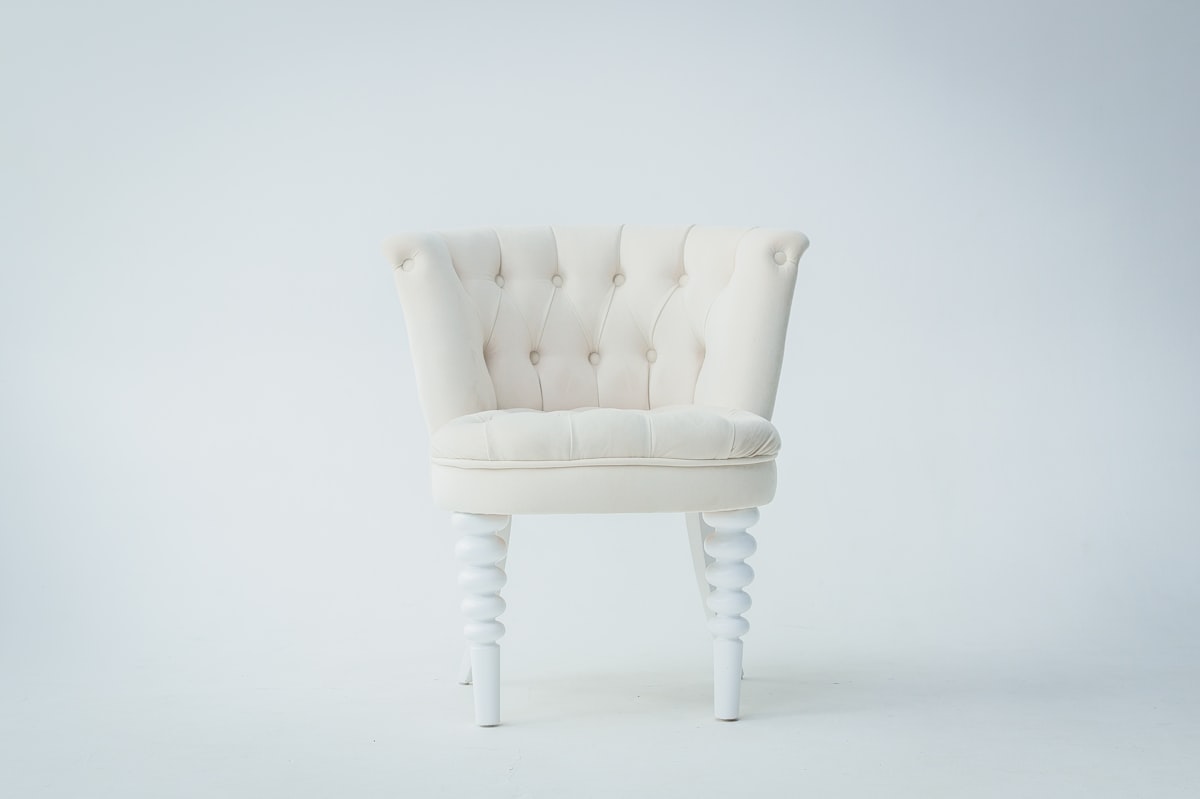
A luxury furniture showroom in Munich received 60 custom dining chairs from a Foshan supplier. The contracted finish was “antique walnut” velvet with a brass leg. On arrival, 23 of the 60 chairs had noticeably different fabric saturation — darker patches visible in directional light — due to inconsistent fabric cutting direction in mass production.
Negotiation for remedy: The showroom owner sent documented photo evidence within 24 hours of container opening. Rather than threatening legal action immediately, the team approached the factory with a specific, measurable complaint: “23 of 60 units fail the approved sample standard on fabric shading. We request replacement fabric panels for re-upholstery locally, plus a $1,200 credit against our next order for local labor cost.”
Factory response: The factory accepted responsibility (their production record showed the fabric roll direction had not been specified on the cutting order). They shipped replacement fabric panels by air (at their cost, $340) and agreed to the $1,200 credit. The showroom owner had the chairs re-covered locally in 4 days — in time for a scheduled client event — and placed a repeat order with the factory two months later, now with explicit fabric direction noted on every cutting order.
Key Takeaways from This Playbook
Effective negotiation with Chinese furniture manufacturers is not about driving the hardest possible price. It is about building a structured relationship in which both parties have clear expectations, documented commitments, and a shared interest in long-term success. The buyers who consistently get the best pricing, the fastest production slots, and the most transparent quality communication are not the most aggressive negotiators — they are the most prepared ones.
Three principles drive every successful negotiation in this guide:
- Specificity beats vagueness. The buyer with a detailed specification sheet, a 12-month volume projection, and a documented BATNA will always outperform the buyer who opens with “can you do better on price?”
- Relationship investment has a measurable ROI. The 18% price reduction in Case Study 1 was not achieved through aggression — it was built over three orders and one factory visit. The investment in relationship compound over time.
- Documentation is protection. Every agreement — on price, quality, timeline, payment, or remedy — must exist in writing. Verbal confirmations over WeChat are not enforceable. Written purchase orders and supply agreements are.
First Steps to Implement These Strategies
- Download or build your specification sheet template this week — before your next supplier conversation
- Verify your top 2–3 suppliers on GSXT to confirm registration and business scope
- Calculate your landed cost (not just FOB) for your current top-selling imported products
- Identify your BATNA for each product category — who is your backup supplier?
- Add an annual price review clause and inspection rights clause to your next purchase order
- Book a factory visit for your highest-volume supplier in the next 90 days
Measuring Success and Continuous Improvement
Track these metrics quarterly: (1) unit price vs. opening quote — target minimum 8% negotiated discount; (2) on-time delivery rate — target 90%+; (3) defect rate per PSI — target below AQL 2.5; (4) response time to commercial and technical queries — target same business day. Review them in your quarterly supplier call and share the results transparently. The factories that want to improve will use the data. The ones that don’t will tell you what you need to know about the relationship.
🚀 Ready to Negotiate Like a Pro?
Explore Jade Ant furniture’s full range of custom and luxury furniture manufacturing options — or get in touch with our team to discuss your next project requirements, specification review, or supplier vetting process.
📩 Contact Jade Ant FurniturePreguntas frecuentes
GEO-optimized answers for furniture distributors, interior designers, showroom owners, and hotel procurement teams sourcing directly from Chinese manufacturers.