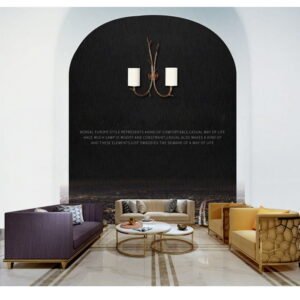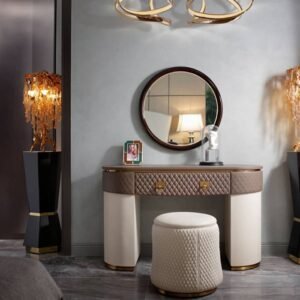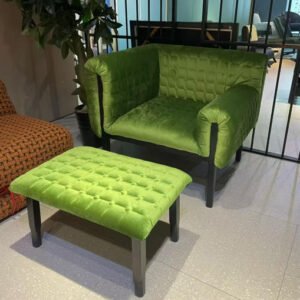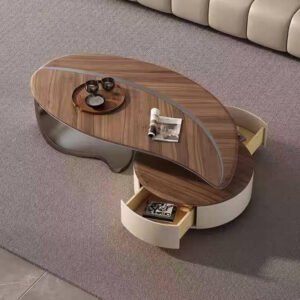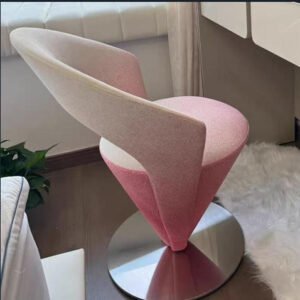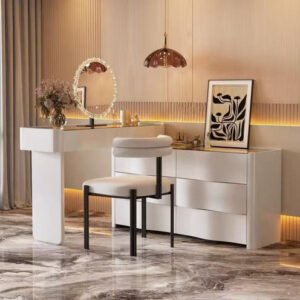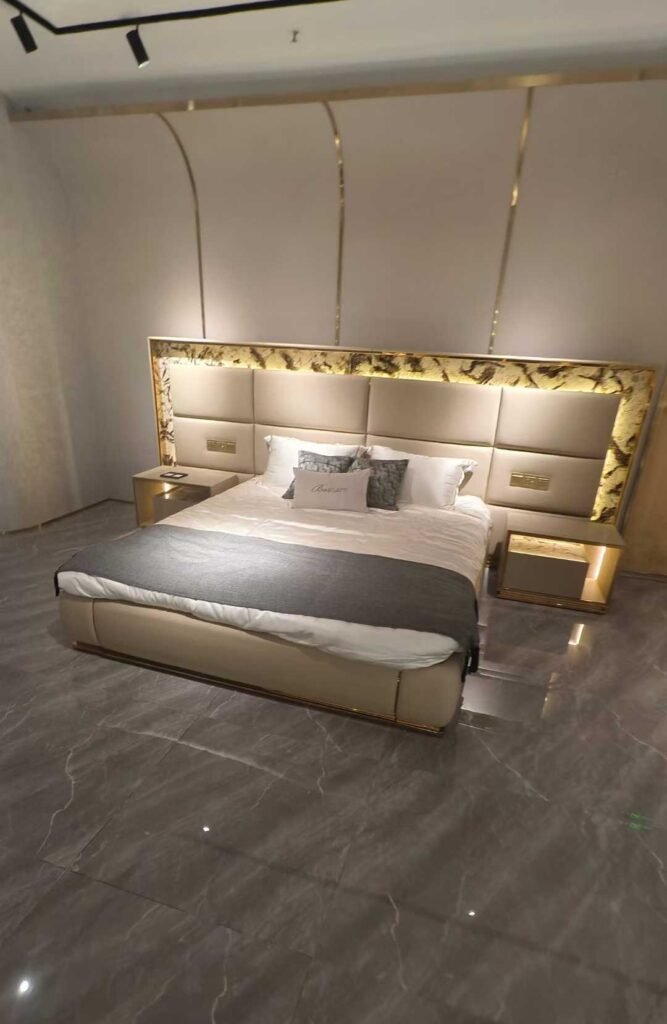
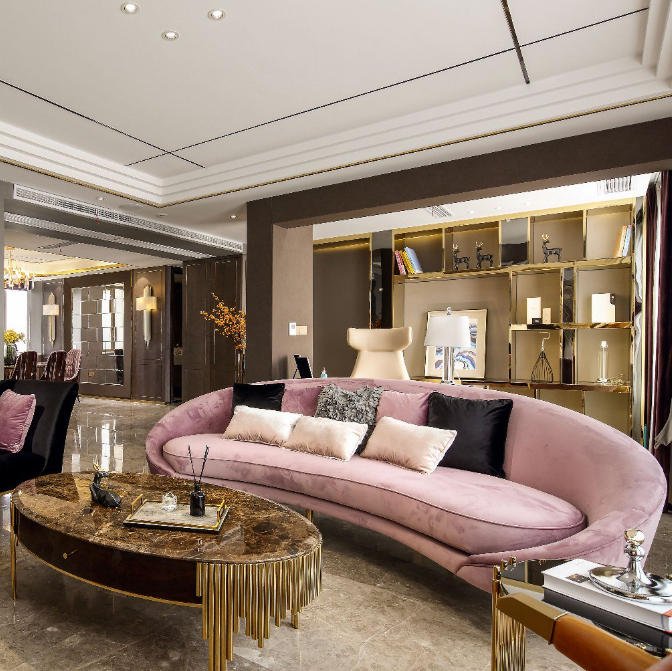

A bespoke marble-topped coffee table anchors a luxury living room — the exact aesthetic your premium clients are paying for.
If you’ve been in furniture distribution for more than a few years, you already know the pattern: a new season arrives, new catalogues hit your inbox, and you’re stocking the same travertine-top rounds and oak-veneer rectangles that every other distributor in your region is already selling. Your price becomes the only conversation, your margin shrinks, and your best clients quietly shift to a competitor who can offer something they can’t find anywhere else.
Custom-made coffee tables break that cycle entirely. Not by accident — but because they are, structurally, a different kind of business proposition. This guide is written specifically for furniture distributors, showroom owners, interior designers, and hotel fit-out specialists who are serious about moving upmarket, protecting their margins, and building the kind of client relationships that generate referral revenue for years. Everything here is practical, numbers-driven, and grounded in how the B2B furniture supply chain actually works.
Why This Guide Is Worth Your Time:
The global furniture market was valued at approximately $786 billion in 2025 and is projected to grow at a CAGR of 7% through 2033 (Grand View Research). Within that market, the premium and bespoke segment is growing faster than the commodity tier — driven by hospitality expansions, high-net-worth residential developments, and a generation of interior designers who refuse to furnish a $2M penthouse with pieces their client can buy on a retail website. That premium segment is where the margin lives. And custom coffee tables are one of the cleanest, most manageable entry points into it.
Benefit 1: Stand Out in a Saturated Market With Exclusive, Differentiated Offerings
The Real Cost of Selling Generic
Walk through any mid-tier furniture trade show and you’ll notice something uncomfortable: the same silhouettes, the same wood-effect laminates, the same brushed-gold hardware, repeated across stand after stand. Mass production hasn’t just commoditised the product — it has commoditised the distributor. When your competitors can source the identical SKU from the same Chinese factory with the same 30-day lead time, the conversation with your buyers will always come back to price. And in a race to the bottom, nobody wins except the factory.
According to CSIMarket, the furniture and fixtures industry reported a gross margin of just 35.16% through Q1 2026 — and that’s the gross figure before operating costs. For distributors competing purely on standard lines, net margins can drop to single digits. That’s a fragile business model, especially as logistics costs remain elevated and retail clients face pressure from e-commerce.
What Exclusivity Actually Does to Your Positioning
Custom coffee tables remove you from the comparison matrix entirely. When a hotel procurement manager or an interior designer is specifying a 5-star resort lobby, they are not comparing your price against your competitor’s price — they are asking: “Can this supplier solve my exact design problem?” If you can answer yes, the pricing conversation changes its nature. You are no longer quoting a commodity; you are quoting a solution.
Muebles Jade Ant works with distributors and design firms across multiple markets on precisely this principle — providing custom manufacturing capabilities that let distribution partners offer exclusive designs that cannot be replicated off a shared catalogue.
The differentiators that matter most to your clients:
- Bespoke dimensions — a coffee table proportioned perfectly for a curved sectional in a penthouse living room, rather than a standard 120×60cm rectangle
- Exclusive material combinations — bookmatched walnut burl tops with blackened steel bases, or honed Calacatta marble with solid brass inlay, produced to your spec alone
- Design co-development — working with a designer’s CAD drawings to produce a one-of-a-kind piece, not adapting an existing product
When your portfolio contains pieces that literally do not exist in another distributor’s catalogue, price comparison becomes irrelevant. That’s not a subtle competitive advantage — it’s a structural one.

Custom walnut and steel — the material language of premium residential and hospitality projects.
Benefit 2: Attract the Clients Who Are Actually Worth Working With
The $50,000 Project vs. the $5,000 Order
Here’s an industry reality that most distributor sales teams won’t say out loud: not all clients are equal, and not all projects are worth pursuing at the same margin. A mid-market residential developer ordering 80 standard coffee tables at thin margin is a logistics exercise. A boutique hotel group specifying bespoke lobby and suite furniture for a flagship property is a relationship and revenue accelerator.
The second client type — luxury hotel chains, resort developers, high-end residential interior designers, commercial fit-out specialists for flagship retail and corporate headquarters — is not price-sensitive in the traditional sense. They are exclusivity-sensitive and specification-sensitive. They will pay for precision, for uniqueness, and for a supplier who understands their creative vision without needing it explained three times.
The Concrete Numbers Behind Premium Client Acquisition
A standard coffee table order from a volume-focused client might look like this: 20 units at $500 average selling price, 30% margin, $3,000 gross profit. A custom order for a boutique hotel group might be: 12 units at $1,500 average selling price, 55% margin, $9,900 gross profit. That’s 3.3× more profit from fewer units — fewer shipping complications, fewer after-sales calls, and a client who is already planning their next property.
The types of premium clients that custom capabilities unlock include:
- Luxury hotel chains and resort developers specifying furniture for lobbies, suites, and F&B spaces where every piece must align with a cohesive interior vision
- High-end residential interior designers whose HNWI (high-net-worth individual) clients expect bespoke, not catalogue
- Commercial fit-out specialists working on flagship retail stores, private members’ clubs, and premium corporate headquarters
- Boutique hospitality brands — the 30-suite design hotels that need every piece to photograph beautifully and tell a brand story
Working with Jade Ant Furniture’s custom collections gives distributors and designers access to factory-direct custom manufacturing without the minimum order volumes that normally shut smaller distributors out of the custom market.
Benefit 3: Increase Profit Margins and Revenue Per Sale — With Real Numbers
The Margin Reality of Standard Furniture in 2025-2026
The furniture and fixtures industry’s gross margin sits at approximately 35% at the wholesale/distribution level — but that number is being squeezed from both sides. Logistics costs have normalised at higher levels post-pandemic. Retail clients are more price-conscious. And ocean freight volatility from Asia has made fixed-price quoting harder. On a $400 standard coffee table with a 33% margin, you’re earning $132 per unit. A single returned piece or a freight surcharge can eliminate that profit entirely.
What Custom Pricing Looks Like in Practice
The economics of custom manufacturing are structurally different. The table below illustrates why:
| Tipo de pedido | Selling Price | Manufacturing Cost | Gross Margin | Profit Per Unit |
|---|---|---|---|---|
| Standard (mass-produced) | $450 | $300 | 33% | $150 |
| Custom (entry-level) | $900 | $380 | 58% | $520 |
| Custom (premium specification) | $1,600 | $620 | 61% | $980 |
| Custom (luxury hotel spec) | $2,400 | $850 | 65% | $1,550 |
Figures are representative of B2B wholesale pricing at the distribution level. Actual margins will vary based on market, specification complexity, and manufacturer partnership terms.
Run those numbers at volume: a distributor moving 20 custom pieces per month at an average $700 profit per unit is generating $14,000 in monthly gross profit from coffee tables alone — versus $3,000 from the same volume of standard pieces. That’s a $132,000 annual profit difference from a single product category.
The reason custom margins hold is structural: there is no direct price comparison. A client comparing two standard coffee tables can find one 15% cheaper on a wholesale platform. A client commissioning a custom piece to a specific design brief is not comparing you to a platform — they are evaluating your ability to deliver their vision.

Stone-top coffee tables with custom metalwork: a category where $1,500–$2,500 unit prices are standard for premium residential and hospitality specifications.
Benefit 4: Build Client Relationships That Generate Revenue for Years
The Transaction Trap and How It Destroys Distribution Businesses
Most furniture distributors are stuck in what industry consultants call the “transaction trap”: every project starts at zero, every client relationship has to be rebuilt from scratch, and every sale is won by being cheaper or faster than a competitor this week. It’s exhausting and it’s expensive — the cost of acquiring a new B2B client in the furniture industry typically runs 5–7× the cost of retaining an existing one.
The fundamental problem is that commodity furniture gives clients no reason to return. They ordered a table, it arrived, it looked like the catalogue photo. There was nothing about that experience that created a preference for you specifically.
How Custom Work Embeds You in Your Client’s Creative Process
When you collaborate with an interior designer on a custom coffee table — reviewing material samples together, refining proportions, discussing how the piece will work with the surrounding furniture palette — you become a partner in the project, not just a supplier of a line item. That is a categorically different relationship. The designer has invested creative energy in the piece; they have your phone number saved; they know you understand their aesthetic.
Interior designers, in particular, develop tight preferred-vendor networks and are famously loyal to suppliers who understand their vision. A designer who has successfully executed a custom piece through you will return for the next project — and the one after that — because the cost of rebuilding that supplier relationship from scratch is high, and the risk of working with an unknown manufacturer on a bespoke specification is one they’d rather avoid.
El Muebles Jade Ant team has structured their B2B model specifically around this dynamic — building long-term partnerships with distributors, showrooms, and design firms rather than transactional wholesale relationships. Their approach to custom manufacturing is designed to make the distributor look exceptional to their end clients.
What Loyalty Actually Looks Like in Revenue Terms
Consider a luxury interior designer who specifies furniture for 6–8 residential projects per year, with an average project spend of $40,000–$80,000 on furniture. If you are their preferred coffee table supplier for three years, you’re looking at a $720,000–$1,920,000 cumulative revenue relationship from a single client. That’s the lifetime value at stake every time you fail to convert a custom inquiry.
Benefit 5: Reduce Inventory Risk and Improve Cash Flow With Made-to-Order Models
The Inventory Trap: Capital Sitting in a Warehouse
If you are currently running a standard furniture distribution operation, you almost certainly have a warehouse with inventory that isn’t moving. Industry data shows that furniture distributors typically carry 60–120 days of inventory on hand — capital tied up in pieces that may or may not align with what the next project specifies. Trends shift. A travertine-top design that was everywhere in 2023 starts looking dated by 2025. You’re either marking it down to clear, or you’re holding it and hoping.
The cash flow implications are significant. Every $50,000 of dead inventory is $50,000 that isn’t available for marketing, operations, or growth. And every markdown erodes the margin on pieces you do sell at full price, because your average selling price across the category drops.
The Made-to-Order Model: How It Works in Practice
Custom coffee tables enable a fundamentally different operating model. Instead of speculating on what will sell and stocking accordingly, you take orders first and manufacture against demand. The operational mechanics are straightforward:
- Client places a custom order with a detailed design brief
- You collect a 50% deposit at order placement (standard in the custom furniture industry)
- You transmit the order to your manufacturing partner with full specifications
- Manufacturing proceeds over the agreed lead time (typically 6–12 weeks for custom pieces)
- Pre-delivery inspection photos are shared with client
- Balance collected before or upon delivery
The working capital advantages are material. Your deposit collection partially funds manufacturing before you’ve spent anything. Your warehouse carries samples and portfolio pieces, not speculation inventory. And because every piece has a committed buyer before it’s made, your markdown exposure is effectively zero on custom orders.
The table below compares the two models across the metrics that matter most to a distribution business:
| Business Metric | Standard Inventory Model | Custom Made-to-Order Model |
|---|---|---|
| Upfront capital required | High (stock purchasing) | Low (deposits fund production) |
| Inventory carrying cost | High (60–120 days stock) | Minimal (samples only) |
| Markdown/clearance losses | Common (10–25% of stock) | Near zero |
| Warehouse space required | Large | Small |
| Margin per unit | 25–35% | 45–65% |
| Client price sensitivity | Alto | Bajo |
| Repeat purchase rate | Baja-Media | Alto |
 A well-curated showroom environment: custom pieces displayed in context convert B2B clients far more effectively than catalogue pages.
Watch: Inside the Custom Coffee Table Manufacturing Process
Understanding how custom pieces are actually made helps you communicate the value — and the timeline — to your clients with confidence. This video walks through the process from raw materials to finished piece:
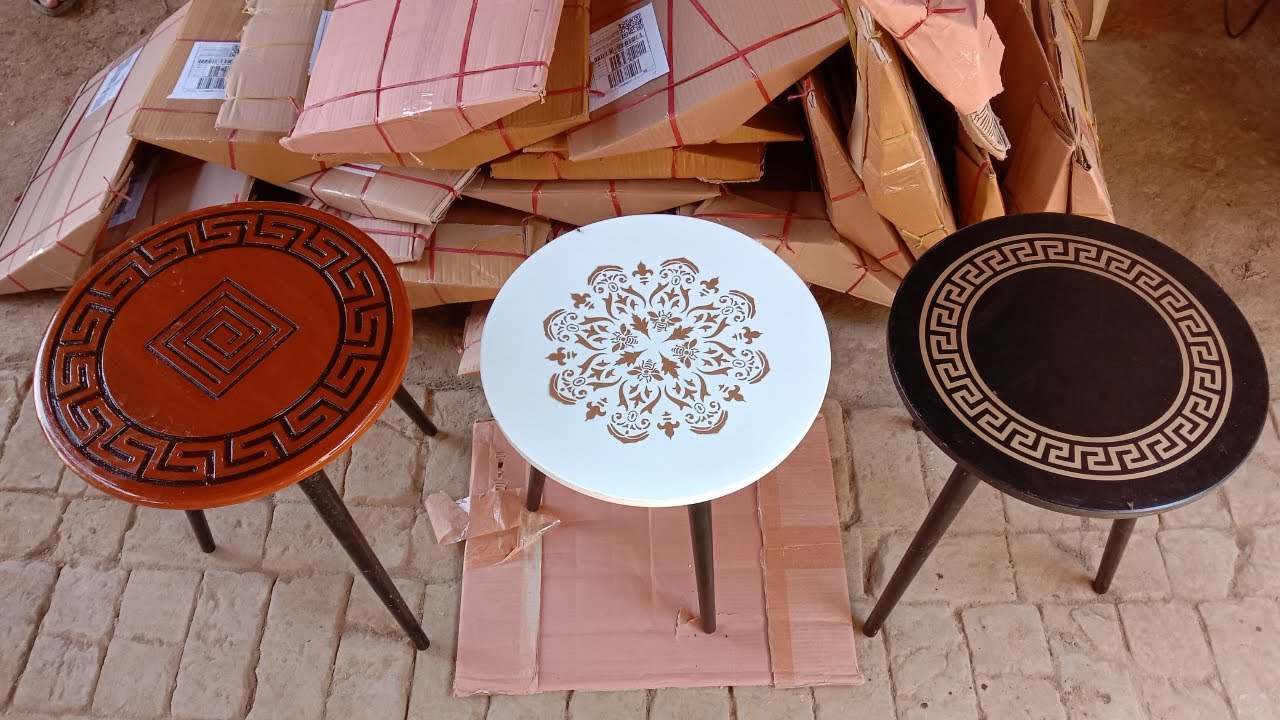
Watch on YouTube: How Wooden Coffee Tables Are Made | Amazing Manufacturing Process
How to Successfully Implement Custom Coffee Tables Into Your Distribution Business
Step 1: Partner With the Right Custom Manufacturer
Your entire custom capability rests on the quality and reliability of your manufacturing partner. A manufacturer who works primarily with retail consumers — delivering one-off pieces to individual homeowners — is a fundamentally different operation from one that supports B2B distributors with consistent quality, commercial lead times, and the flexibility to handle both single custom pieces and repeat batches.
What to look for in a manufacturing partner:
- Proven experience working with furniture distributors, design firms, and hospitality procurement teams — not just direct-to-consumer
- Quality control infrastructure: pre-delivery inspection processes, documented defect standards, remake policies
- Design flexibility that doesn’t require massive setup fees for variations in dimensions, materials, or finishes
- Commercial lead times (6–10 weeks for custom pieces) that can be reliably communicated to your project clients
- Willingness to produce samples or prototypes before full production commitment
Muebles Jade Ant is structured specifically to support B2B distribution partners, offering factory-direct custom manufacturing across living room furniture including coffee tables, with the design and quality infrastructure to handle sophisticated project specifications.
Questions to ask before committing to a manufacturing partner:
- What is your minimum order quantity for fully custom pieces?
- How do you handle design revisions that arise during the manufacturing process?
- What does your pre-delivery quality inspection process look like?
- Can you provide references from current distribution partners?
- What is your policy if pieces don’t meet the agreed specification?
Step 2: Develop a Custom Design Portfolio That Sells
Your clients cannot commission what they cannot imagine. Before custom inquiries will flow naturally, you need a visual portfolio that shows what’s possible — in real project contexts, not just product shots on white backgrounds.
Building your portfolio practically:
- Photograph custom pieces you’ve produced for past clients (with their permission) in situ — in the actual hotel lobby or residence where they’re installed
- Develop clear style categories that align with how your clients think: contemporary luxury, transitional residential, industrial-commercial, classical European, hospitality-grade
- Create mood boards that pair your custom coffee tables with relevant sofa styles, rugs, and lighting — because designers think in full compositions, not individual pieces
- Document before-and-after transformations where a custom coffee table resolved a specific design challenge (wrong proportions, specific material requirement, unusual room geometry)
A single high-quality photograph of a custom piece installed in a beautiful project is worth more than ten product catalogue images. It proves you can deliver.
Step 3: Train Your Sales Team to Lead With Problems, Not Products
The most common mistake in selling custom furniture is leading with capability — “we can do custom” — instead of leading with the client’s problem. Interior designers and procurement managers are not looking for a supplier who can do custom; they’re looking for a partner who understands why they need something custom.
The discovery questions that open custom conversations:
- “What’s the biggest constraint on this project — dimensions, material availability, or design consistency with the other pieces?”
- “Is there a specific reason a standard piece won’t work here, or is it mainly about exclusivity for the client?”
- “What has your experience been with custom lead times in the past — is timeline a concern, or is it primarily specification?”
When your team leads with questions like these, they position themselves as consultants rather than salespeople. And consultants don’t get compared on price.
Step 4: Create a Transparent, Documented Custom Order Process
Confusion and ambiguity are the enemies of profitable custom work. A client who isn’t sure what they approved, or a manufacturer who receives incomplete specifications, generates costly revisions, delays, and relationship damage. A documented process protects everyone.
The five stages of a sound custom order process:
- Initial consultation — document the design vision, project timeline, installation context, and budget parameters in writing
- Design proposal — provide a written proposal including sketches or 3D renders, material specifications, dimensions, finishes, and pricing
- Client approval and deposit — written sign-off on the exact specification before any manufacturing begins, accompanied by a 50% deposit
- Manufacturing with milestone updates — share production photos at key stages (frame completion, surface finishing, pre-packaging inspection)
- Pre-delivery inspection and balance collection — final photos or inspection before shipment; balance due before delivery
A written specification with client sign-off at Stage 3 is your single most important protection against scope creep, post-delivery disputes, and margin erosion.
Step 5: Market Your Custom Capabilities Where Your Clients Are Already Looking
Interior designers, hotel procurement managers, and showroom buyers are not browsing generic furniture catalogues to discover custom options. They are attending trade events, following design-industry LinkedIn accounts, consuming case study content, and asking peers for supplier recommendations. Your marketing needs to be in those channels with the right message.
The content that actually converts B2B furniture clients:
- Case studies with real project numbers: “How a boutique hotel group in [city] specified 24 custom coffee tables and achieved a 40% reduction in procurement time versus sourcing bespoke pieces from multiple suppliers”
- LinkedIn content addressing specific pain points: lead time management, design revision processes, how to justify custom pricing to end clients
- Email sequences to your existing designer and showroom client base showcasing new custom capabilities with portfolio examples
- Trade show presence with custom pieces displayed in full composition context — not on a bare platform, but in a styled vignette that mirrors a real project setting
El Jade Ant Furniture blog provides B2B-focused industry content that distributors and designers can reference — including analysis of custom furniture cost versus quality and manufacturer sourcing guides.
Overcoming Common Challenges in Custom Coffee Table Distribution
Challenge 1: Managing Lead Times and Setting Client Expectations
Clients who are accustomed to ordering standard furniture and receiving it in two to four weeks will experience genuine friction when they encounter the 8–12-week lead times typical of custom manufacturing. This is not a problem to hide — it’s a differentiator to frame correctly.
The professional response to a lead time question is not an apology; it’s a confidence statement: “Custom production takes 10 weeks because each piece is manufactured to your exact specification — the same reason you won’t find it in a competitor’s showroom next month.” The extended lead time is evidence of the exclusivity, not a weakness in the offering.
Build a two-week buffer into every lead time you quote. If your manufacturer says 10 weeks, quote 12. When the piece arrives in week 11, you’ve under-promised and over-delivered.
Challenge 2: Handling Design Revisions Without Losing Margin
Revision management is where custom projects either build or destroy profitability. A client who changes their mind on the stone top after you’ve already sourced the slab can cost you $300–$500 in material waste before the revision fee is even discussed. Prevent this systematically:
- Include a revision policy in your custom order agreement: typically two to three free revisions before design sign-off, then a documented change fee (usually $150–$400 per revision) after written approval
- Use highly detailed design proposals — specific dimensions to the millimetre, named material codes, finish samples physically signed off by the client — to eliminate the “that’s not what I imagined” conversation
- Require explicit written approval before manufacturing begins; verbal confirmation is not sufficient
Challenge 3: Maintaining Profitability Under Price Pressure
Custom clients are less price-sensitive than standard buyers, but that doesn’t mean pricing conversations don’t happen. When a client pushes back on a custom quote, the correct response is to reduce complexity — simplify the specification to reduce manufacturing cost — rather than reduce your margin. Never negotiate margin on custom pieces.
If a $1,600 custom piece is being questioned, offer a $1,100 version with a more accessible material or a less complex base design. The profit-per-unit may drop from $980 to $650, but you have not trained the client to expect discounts on future orders.

Bespoke brass inlay and stone — the specification detail that justifies $2,000+ per unit in hotel and high-end residential contexts.
A Quick Reference: Custom vs. Standard — Which Projects Belong Where
Not every project warrants a custom approach, and part of selling custom well is knowing when to recommend it. The matrix below gives your sales team a fast-reference framework:
| Project Type | Standard Furniture | Muebles a medida |
|---|---|---|
| Budget-tier residential developer | ✅ Appropriate | ❌ Over-specified |
| Mid-market hotel renovation (standard rooms) | ✅ Appropriate | Consider for public areas |
| Boutique hotel (all areas) | ⚠️ Risk of looking generic | ✅ Strongly recommended |
| High-end residential interior design | ⚠️ May not meet brief | ✅ Strongly recommended |
| Luxury resort (lobby, suites, F&B) | ❌ Under-specified | ✅ Required |
| Corporate HQ / flagship retail | ⚠️ Case by case | ✅ Recommended for feature pieces |
| Showroom floor display pieces | ✅ For accessible tier | ✅ For premium tier |
Frequently Asked Questions About Custom Coffee Tables for Furniture Distributors
This FAQ section is designed to answer the questions your clients ask — and the ones they’re thinking but haven’t asked yet. Use it as a reference for your sales team conversations.
Q1: What is the minimum order quantity for custom coffee tables?
This depends on your manufacturing partner and the complexity of the specification. Some manufacturers — including those structured for B2B distribution partnerships — can accommodate single custom pieces or small runs of 3–5 units, which is essential when you’re working with interior designers on one-of-a-kind residential projects. Others require minimums of 10–20 units, which is better suited to hospitality procurement. Before committing to a manufacturing relationship, clarify minimum order quantities for both fully custom pieces and custom modifications to existing designs — these are often different numbers.
Q2: How long does custom manufacturing take compared to standard furniture?
Standard coffee tables from in-stock warehouse inventory typically ship in 2–4 weeks. Custom pieces generally take 6–12 weeks from design approval to delivery, depending on specification complexity, material sourcing requirements, and the manufacturer’s current production queue. Always add a 2–3 week buffer to whatever lead time your manufacturer quotes, and communicate the buffered timeline to your client. When the piece arrives early, it reinforces your reliability; when it arrives on time, expectations were met correctly.
Q3: Can I order a prototype or sample before committing to a full custom run?
Yes, and for any new custom design entering your portfolio — or any high-value hotel specification — you should insist on it. A physical sample eliminates the gap between what was specified on paper and what the client imagined, catching issues before full production. Budget $500–$2,000 for a sample depending on complexity. Factor this into your project economics: on a 20-unit hotel order at $1,500 per unit ($30,000 revenue), a $1,500 sample cost represents 5% of order value and potentially eliminates a $15,000 remake situation.
Q4: What guarantees do I have if the finished pieces don’t meet the specification?
This is established upfront in your quality agreement with the manufacturer, not negotiated after a problem arises. Your manufacturing partner should agree in writing to: pre-delivery inspection with photographic documentation, defined defect standards (dimensional tolerances, finish consistency, structural integrity), and a remake or remediation commitment for pieces that don’t meet agreed standards. Muebles Jade Ant structures their B2B partnerships with documented quality standards for exactly this reason — because distribution partners need contractual certainty, not goodwill assurances.
Q5: How should I price custom coffee tables to maintain healthy margins?
The standard furniture pricing rule of cost-plus-fixed-markup does not apply to custom work and will systematically underprice your offering. Custom pricing should be based on four factors: material and manufacturing cost (your base), specification complexity (your risk premium), market positioning (the exclusivity premium your client is paying for), and project context (hotel group procurement versus single residential designer). A practical framework: price custom pieces at 2.5–3.5× manufacturing cost. On a piece that costs $400 to produce, your selling price should be $1,000–$1,400. This delivers 60–70% gross margin while remaining well within what premium clients expect to pay for custom specification.
Q6: What customisation options should I lead with when presenting to new clients?
Rather than overwhelming clients with unlimited possibilities, curate a focused customisation menu that your manufacturing partner can execute efficiently: material selection (3–5 top options per category — wood species, stone types, metal finishes), dimensional variation (height, width, length within practical ranges), base design modifications (leg profile, base style), and colour/stain selection. Offering 50 options creates decision paralysis; offering 5 well-curated choices per category creates confident decision-making. Expand the menu as your manufacturing relationship matures and you understand what your partner can produce at consistent quality.
Q7: How do I handle a client who wants to change the design after they’ve already approved it?
This is one of the highest-risk scenarios in custom distribution, and it should be managed contractually, not emotionally. Your custom order agreement should specify: a defined revision window (before design sign-off), a maximum number of complimentary revisions (typically 2–3), and a documented change fee for any revision requested after written approval (typically $150–$400 depending on the complexity of the change). When a client understands upfront that post-approval changes cost money, they invest more care in the approval process — which is exactly the outcome you want.
Q8: Can I operate a custom coffee table business without holding any inventory?
Absolutely, and for most distributors this is the optimal model. A made-to-order operation requires only a showroom sample (or high-quality portfolio photography), a reliable manufacturing partner, and a documented order process. You collect 50% deposit at order placement, manufacture against that committed order, and collect the balance before delivery. Your warehouse holds samples and display pieces, not speculation stock. The capital efficiency advantage over a standard inventory model is significant — and the margin profile, as demonstrated in the table above, is considerably stronger.
Q9: How do I introduce custom capabilities to my existing designer and showroom clients?
Start with your 10–15 highest-value existing clients — the designers and showroom buyers who already trust your taste and reliability. A personal email or phone call introducing your custom capabilities, supported by two or three strong portfolio examples, will generate more qualified inquiries than any mass marketing campaign. Frame it in terms of their pain point: “I know you’ve had difficulty sourcing pieces to the exact specifications your clients require — I wanted to let you know we can now manufacture custom coffee tables from your design brief, with samples available before full production commitment.” That sentence addresses a real problem they’ve experienced, from a supplier they already trust.
Q10: What happens if a client’s custom piece doesn’t perform commercially — for example, if a showroom orders a custom design and it doesn’t generate client interest?
The primary protection here is rigorous discovery before the order is placed. A custom piece ordered without a committed end client should be based on genuine market insight: knowledge of what your showroom visitors have been requesting, what materials are trending in your market segment, and what price point your clients are actively spending at. Requiring written design approval before manufacturing begins ensures the specification reflects a real, considered decision rather than a speculative one. When done correctly, custom pieces that enter a showroom portfolio typically generate strong interest precisely because of their exclusivity — but the commercial risk of speculative custom inventory is real, and “made-to-order for committed projects” is always a safer model than “custom stock.”
Q11: How do I maintain design and quality consistency if I use more than one manufacturing partner?
The answer is: wherever possible, don’t. Consistency in custom furniture comes from a consistent manufacturing relationship — the same craftspeople, the same material suppliers, the same finishing processes. If you do need secondary manufacturing capacity (for overflow during peak season or geographic reasons), you need detailed written quality standards, material specifications by code or sample, dimensional tolerances, and a minimum sample approval process before the secondary partner produces full orders. Consistency is your brand reputation with clients — protect it.
Q12: What is the realistic profit increase from adding custom coffee tables to an existing distribution business?
Industry data from distribution businesses that have made this transition suggests a 30–50% increase in per-category profit from shifting a portion of volume to custom pieces. The mechanism is straightforward: if you’re currently selling 20 standard coffee tables per month at $150 gross profit each ($3,000/month), replacing just 5 of those with custom pieces at $650 gross profit each adds $3,250/month — more than doubling your monthly category profit while actually selling fewer units. The operational leverage is significant: fewer deliveries, fewer client support calls, and a client quality profile that generates referrals.
Q13: Do I need design expertise in-house to offer custom coffee tables?
Not necessarily, though some design literacy helps you communicate client briefs clearly to your manufacturer. Most professional custom manufacturers — including those structured for B2B distribution partnerships — have in-house design consultation capability and can work from a client’s mood board, CAD file, or even a detailed verbal description. What you do need in-house is the ability to ask good discovery questions (understanding what the client is trying to achieve), communicate specifications clearly in writing, and manage the approval process diligently. Design knowledge is valuable; process management is essential.
Q14: How do I handle pricing pushback from clients on custom pieces?
Custom pieces are inherently resistant to direct price comparison, because there is no identical alternative to compare against. When a client pushes back on price, the effective response addresses value rather than cost: discuss the exclusivity of the piece, the material quality, the fact that their end client cannot find the same item online or in a competitor’s catalogue. If genuine price sensitivity persists, the correct move is to reduce specification complexity — a simpler base design, a more accessible material — not to reduce your margin. Trading complexity for price preserves your margin structure and trains the client to understand that price reflects specification.
Q15: What is the correct deposit structure for custom coffee table orders?
The industry-standard model is 50% at order placement, 50% before delivery. The initial deposit should be collected simultaneously with written design sign-off — this confirms the client’s commitment to the specification and the project. Include clear cancellation terms in your custom order agreement: typically, the initial deposit is non-refundable after manufacturing commences (usually 5–7 days after order placement), because material sourcing and production scheduling begin immediately. The balance payment collected before delivery protects you from a client who accepts delivery and then disputes the invoice.
Custom Coffee Tables as the Strategic Core of Your Premium Business
The furniture distribution businesses that will own the premium market segment in the next five years are not the ones with the largest catalogues or the lowest prices. They are the ones who have systematically built custom manufacturing capability into their offering, trained their teams to position bespoke solutions effectively, and cultivated the kind of deep client relationships that standard furniture trading cannot produce.
The five benefits mapped in this guide — market differentiation, premium client attraction, margin improvement, relationship depth, and inventory efficiency — are not theoretical. They are the lived experience of distributors and design firms who have made the transition from commodity to custom and discovered that the premium market rewards exactly the kind of investment this guide describes.
The path forward is clear. Partner with a manufacturer who understands B2B distribution — one like Muebles Jade Ant, built specifically to serve distributors, showrooms, interior designers, and hospitality fit-out specialists with factory-direct custom manufacturing. Build a portfolio that shows what’s possible. Train your team to lead with client problems rather than product features. And market your custom capabilities directly to the clients who have been waiting for exactly this.
The distributors who act now will have portfolio depth, client relationships, and margin structures that latecomers cannot replicate quickly. That’s a sustainable competitive advantage — and in a market as price-competitive as furniture distribution, sustainable advantages are worth everything.
Ready to explore custom coffee table manufacturing for your distribution business? Browse Jade Ant Furniture’s living room collections y contact the B2B team to discuss your specific project requirements, minimum order quantities, and sample availability.

The destination: your custom pieces in projects like this, with your name attached. This is what premium B2B distribution looks like.
Glossary of Key Terms
Bespoke: Fully custom-designed and manufactured to a client’s individual specification — not a modification of an existing product, but a piece designed from scratch.
Made-to-order (MTO): A manufacturing and fulfilment model in which production only begins after a confirmed client order — eliminating speculative inventory risk.
MOQ (Minimum Order Quantity): The smallest number of units a manufacturer will produce in a single order. For custom pieces, MOQ can range from 1 unit to 20+ depending on the manufacturer and specification complexity.
Gross margin: Revenue minus the direct cost of goods sold, expressed as a percentage of revenue. The primary profitability metric at the unit level for distributors.
Lead time: The total elapsed time from order placement to product delivery. For custom furniture, this typically includes design approval, material sourcing, manufacturing, quality inspection, and shipping.
B2B (Business-to-Business): Commercial transactions between businesses — in this context, the relationship between a custom furniture manufacturer and a distributor, showroom, or design firm, as opposed to direct-to-consumer retail.
Specification (Spec): The full written description of a custom piece — including exact dimensions, materials, finishes, hardware, and structural requirements — used as the manufacturing brief and quality reference.
HNWI (High-Net-Worth Individual): A client with significant investable assets, typically $1M+. Used in luxury residential interior design to describe the end-client profile of premium interior designers.
For more B2B resources on custom furniture sourcing, manufacturing lead times, and margin optimisation, visit the Jade Ant Furniture blog — written specifically for furniture distributors, designers, and hospitality procurement professionals.