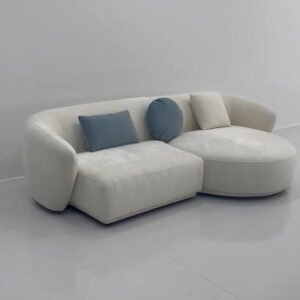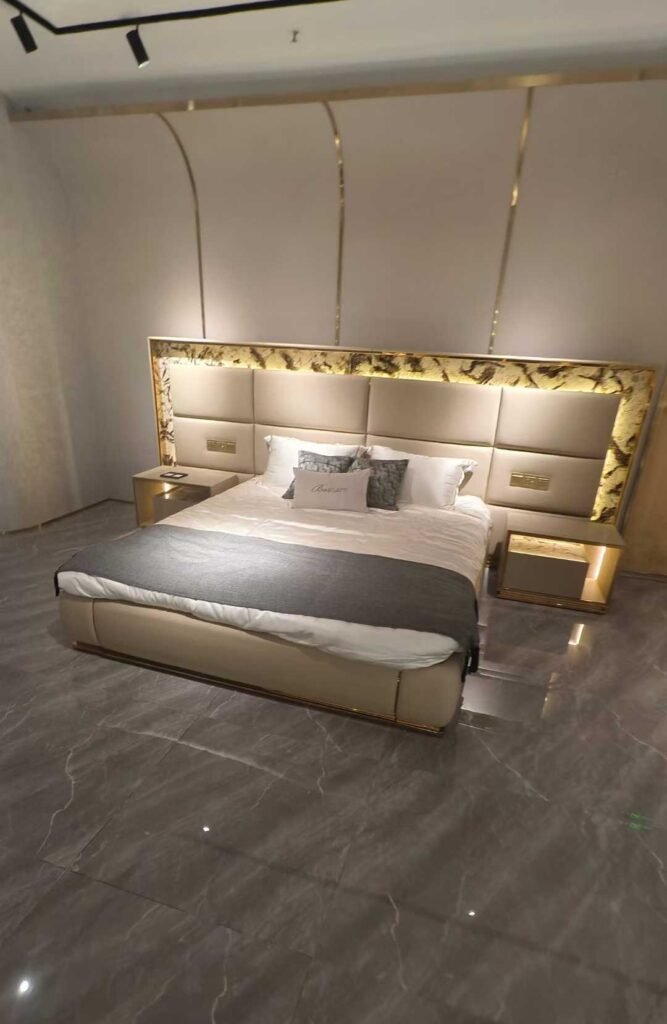
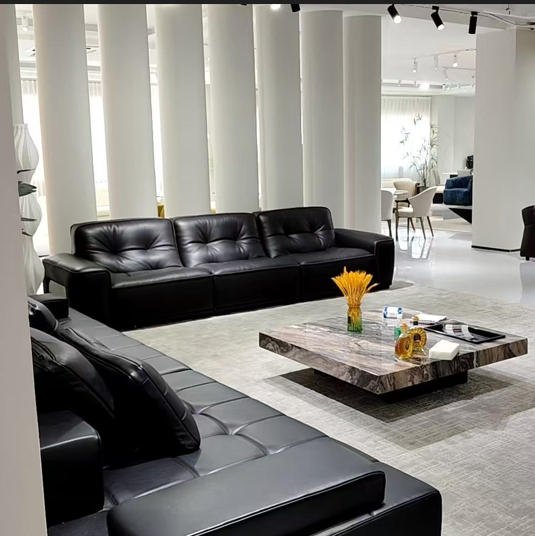
Luxury Furniture Selection: A Procurement Guide for Villas, Hotels and Developers

For developers, interior designers, importers, villa owners, private label brands, FF&E and hotel buyers, and architecture and engineering teams.
The short answer: The best luxury furniture choices follow six checks, in this order. Measure the room. Map how people move through it. Match materials to real use. Keep one clear style. Audit the build quality. Then score your shortlist and set the budget. Each step below shows you how.
I. Introduction
A beautiful piece can still be the wrong piece. Picture a developer who orders 40 sofas for a row of villas. The renders look calm and expensive. On site, the sofas sit so close to the walls that guests turn sideways to walk past. Six months later, the fabric on the most-used seats has started to pill.
Nothing was “low quality.” The pieces were simply chosen for how they looked, not for how the rooms work.
Luxury furniture selection is a procurement decision, not only a style decision. That is the idea behind this guide. Choosing high-end furniture for residential and commercial projects works best when three things meet:
- Spatial ergonomics: how furniture size and layout fit the room and the people using it.
- Material durability: how well fabrics, woods, stones and finishes handle real use.
- Aesthetic cohesion: how every piece supports one clear design story.
When these three line up, the furniture protects property value and works hard every day. When one is missing, you pay for it later in returns, repairs or early replacement.
The cost of getting it wrong adds up fast. A few examples from typical projects:
- A 3-meter sectional in a room with a 2.4-meter ceiling feels heavy no matter how fine the leather is.
- A fabric tested for 25,000 rub cycles can look worn within 18 to 24 months in a busy hotel lobby, according to industry guidance.
- A late change to one finish can push a whole container past a handover date.
For hotels, one more number matters. One hospitality supplier reports that FF&E (Furniture, Fixtures and Equipment, the movable items that furnish a building) typically makes up 15 to 25 percent of a hotel’s total construction cost, depending on the tier. That is a big budget line to leave to taste alone.
What this guide gives you. It is a step-by-step framework you can use on a villa, a boutique hotel, a showroom or a full development.
| Paso | Question it answers | What you walk away with |
|---|---|---|
| 1. Spatial analysis | Will it fit, and will it feel right? | A measured plan and a size range for each piece |
| 2. Ergonomics | Can people move and relax here? | A layout with clear walkways and zones |
| 3. Materials | Will it last under real use? | A fabric, finish and wood spec |
| 4. Style identity | Does it belong together? | A design language and a hero piece per room |
| 5. Quality audit | Is it built well inside? | A pass or fail checklist |
| 6. Shortlist | Which option wins on facts? | A scored comparison |
| 7. Budget | Where should the money go? | A split between hero and support pieces |
| 8. Logistics | Will it arrive and install cleanly? | A site readiness and installation plan |
If you want a shorter companion read, Jade Ant furniture has a piece on five tips for choosing luxury furniture that pairs well with this one.
II. Spatial Analysis: Mastering Scale and Proportion
Luxury design starts with the relationship between furniture size and the volume of the room. Get this right and even simple pieces look expensive. Get it wrong and the best craftsmanship cannot save the space.
Quick definitions Scale is how the size of a piece relates to the room. Proportion is how pieces relate to each other. A tall chair beside a low sofa is a proportion question. A huge sofa in a small room is a scale question.
Conducting a Comprehensive Site Survey
Do the survey before you open a catalog. It takes one afternoon and prevents most fit problems.
- Measure ceiling height at several points. Beams and bulkheads often lower the real height.
- Measure door, hallway and elevator widths. A piece that cannot get in the building is a very costly mistake.
- Mark every opening: windows, doors, vents, switches and sockets.
- Draw the traffic flow. Show where people enter, pause and cross the room.
- Note light. Check how sun moves across the room during the day, because it changes how colors and finishes look.
- Photograph everything with a ruler or tape in some shots.
Análisis del sector: Designers often say a room feels “crowded” even when it is half empty. The cause is usually blocked paths and pieces that sit too close to walls, not too many pieces. A survey with the traffic flow drawn on it solves this early.
Double-height villa rooms need extra care. Tall ceilings make low furniture look lost. Use one tall element, such as a floor lamp, a cabinet or a large mirror, to connect the floor to the volume above.
The Golden Ratio in Furniture Placement
El golden ratio is a proportion of about 1 to 1.6 that people often find pleasing. You do not need to measure to the millimeter. Use it as a simple guide:
- A coffee table is usually about two-thirds the length of the sofa it sits in front of.
- A large rug should leave a visible border of floor around the seating group.
- A main artwork or mirror is often about two-thirds the width of the furniture below it.
The point is balance, not math. If a design guide helps your team see it, this short explainer on scale and proportion mistakes is easy to share.
Negative space is part of the design. Negative space means the empty floor and wall around furniture. In luxury rooms it signals calm and choice. As a loose rule of thumb, many designers keep roughly a third of the visible floor open in a main living area. Treat that as a starting point and adjust to the room.
Scaling for Purpose: Statement Pieces and Supporting Elements
Every room needs a clear order of importance. This is called visual hierarchy, which means the eye knows what to look at first.
| Role | What it does | Example | How many per zone |
|---|---|---|---|
| Statement piece | Sets the mood and draws the eye first | A sculptural sofa, a carved dining table, a signature bed | One |
| Supporting piece | Backs up the statement without competing | Side tables, accent chairs, consoles | Two to four |
| Quiet layer | Adds comfort and detail | Lamps, rugs, cushions, decor | As needed |
Quick scale rules. These are common starting points, not laws. Always check against the actual room.
| Item | Typical guide |
|---|---|
| Coffee table length | About two-thirds of the sofa length |
| Gap between sofa and coffee table | About 40 to 45 cm (16 to 18 in) |
| Seat height in one seating group | Within about 5 cm of each other |
| Bedside table height | Within about 5 cm of the mattress top |
Watch this short video before your next layout meeting for a visual take on the same ideas:
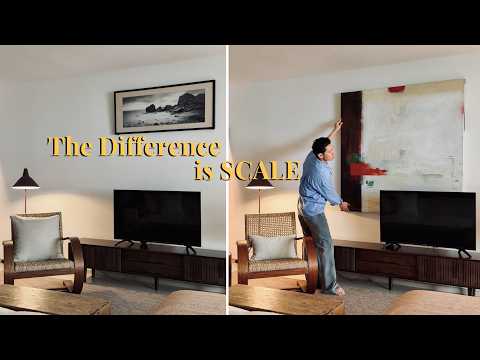
Watch: 7 designer tips on scale and proportion for a high-end room.
III. Ergonomics and Layout Optimization
True luxury is comfort and movement working together. If a guest has to think about where to walk or sit, the room is not finished.
Quick definition Ergonomics is the science of fitting spaces and objects to the people who use them. In furniture, it covers seat height, reach, walking room and how easy it is to get up from a chair. Read more on ergonomics.
Mapping User Journeys
A user journey is the path a person naturally takes through a space. Draw it before you place furniture.
For a villa owner, a morning path might run from the bedroom to the terrace with a coffee, then to the sofa with a laptop. Put a side table where the cup lands. Leave the path to the terrace clear.
For a hotel guest, the journey is: enter, drop bags, sit, open the case, check the phone, rest. A luggage bench, a good lamp near the chair and an easy path from door to bed make the room feel considered.
Walk the plan with your finger. Wherever you have to squeeze, step around or turn sideways, move a piece.
Zoning for Multifunctionality
Furniture can divide a room without walls. This is called zoning. It keeps a large open room from feeling empty and keeps it feeling connected.
- Use the back of a sofa as a soft wall between lounge and dining.
- Anchor each zone with a rug. One rug under the lounge and a different surface for dining mark the border clearly.
- Float a console behind a sofa to hold lamps and add depth.
- Set lighting per zone, so each area can have its own mood.
Clearance Standards
Liquidación means the open space around furniture. Professional FF&E teams plan it on purpose, then check it against local code.
| Situation | Common clearance guide |
|---|---|
| Dining table edge to wall or next piece | About 90 to 105 cm (36 to 42 in) so chairs can slide out and people can pass |
| Main walkway in a living or lobby area | About 105 to 120 cm (42 to 48 in) |
| Sofa to coffee table | About 40 to 45 cm (16 to 18 in) |
| Minimum width of an accessible route (US ADA guidance) | 36 in (915 mm) at minimum, with more at turns and doors |
Análisis del sector: Private villas can bend these numbers. Hotels, restaurants and public areas cannot. Accessibility rules and fire exit rules vary by country and building type, so confirm them with your local certifier before you freeze a layout.
IV. Material Science: Matching Finishes to Lifestyle and Usage
Pick materials for how the space will be used, then for how you want it to feel. A fabric that suits a quiet private suite can fail in a lobby within a year.
High-Traffic vs. Private Sanctuary
Two spaces, two very different jobs.
| Espacio | What it needs | Good choices |
|---|---|---|
| Hotel lobby, lounge, restaurant | Resist wear, stains and sun | Performance velvet, solution-dyed fabrics, top-grain leather |
| Private suite or master bedroom | Softness and visual richness | Silk blends, fine wool, linen, full-grain leather |
| Outdoor or terrace | Weather and UV resistance | Marine-grade finishes, teak, powder-coated aluminium |
How to read a fabric’s strength. El Martindale test rubs the fabric with a standard material in a set pattern and counts the cycles until the surface wears. A higher number means a tougher fabric. The chart shows common guideline levels. Exact thresholds vary between suppliers and brands, so always check the project specification.
Leather in plain terms. Full-grain leather keeps the natural surface and develops a rich patina with age. Top-grain is lightly sanded and coated, so it looks more even and resists stains better. For a lobby or a large hotel order where every unit must match, top-grain is often the practical choice. Full-grain suits private rooms where patina is a feature.
The Psychology of Finishes
Texture changes how a room feels, even when people cannot say why.
| Finish | How it feels | Where it works |
|---|---|---|
| Matte | Calm, soft, warm | Residences, spas, bedrooms |
| Polished | Formal, bright, reflective | Reception, boardrooms, grand dining rooms |
| Brushed | Quiet, tactile, understated | Hotel suites, lounges, modern villas |
A polished brass console feels like authority. The same shape in brushed brass feels like hospitality. If you want a warm residential mood in a corporate building, lean on matte woods and brushed metals.
Sustainability and Provenance
Provenance means where a material came from. High-net-worth clients now ask this early, and hotel brands often write it into the brief.
- Wood: Ask for FSC chain-of-custody documents, which show responsible forest sourcing. Rare species such as ebony and some mahoganies have trade limits, so verify the paperwork.
- Hardness: El Janka hardness test shows how well a wood resists dents. Walnut and oak are common luxury choices for good reason.
- Stone: Ask for the quarry, the finish and whether the slab has been resin-treated.
- Fabric: Norma OEKO-TEX 100 labels show that textiles were tested for harmful substances.
Durability is also a sustainability point. A piece that lasts 20 years has half the footprint of one replaced every 10. For deeper sourcing detail, see Jade Ant’s sustainable furniture sourcing guide.
V. Curating a Style Identity: Cohesion Over Trend
Trends fade, but a clear design story stays relevant. To avoid early obsolescence, pick furniture that fits the architecture and the property’s long-term identity.
Defining the Design Language
A design language is a short list of rules: shapes, materials, colors and details that repeat across the project. Choose one main style, then stay loyal to it.
| Style | Signature traits | Materials that suit it |
|---|---|---|
| Mid-Century Modern | Organic curves, slim legs, honest wood | Walnut, teak, wool, leather |
| Neoclassical | Symmetry, fluted legs, formal lines | Marble, carved wood, silk, brass |
| Contemporary Minimalism | Clean edges, low profiles, quiet color | Stone, oak, linen, matte metal |
Write the language down in two or three lines, such as: “Warm oak, soft curves, bronze details, no gloss.” Everyone on the project can then judge a piece against it.
The Art of Contrast
Contrast adds life. But too much of it adds noise. A simple ratio keeps things safe:
For example, a contemporary base (60%), mid-century chairs (30%) and one antique mirror (10%) feels collected rather than random. Link the three layers with a shared material, such as oak or brass. Jade Ant furniture covers this in more detail in its guide on mixing eras without visual clutter.
If you prefer to see it, this walkthrough shows how to blend eras in a real room:
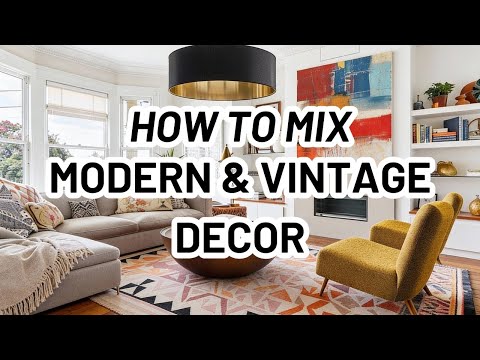
Watch: a practical guide to mixing vintage and modern furniture.
Brand Synergy
Furniture speaks for the property. A bold sculptural chair says “design hotel.” A restrained, heavy oak table says “private estate.” Ask whether each piece matches what the development or brand promises.
For private label owners, the same rule applies. Your furniture must look like it belongs to your brand and no one else’s. Keep the silhouette, finish and detail language consistent across the range. Jade Ant’s living room collection shows how sofas, tables and accent chairs can be built as one coordinated family.
VI. The Quality Audit: Technical Criteria for Procurement
Professional buyers look past the surface. Two sofas can look identical in a photo and differ by ten years of life. The difference is inside the frame.
Joinery and Construction Standards
Joinery is how parts are connected. It is the quickest way to judge build quality.
| Método | What it is | Quality signal |
|---|---|---|
| Mortise-and-tenon | A projecting tongue fits into a cut slot | Best choice for frames and bed rails |
| Dovetail | Interlocking “tail and pin” corners | Best choice for drawers |
| Dowel joint | Round wooden pins and glue | Fine for medium-duty parts |
| Staples or glue only | Fast factory fixing | Not suitable for luxury pieces |
Frame material matters too. Kiln-dried solid hardwood and good multi-layer plywood are strong choices. Particle board cannot hold fasteners well and tends to fail early. If a supplier says “solid wood,” ask for a cross-section sample. A reliable maker will send one without fuss.
Simple in-person checks:
- Lift the piece. Solid frames feel heavy.
- Rock it. A good frame does not creak or shift.
- Look under it. Hidden surfaces should be finished too.
- Check corner blocks inside upholstered frames.
- Press the seat. It should spring back evenly.
Jade Ant furniture keeps a longer version of these checks in its luxury furniture investment checklist.
Hardware and Componentry
Hardware is where clients feel quality every day. Drawer slides, hinges and fasteners are used hundreds of times a year.
- Drawer runners: Look for soft-close, full-extension runners from known makers such as Blum.
- Hinges: They should close quietly and hold alignment.
- Finishes: Plating should be even, without thin spots or rust marks.
- Gaps: Door and drawer gaps should be even and tight.
Certification and Compliance
Certificates prove performance. For hotel and commercial work they are often required, not optional.
| Area | Standard or label | What it covers |
|---|---|---|
| Upholstery fire (smolder) | California TB 117-2013 | Smolder resistance of upholstered furniture |
| Upholstery fire (open flame) | TB 133, BS 5852 or EN 1021 | Open-flame tests used in public and hospitality spaces |
| Commercial strength | BIFMA standards | Strength, safety and durability tests for commercial furniture |
| Indoor air | Low-emission labels and COV limits | Gases released by glues, foams and finishes |
| Textile safety | OEKO-TEX | Substances in fabric |
Quick definition: COV stands for volatile organic compounds, gases that glues, lacquers and foams can release. Low-VOC furniture helps indoor air feel fresh, which matters in sealed hotel rooms and tight villas.
Análisis del sector: Which fire standard applies depends on country, building type and brand. Ask the project’s fire engineer for the exact list before sampling. Asking after production often means retesting.
VII. Developing a Strategic Shortlist
A fair filter prevents expensive mistakes. Without one, the loudest opinion in the room usually wins.
Establishing a Weighted Scoring Matrix
A weighted scoring matrix gives each factor a share of importance, then scores each option. The highest total wins on facts, not mood.
- List what matters: looks, durability, lead time and cost.
- Give each a weight so the weights add to 100%.
- Score each option from 1 (poor) to 5 (excellent).
- Multiply and add.
Here is an example for a lobby sofa:
| Factor | Peso | Option A | Option B | Option C |
|---|---|---|---|---|
| Aesthetics | 25% | 5 | 4 | 5 |
| Durability | 30% | 3 | 5 | 2 |
| Lead time | 20% | 4 | 3 | 5 |
| Coste | 25% | 3 | 4 | 4 |
| Weighted total | 100% | 3.70 | 4.10 | 3.85 |
Option A is the prettiest on paper, but Option B wins because the lobby values durability most. Change the weights to fit your own project. A private villa might weight aesthetics at 40% and lead time at 10%.
Vendor Vetting
Judge the maker as carefully as the piece. Ask:
- Can you provide test reports and certificates for every material in this quote?
- What can you customize: size, finish, fabric, hardware?
- Who is my single point of contact?
- What is your process when a unit arrives damaged or off-spec?
- Can I see photos or references from projects like mine?
Check how fast and how clearly they answer. A maker who is slow to respond before the order will not speed up after it. If you are weighing factories, Jade Ant’s company background and capabilities show the kind of information a serious supplier should be willing to share.
Prototyping and Sampling
Photos can’t tell you how fabric drapes or how a lacquer reflects light. Always touch before you commit.
- Approve a finish board with physical swatches of wood, stone, metal and fabric.
- Request one full-size sample of the statement pieces.
- Check size, comfort, stitching, weight and finish in the real room light.
- Sign off in writing and keep the sample as a reference for the bulk order.
VIII. Budgetary Allocation and Value Engineering
Spend most where the eye lands first. Strategic investment means putting the money into pieces that define a room, and trimming cost where nobody looks.
Quick definition: Value engineering means finding ways to get the same function and look at a lower cost, without lowering quality in ways people can see or feel. The Whole Building Design Guide explains how budget, scope and quality should be balanced throughout a project.
The “Investment Piece” Strategy
A hero piece is the sofa, dining table or bed that the whole room is built around. Give it a bigger share of the budget. Here is one example split for a luxury living area. Treat it as a starting point, not a rule.
Value Engineering without Compromise
Look for swaps that keep the visual effect. One hospitality FF&E supplier reports that smart material substitutions can save roughly 8 to 15 percent without changing visible quality. Real savings depend on the project, so test each swap against a sample.
| Original choice | Smart alternative | What you keep | Watch out for |
|---|---|---|---|
| Solid wood tabletop | Quality veneer on a stable core | Grain and look, plus better flatness | Harder to repair deep damage |
| Natural stone top | Engineered or sintered stone | Clean look, easy care | Edge profiles and veining feel different |
| Solid brass | Brass plating on a strong base | Color and shine | Plating thickness and wear |
| Imported fabric | Performance fabric of similar texture | Hand-feel and color | Test the swatch in real light |
Keep solid hardwood where strength matters, such as frames and legs. Use veneers where flat surfaces gain from stability.
Long-term Lifecycle Costing
The cheapest sticker price is rarely the cheapest cost. Use this simple formula:
| Sofá | Price | Maintenance per year | Life | Annual cost |
|---|---|---|---|---|
| Standard-grade | $2,400 | $100 | 5 years | $580 |
| Investment-grade | $6,200 | $150 | 18 years | $494 |
Illustrative example. Real prices and lifespans vary by project.
The more expensive sofa costs less each year. It also avoids replacement freight, installation and room downtime, which this simple formula leaves out. Jade Ant furniture has a detailed look at this trade-off in its cost versus quality analysis for custom furniture.
Include restoration in the plan too. Leather conditioning, oil refinishing and reupholstery are normal costs, not surprises.
IX. Logistics and Installation Management
The luxury experience ends at final placement, not at the factory gate. A flawless piece can still disappoint if it is dragged across a fresh floor or placed in the wrong room.
White-Glove Installation Requirements
White-glove service means trained crews handle delivery, unpacking, placement and debris removal. It matters most for oversized, fragile or very valuable pieces.
- Book the elevator and loading dock in advance.
- Confirm door and stair widths against the packed size, not just the product size.
- Send an installation plan with room numbers or a floor plan.
- Use a team that has handled marble, glass or large upholstered items before.
Site Readiness Coordination
Furniture should arrive last. Before delivery, confirm that:
- Painting, wall finishes and ceilings are complete and dry.
- Floors are finished and protected with proper covering.
- Lighting, sockets and air conditioning are working, because humidity swings can harm wood.
- Cleaning is done, so dust does not settle on new upholstery.
- Access routes are clear and protected.
For hotel and villa programs with many rooms, label each carton with the building, floor, room and item. Crews then install straight into place. Jade Ant furniture lays out how the steps fit together in its furniture sourcing workflow from concept to installation, and in a separate piece on logistics as a competitive advantage.
Final Styling and “Staging”
Staging is the last layer: arranging furniture, adding art, plants, cushions and lamps so the space photographs and feels finished at handover.
A professional stylist can:
- Place pieces by sight lines, not just by drawing.
- Adjust lamp heights and rug position.
- Prepare the room for handover photos, which often become marketing images.
Análisis del sector: Hotel and villa developers often get marketing shots on day one. If the styling is rushed, that first impression is the one that circulates online for years. Add a stylist day to the schedule and the budget early.
X. Conclusion
The framework in one line: Space → Comfort → Materials → Style → Quality → Shortlist → Budget → Installation.
- Space: Survey the room and size furniture to it.
- Comfort: Map how people move, and keep clearances open.
- Materials: Match fabrics, woods and finishes to real use.
- Style: Keep one design language and one hero piece per room.
- Quality: Audit joinery, hardware and certificates.
- Shortlist: Score options with a weighted matrix.
- Budget: Invest in hero pieces and value-engineer the rest.
- Installation: Prepare the site and style the final result.
The long-term payoff. Professional procurement does three things. It lowers the chance of returns and early replacement. It keeps design and operations working together. And it helps a property look and feel worth more years after the opening. Clients notice. They renew, refer and specify you again.
Your next step. Stop buying by intuition alone. Pick one live project and run it through the eight steps this week, even on paper. If you want a manufacturing partner for the pieces you shortlist, talk to the team at Muebles Hormiga de Jade. Send your drawings or brief through the contact page, or browse more practical guides on the Jade Ant blog.
Glossary of Key Terms
Quick definitions for terms used in this guide.
| Término | Plain-English meaning | Example |
|---|---|---|
| Scale | How a piece’s size relates to the room | A 3 m sofa in a 2.4 m ceiling room |
| Proportion | How pieces relate to each other | A tall chair beside a low sofa |
| Negative space | Open floor and wall around furniture | A clear border around the rug |
| Visual hierarchy | The order in which the eye reads a room | Statement piece first, then supports |
| Ergonomics | Fitting spaces to the people who use them | Seat height that is easy to rise from |
| Zoning | Defining areas without walls | A sofa back dividing lounge and dining |
| FF&E | Furniture, Fixtures and Equipment | Beds, lamps, chairs, side tables |
| Martindale count | Fabric wear test cycles | 100,000 for a busy lobby |
| Joinery | How wood parts are connected | Mortise-and-tenon rails |
| COV | Gases released by glues and finishes | The “new furniture smell” |
| Value engineering | Same look and function, lower cost | Veneer on a stable core |
| Lifecycle cost | Total cost over the piece’s life | Price plus upkeep, divided by years |
| White-glove | Trained crews for delivery and placement | Marble table installation |
| Staging | Final styling for handover | Lamps, art and cushions placed |
Preguntas frecuentes
1. How do I determine the ideal scale for furniture in a double-height villa ceiling?
Start from the floor plan, not the ceiling. Choose seating sized to the floor area and the number of people, then add one tall element, such as a floor lamp, a cabinet, a large mirror or a tall artwork, to connect the room to the extra height. Use a generous rug so the seating group does not float. Low furniture alone makes a tall room feel empty, and oversized furniture makes the lower half feel crowded. Mock up the layout with tape on the floor before ordering.
2. What are the most durable luxury fabrics for high-traffic hotel lobby environments?
Look at performance velvets, solution-dyed fabrics, tightly woven chenilles and top-grain leather. Ask for a Martindale test report and check the project’s specification, since many hospitality guidelines point to around 100,000 cycles or more for lobbies. Also request colorfastness results if the lobby gets strong sun. Always test a real swatch for stain cleaning before you approve it.
3. How can I balance a private label furniture line with third-party luxury imports?
Let your private label pieces carry the signature look: the main sofa, dining table or bed. Bring in third-party pieces as accents, such as a single sculptural chair or a lamp. Keep one shared material or color across both groups so they feel related. Check that imports have the same quality documentation as your own line, because one weak piece can lower trust in the whole collection.
4. What are the key indicators of “investment-grade” furniture craftsmanship?
Check for solid hardwood or quality plywood frames, mortise-and-tenon or dovetail joinery, corner blocks in upholstered pieces, branded soft-close hardware, even gaps, a finish on hidden surfaces and clear material documents. Weight is also a clue, since good frames feel heavy. If a supplier will not share a cross-section sample or test reports, treat that as a warning sign.
5. How do I manage lead times for bespoke luxury pieces without delaying project handover?
Order bespoke items first and approve samples early. Add a buffer of roughly 15 to 25 percent to the quoted production time, then add shipping, customs and site-ready time. Confirm in writing which date the maker means: production complete or delivered to site. Split the order so hero pieces and long-lead items start first, and keep an approved backup option in case a material runs short.
6. What is the professional standard for clearance distances in a luxury dining layout?
A common guide is about 90 to 105 cm (36 to 42 in) from the table edge to the nearest wall or furniture, so chairs can pull out and people can pass behind them. Where the space is also a main walkway, plan about 105 to 120 cm (42 to 48 in). In hospitality or public spaces, also check local accessibility and fire code, because they can set stricter limits.
7. How do I communicate technical material specifications to high-net-worth clients?
Skip the jargon and show outcomes. Use a physical finish board and a one-page summary that says what each material does: “This fabric is made for daily use and cleans easily.” Show real samples, photographs of similar finished projects and a simple cost-per-year comparison. Keep the technical sheets in an appendix so the client can review them if they wish.
8. Which certifications should I require from furniture importers to ensure sustainability?
Ask for FSC or an equivalent chain-of-custody certificate for wood, OEKO-TEX for textiles and low-emission test reports for boards, glues and finishes. For rare woods, also request proof of legal origin and any needed trade permits. Verify certificate numbers with the issuing body rather than relying on a copy alone, and check that the certificate covers the product and the dates in your order.
9. How do I handle the logistics of transporting oversized marble or glass luxury pieces?
Plan the route first. Measure doors, stairs, elevators and turns against the packed dimensions. Use custom crates with cushioning, edge protection and clear handling marks, and add cargo insurance. Brief the delivery crew on weight and lifting points, and arrange the right equipment on site, such as a lifting rig or glass handling frames. Inspect and photograph on arrival before signing for the goods.
10. What is the best way to mix different luxury brands without creating visual clutter?
Choose a lead brand or style for most of the room, then add one or two pieces from other brands as accents. Link everything through a common material, such as walnut or brushed brass, or a shared color family. Keep similar seat heights and visual weight within one seating group. Limit the number of statement pieces to one per zone so each one has room to stand out.
11. How often should luxury commercial furniture be audited for wear and tear?
Many properties do a quick visual check monthly and a detailed review every year. The detailed check covers joints, upholstery wear, finish damage, hardware and stability. Review high-use areas such as lobbies and restaurants more often. Record each audit with photos so you can predict repairs and plan refurbishment before guests notice the wear.
12. How do I justify the premium cost of artisanal furniture to a developer focused on ROI?
Use lifecycle cost and revenue effects. Show the annual cost comparison of a standard piece against an investment-grade one, including replacement, downtime and installation. Add the effect on guest or buyer perception, since quality furniture shows up in photos, reviews and sales conversations. Where possible, offer a split: artisanal hero pieces in the spaces people see most, and value-engineered pieces in secondary areas.
Ready to turn a shortlist into a finished project? Share your brief with the Jade Ant team and get a plan for materials, lead times and delivery.