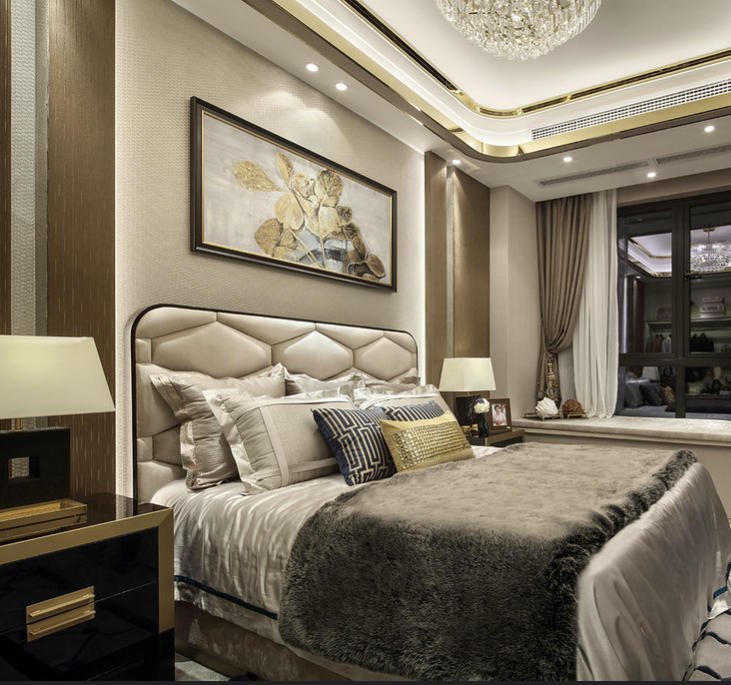
Understanding the true ROI of custom furniture partnerships for your business. This comprehensive guide helps furniture distributors, showroom owners, interior designers, and hospitality fit-out specialists make data-driven decisions about offering custom solutions to your clients — comparing costs, quality, timelines, and profit margins across premium brands and ready-made alternatives.
 Custom furniture is a business model decision before it’s a product decision. The margin lives in the details — material, labor, and positioning. Image: Unsplash
The question of whether to add custom furniture programs to your business model seems straightforward until you try to answer it with real numbers.
Custom furniture generates enthusiastic conversations at trade shows and in designer forums. It features prominently in the marketing of premium brands. And it carries a premium price point that looks compelling on paper. But for furniture distributors, showroom operators, agents, and interior designers who need to run a profitable business — not just a prestigious one — the real question is more specific: does custom furniture actually make money at your scale, with your client base, in your market?
The answer depends entirely on how you structure and manage it. Done right, custom programs deliver margins of 100–200% retail markup, generate the kind of repeat client relationships that 76–78% of interior designers cite as their primary revenue driver, and position your business in a premium segment that mass-market competitors simply cannot reach. Done without a clear financial framework, the same custom program quietly erodes margins through unquantified consultation time, deposit exposure, production delays, and client management complexity.
This guide gives you the framework to decide — and if you proceed, to implement — a custom furniture strategy that actually works for your bottom line.
Understanding the Cost Structure of Custom Furniture
Breaking Down the True Price of Custom Manufacturing
Every custom furniture price is built from the same four components, and understanding each one tells you where your margin lives — and where it leaks.
Material sourcing and quality tiers are the most visible cost driver and the clearest differentiator from mass-produced alternatives. Solid hardwood — the foundation of genuine custom furniture — carries a material premium of 3–7x over the particle board and MDF (medium-density fiberboard — engineered wood made from wood residuals and resin binders) used in volume production. But that premium buys something specific: a solid hardwood dining table withstands 30–100+ years of use with proper care, compared to the 5–10 year lifespan typical of MDF-core alternatives. In commercial settings, that lifespan differential is not an aesthetic preference — it is a lifecycle cost calculation that changes the economics of the purchasing decision entirely.
Material quality also determines finish longevity. Hand-applied oil and wax finishes on solid wood can be refinished and restored in place — a service that adds value for hotel and commercial clients who need furniture to hold its appearance through heavy use cycles. Polyurethane spray finishes on engineered wood substrates cannot be refinished; they require piece replacement when they fail.
Labor costs are the second major cost driver and the one most often misunderstood by distributors evaluating custom programs. A master woodworker producing a mortise-and-tenon joint by hand earns a labor rate that reflects decades of skill development. That labor cost is real, and it is what you are paying for in a genuine custom piece. Understanding the relationship between labor intensity and price — and being able to articulate it to clients — is what separates a confident specialty distributor from one who defensively justifies prices they don’t fully understand.
For a distributor pricing custom product for resale, labor costs are embedded in the manufacturer’s FOB (Free On Board — the price at which a manufacturer transfers ownership of goods to the buyer at the origin point) price. The question is not whether to absorb this cost, but whether your market positioning and client relationships support the retail price that makes it profitable.
Understanding Material Cost Tiers at a Glance
| Material Type | Typical Furniture Type | Lifespan (Commercial) | Repairability | Relative Material Cost |
|---|---|---|---|---|
| Solid hardwood (oak, walnut, teak) | Custom/premium pieces | 30–100+ years | Full refinishing possible | $ |
| Solid softwood (pine, rubber wood) | Entry-level custom | 15–30 years | Partial refinishing | $ |
| Hardwood veneer over solid core | Mid-range custom | 15-25 años | Limited surface repair | $ |
| MDF core with veneer | Volume/ready-made | De 5 a 12 años | Surface repair only | $$ |
| Particleboard/laminate | Mass market | 3–7 years | Not repairable | $ |
Ready-Made Furniture Pricing: What You’re Actually Paying For
Ready-made furniture’s pricing structure reflects a completely different manufacturing model — one optimized for cost efficiency rather than customization flexibility. Volume production allows manufacturers to negotiate material costs that custom manufacturers cannot approach, use automated processes for operations that custom work requires by hand, and distribute design and tooling costs across thousands of units rather than dozens.
The result is a lower unit cost that looks compelling until you add the costs that don’t appear on the invoice.
Hidden Costs in Bulk Purchasing
The fully-loaded cost of ready-made furniture inventory for a distributor or showroom includes several items that never appear on the purchase order: warehouse space per SKU per month (typically $2–$6 per square foot annually for climate-controlled furniture storage), carrying cost on tied-up capital (the industry standard is 20–30% of inventory value annually when you factor in financing, insurance, obsolescence risk, and opportunity cost), and the markdown exposure when styles shift or inventory ages.
A distributor carrying $500,000 in ready-made inventory is absorbing $100,000–$150,000 per year in carrying costs before a single piece moves. That cost is real, and it should be factored into the margin comparison between custom and stock approaches.
Inventory Management Expenses for Your Showroom
Floor space is expensive. Every square foot of showroom floor occupied by a ready-made piece that isn’t moving is generating negative ROI. The industry average gross margin for furniture retailers is approximately 35%, according to CSIMarket data through Q1 2026. That margin applies to pieces that actually sell — pieces that sit are generating carrying costs against zero revenue contribution.
Custom programs, by contrast, require floor space only for samples and display pieces. A single display piece generates multiple production orders without the inventory carrying risk of stocking every SKU in multiple finishes.
Comparative Cost Analysis: Where Your Profit Margins Really Sit
The margin comparison between custom and ready-made furniture is not as simple as comparing purchase prices. The full picture requires accounting for markups, carrying costs, consultation time, and the commercial relationships that each model generates.
| Factor | Muebles a medida | Ready-Made Stock |
|---|---|---|
| Typical manufacturer markup at wholesale | 100–200% | 20–50% |
| Retail markup on landed cost | 100–200%+ | 50–100% |
| Inventory carrying cost | Near zero (samples only) | 20–30% of stock value annually |
| Design consultation time per order | 2–8 hours | 0.5–2 hours |
| Return/cancellation risk | Moderate (mitigated by deposits) | Low (stock can be redirected) |
| Repeat client likelihood | High (relationship-based) | Moderado |
| Average order value | Significantly higher | Lower |
| Gross margin % (industry reference) | 40–60%+ on custom programs | 30–40% on stock |
Sources: CSIMarket furniture industry data, Global Furniture USA wholesale margin analysis, Oppein Home furniture markup survey
The margin-per-transaction advantage of custom furniture is real and significant. But it is realized only when the consultation time is accounted for honestly, when the deposit structure protects against cancellation exposure, and when the operational overhead of managing custom production is offset by the higher average order value.
Quality Differences That Impact Your Client Relationships
Materials and Construction: What Separates Premium Custom From Mass-Produced
The quality gap between premium custom furniture and mass-produced alternatives is not a matter of degree — it is a matter of construction philosophy. Mass production optimizes for cost consistency across high volume. Custom manufacturing optimizes for durability and aesthetic integrity at the specific piece level.
The practical consequences of this difference are visible in commercial settings within 3–5 years of installation. A hotel guest room furnished with mass-produced case goods typically requires soft goods replacement at 5–7 years and case good replacement at 7–10 years. A room furnished with well-specified solid wood custom pieces will see soft goods wear at similar rates — but the case goods remain serviceable, refinishable, and aesthetically relevant for 15–25+ years with periodic maintenance.
The Hotel FF&E (Furniture, Fixtures, and Equipment — the movable assets of a hotel property) market, currently valued at $58.4 billion in 2025 and projected to reach $112.8 billion by 2035, is driven substantially by replacement cycle purchases. Hotels that invested in quality custom pieces are on 10–15 year replacement cycles; those who bought mass-market stock are on 5–7 year cycles. That difference, across a 200-room property, represents millions of dollars in either procurement or avoidance.
Wood Selection, Joinery, and Durability Standards
Traditional joinery techniques — mortise-and-tenon joints, dovetail drawers, and hand-fitted corner blocks — are not decorative choices in premium custom furniture. They are structural decisions that determine how long the piece maintains its integrity under real-world use conditions.
A solid walnut sideboard with hand-fitted dovetail drawers tolerates the expansion and contraction of wood through seasonal humidity changes without the drawer fronts cracking or the joints loosening. The same piece built with stapled corner joints and particle-board drawer boxes will show stress failures within 3–5 years of commercial use — not because the materials are inadequate for a consumer setting, but because commercial use is categorically more demanding.
For distributors and showroom operators whose clients include hotel procurement teams, restaurant designers, and commercial interior designers, this structural durability difference is not a selling point — it is a professional responsibility. Specifying inadequate furniture for commercial applications creates liability exposure and damages the professional reputations of everyone in the specification chain.
Upholstery Quality and Longevity in Commercial Settings
Commercial upholstery — fabric and foam specifications designed for 250,000+ double-rub wear cycles — is a distinct product category from residential upholstery, and the gap matters enormously in hospitality and commercial fit-out applications. A residential-grade fabric specified for a hotel lobby sofa will show visible wear in 18–24 months. A commercial-grade fabric on the same frame will maintain its appearance for 7–10 years under the same use conditions.
Premium custom programs allow you to specify exactly the upholstery grade your project requires. Mass-produced alternatives offer the grades their production model accommodates — and in volume furniture, this is almost never commercial-grade. Understanding and communicating this distinction to your hospitality and commercial clients is one of the clearest ways to justify the premium price point of quality custom furniture.
Customization Depth: How Much Control Do You Actually Get?
 The custom specification conversation — where designers earn their fees and distributors earn their repeat business. Image: Unsplash
Design Flexibility and Client Satisfaction Outcomes
True customization in a quality furniture program includes dimensional modification (changing width, depth, height within structural parameters), finish selection from a full wood and paint spectrum, upholstery fabric selection including COM (Customer’s Own Material — a standard industry term meaning the client provides fabric from their own source, which the manufacturer applies to the custom frame), structural modifications for specific functional requirements, and hardware selection from an approved catalog.
This level of specification flexibility is what allows a designer to achieve genuine design coherence in a high-end project — where every piece reflects the project’s design language — rather than assembling a collection of “close enough” approximations from available stock.
The commercial impact of this satisfaction is measurable. Houzz professional research found that 76% of architects and 78% of interior designers say repeat clients contribute substantially to their business. Projects that were executed with genuine custom quality — where clients received exactly what was specified and it performed as expected — generate the repeat client relationships that compound into the most stable and profitable portion of any design professional’s practice.
Limitations You’ll Face With Ready-Made Options
The customization ceiling of ready-made furniture is typically: selecting from available finish options (usually 3–8 per frame), choosing from available fabric grades within the manufacturer’s COM program (if offered), and occasionally selecting from alternative leg or hardware options. Dimensional modification is almost never available. Structural changes are not possible.
For clients whose projects require exact dimensional fit — furniture for architectural alcoves, reception counters with precise ergonomic specifications, custom banquette configurations — ready-made is simply not an option. These clients will purchase custom product from someone. The question is whether that someone is you.
Quality Assurance: Managing Client Expectations and Protecting Your Reputation
Inspection Protocols for Custom Orders
The quality assurance gap between a well-managed custom program and a poorly managed one is almost entirely determined by what happens before the furniture leaves the factory, not after it arrives at your client’s site.
A pre-shipment inspection protocol for custom furniture should cover: dimensional verification against the approved specification (tolerances of ±3mm for dimension-critical applications), finish quality assessment under both directional and overhead lighting (the conditions under which defects most commonly hide), structural integrity checks at all joinery and hardware points, upholstery coverage and seam quality inspection, and packaging adequacy verification for transit protection.
Third-party inspection services operating at Asian and domestic manufacturing facilities typically charge $200–$500 per inspection session and prevent claims that routinely run $1,500–$5,000 per custom piece when defects reach the installation site. The economics of pre-shipment inspection are unambiguous. The practical challenge is building this step into your standard operating procedure before a crisis teaches you to.
Warranty Differences and Liability Considerations
Premium custom manufacturers typically offer more comprehensive warranty coverage than mass-market producers, reflecting their confidence in the product they ship. Commercial-grade custom furniture warranties from established manufacturers commonly cover structural defects for 5–10 years, with upholstery warranties of 1–3 years depending on wear classification.
Mass-produced stock warranties are typically 1-year structural, with fabric and finish coverage of 30–90 days. In commercial applications — where furniture is expected to perform reliably for years — this warranty gap represents a real liability consideration for distributors and designers who specify stock furniture at a price point that implies commercial durability.
Timeline Realities: Production, Delivery, and Client Management
Custom Furniture Production Timelines: Planning for Your Project Schedules
Production timelines for custom furniture follow a predictable structure across most premium manufacturers, with specific variations based on complexity and customization depth:
| Tipo de pedido | Plazo de producción | Total Timeline (incl. shipping) |
|---|---|---|
| Standard piece, stock fabric | 6–8 weeks | 8-12 semanas |
| Modified dimensions (±20%) | 7–9 weeks | 10-14 semanas |
| COM (Customer’s Own Material — client supplies fabric) | 6–8 weeks after fabric arrival | 9–14 weeks total |
| Complex sectional or custom configuration | 8-12 semanas | 11–16 weeks |
| Full bespoke (custom design, non-standard materials) | 12–20 weeks | 15–24 weeks |
Source: Hendricks Fine Furniture Custom Lead Time Guide; FurnishNC Production Timeline Analysis
These are the baseline timelines under normal production conditions. Rush production is available from most premium manufacturers at a premium of typically 15–35% above standard pricing, and is genuinely available only when production slots exist — which is not guaranteed during peak periods (Q3 hospitality procurement, Q4 retail).
Lead Times from Major Manufacturers
Ethan Allen’s trade program — which includes no minimum order requirements for qualified design trade professionals — quotes standard custom lead times of 8-12 semanas for most upholstered and case good programs, with approximately 4–6 additional weeks for international shipping to non-US markets. Their trade program also provides dedicated trade service representatives who manage custom order communication, which is operationally valuable for designers managing multiple concurrent projects.
Direct-from-manufacturer custom programs in China’s primary production regions (Guangdong, Zhejiang, Shandong) quote 6–10 weeks production for standard custom work, with 3–6 weeks ocean freight to US ports. Total lead times of 10–16 weeks are achievable with reliable factory partners — comparable to domestic premium brands and potentially less expensive at the same quality tier, depending on the specific manufacturer and category. The China furniture sourcing guide at Jade Ant Furniture provides a practical framework for evaluating direct-manufacturer options against domestic brand programs.
Rush Order Options and Premium Costs
When a client has a hard deadline that standard lead times cannot meet, rush production is sometimes available — but it requires specific conversations with your manufacturing partner about current production capacity before committing to a client. Promising a rush order without confirming production slot availability is one of the most common and damaging mistakes in custom furniture project management.
Build a “rush availability confirmation” step into your standard custom order workflow: before communicating any rush-capable lead time to a client, contact your manufacturing partner directly to confirm a specific production slot. This takes 24–48 hours and prevents the client relationship disasters that follow overcommitted rush timelines.
Ready-Made Furniture: Speed vs. Limited Selection Trade-offs
Inventory Availability and Stock-Out Risks
The speed advantage of ready-made furniture is real — but it is conditional on actual stock availability, which is the variable that most distributors and designers discover is less reliable than assumed at the moment it matters most. An in-stock dining chair that is listed as available when a designer checks on Monday may be out of stock by Thursday when the order is placed, if another buyer purchased the last warehouse units in the interim.
For time-sensitive projects, the false security of “in-stock” furniture — without confirmed allocation — is more dangerous than a clear custom lead time, because the former creates a client expectation of immediate availability that may not survive to order confirmation.
Quick Turnaround Advantages for Tight Deadlines
Where in-stock furniture genuinely delivers its speed advantage is in projects where specifications are flexible, timelines are genuinely tight, and the client understands the selection will be drawn from available inventory. For hospitality operators with an unexpected opening-date acceleration, for commercial clients with lease commitments that require furniture for an occupancy date, and for residential projects where the client is prepared to be flexible on their ideal selection in exchange for faster delivery — ready-made stock is the correct answer, and having strong supplier relationships with guaranteed allocation is the operational capability that serves these clients.
Managing Client Expectations: Communication Strategies That Protect Your Business
Setting Realistic Delivery Windows in Contracts
Every custom furniture contract should specify delivery windows with explicit language about what “production completion” means versus “delivery to site.” These are different dates, and confusing them is a structural source of client disputes.
A contract structure that works: “Estimated production completion: [date range]. Estimated delivery to [destination]: [date range]. Client acknowledges that delivery windows are estimates subject to production scheduling and logistics factors. Distributor/designer will communicate proactively if either window changes by more than 5 business days.”
This language sets accurate expectations, creates a proactive communication obligation, and establishes in writing that delivery estimates are not guarantees — while still committing to transparency when circumstances change.
Buffer Time Planning for Interior Design and Hospitality Projects
The professional standard for custom furniture in project-based work is to add 15–25% buffer to every production lead time before committing to a project installation date. A manufacturer quoting 10 weeks means 12–13 weeks in your project plan. A 14-week lead time becomes a 17–18 week project window.
This buffer time is not padding for its own sake — it absorbs the production variables that are structural to custom manufacturing: fabric availability delays on COM orders, minor production schedule adjustments, logistics delays during peak shipping periods, and the time between production completion and delivery scheduling confirmation. Designers and distributors who build this buffer into their standard project planning eliminate the majority of timeline-related client conflicts without any additional operational investment.
Customization Options: What You Can Actually Offer Your Clients
Design Flexibility in Custom Programs
Fabric, Finish, and Dimension Choices Available
A well-structured custom program from a quality manufacturer gives you a specification toolkit that covers the great majority of professional project requirements without entering fully bespoke territory. The standard customization range available through established custom programs includes:
- Dimensions: Typically ±20% on height, width, and depth from standard configurations; some manufacturers accommodate ±30% with extended lead times
- Wood species and finish: Selection from 15–40+ standard finishes plus custom color matching available from premium manufacturers at an additional charge of 10–20% on standard pricing
- Fabric: Full COM capability (client provides fabric; manufacturer charges a COM upcharge of typically $50–$150 per yard of application) plus manufacturer’s standard fabric collections in 100–500+ options depending on brand
- Hardware: Knob, pull, and hinge selection from manufacturer’s approved hardware catalog
- Configuration: L-shapes, sectionals, corner units, and modular combinations from most upholstered custom programs
COM (Customer’s Own Material) specification is particularly valuable for interior designers working on branded hospitality projects, where fabric selection must match a brand’s approved standards library. The ability to specify a manufacturer’s solid wood frame quality with the client’s fabric selection is frequently the exact combination that wins high-value commercial projects.
Structural Modifications and Bespoke Features
Beyond standard customization, some manufacturers offer genuine structural modification capability: custom leg heights for ergonomic specification, built-in storage modifications for commercial applications, altered back heights for architectural requirements, and integrated technology supports for commercial desk and conference applications.
These structural modifications typically require extended lead times (12–20 weeks) and a minimum order quantity (usually 3–6 pieces of the same modification) that makes them appropriate for hospitality fit-out volume but not single-piece residential requests. Understanding your manufacturer’s structural modification capability — and the minimum volumes and lead times that unlock it — is essential knowledge for quoting large commercial projects accurately.
Limited Customization in Ready-Made Solutions
Color and Fabric Options Within Existing Collections
Most ready-made furniture programs offer a narrow customization window that is more accurately described as “selection within a fixed range” rather than customization. Choosing from 4 available finish options on a dining table, or from 12 available fabric colorways on a sofa, is not customization — it is option selection. The distinction matters because it affects what you can promise clients.
When a hospitality client asks for a specific upholstery fabric that matches their brand standards, “we have 12 similar options” is not the same as “we can use your exact fabric.” When an interior designer needs a dining table 6 inches narrower than the standard width to fit an architectural alcove, “we have a smaller version” is not a solution to a dimensional specification. Ready-made programs have a hard ceiling on customization, and knowing where that ceiling sits prevents the client disappointment that comes from discovering it mid-project.
Why Some Clients Settle for Close-Enough Alternatives
Clients who accept ready-made alternatives when custom would better serve their project are almost always making a budget or timeline trade-off — not a quality preference. Understanding this distinction is important for how you position your custom offering. When a client chooses a ready-made piece because custom “takes too long,” the opportunity is better lead time management and communication, not a different product. When they choose it because custom “costs too much,” the opportunity is a value conversation about lifecycle cost, not a price reduction.
Building Your Competitive Advantage Through Customization
Unique Offerings That Differentiate Your Showroom
The competitive landscape for standard ready-made furniture — accessible through dozens of distributors, available online, and increasingly commoditized on price — offers limited differentiation opportunity. Custom programs create differentiation that is durable precisely because it cannot be replicated by a competitor offering the same manufacturers’ stock catalog.
A showroom that offers a custom program from two or three strong manufacturers, with genuine expertise in specification, lead time management, and client communication, is a genuinely different business from one that stocks catalog furniture. That difference is not primarily aesthetic — it is operational. Designers and hospitality procurement teams who have experienced the efficiency of working with a capable custom program will specify through you on future projects without re-evaluating alternatives.
Capturing Premium Projects (Hospitality, High-End Residential)
The premium project market — hotel fit-outs above $500K in furniture value, residential projects with $50K+ furniture budgets, corporate headquarters with bespoke design requirements — is almost entirely a custom market. These clients do not want what everyone else has. They are paying a premium specifically for design integrity and specification control.
Marcas como Muebles Jade Ant serve this segment by pairing premium solid wood craftsmanship with genuine customization capability — the combination that hospitality developers and high-end residential designers require. For distributors and showrooms building toward this segment, the question is not whether custom programs are necessary — it is which manufacturers offer the quality, customization range, and reliability to support the projects you want to win.
Long-Term Value Assessment for Different Budget Scenarios
Premium Budget Clients: Where Custom Furniture Delivers Maximum ROI
For hospitality and high-end residential clients with premium budgets, the ROI case for custom furniture is built on three compounding advantages: lower lifecycle cost, stronger design integrity, and the professional relationship value that flows from delivered quality.
Lifecycle cost is the clearest financial argument. A hotel investing in quality custom solid wood case goods at 2–3x the upfront cost of mass-produced alternatives, but on a 15-year replacement cycle versus a 7-year replacement cycle, typically achieves 30% lower total lifecycle cost over a 20-year property horizon. The higher initial investment is not a cost — it is a capital efficiency decision.
Investment Justification for Luxury Hospitality and Design Projects
The investment justification framework for luxury clients compares not unit price but cost-per-year-of-service. A solid teak dining chair that costs $1,400 and lasts 20 years in commercial use costs $70 per year. A mass-produced dining chair at $350 that requires replacement every 5 years costs $70 per year as well — but the replacement process carries procurement cost, disposal cost, and installation disruption that the custom piece never does. At this level of analysis, the premium price of quality custom furniture is not a luxury — it is rational procurement.
Durability and Replacement Cycle Economics
Research across multiple quality studies consistently shows solid hardwood furniture can last 50+ years with proper care, compared to the 5–10 year lifespan of MDF-core alternatives. In commercial contexts — where furniture is used by many different people and cleaned with commercial products — the durability gap is even larger. Understanding and communicating this durability differential in quantified, project-specific terms is one of the highest-value skills a distributor or designer can develop.
Mid-Range Budget Projects: Finding the Sweet Spot
Hybrid Approaches (Custom Frames, Standard Upholstery)
The most commercially effective approach for mid-range budget projects is a semi-custom hybrid: custom solid wood frames (which provide structural durability and dimensional precision) with manufacturer’s standard upholstery selections (which reduce lead time and cost versus full COM specification).
This hybrid approach delivers approximately 70% of the visual and functional benefit of fully custom furniture at approximately 60–70% of the fully custom cost. For clients whose budget sits between mass-market and fully custom, it is frequently the option that converts a “we can’t afford custom” conversation into an order.
Semi-custom hybrid programs are available from most established custom manufacturers, including Ethan Allen’s trade program, as a standard offering. The commercial value of having this option in your specification toolkit is significant — it extends your custom program’s market reach without compromising the quality standards that protect your reputation.
When Ready-Made Solutions Suffice for Your Margins
Not every project warrants a custom approach, and forcing custom where stock serves the brief equally well is neither good client service nor good business. The projects where ready-made is genuinely the right answer are those where timeline is critical and dimensional precision isn’t, where budget parameters make custom impractical even with a lifecycle cost argument, and where the design brief is flexible enough to work within available inventory.
Developing the judgment to recommend the right solution for each client — rather than defaulting to custom for the margins or to stock for the simplicity — is what builds the professional reputation that generates long-term referral business. 78% of interior designers cite repeat and referred clients as their primary business driver. That figure reflects what happens when clients trust that you recommend what serves them, not what serves your margin.
Budget-Conscious Clients: Positioning Your Services Effectively
Educating Clients on Total Cost of Ownership
TCO (Total Cost of Ownership — the complete financial cost of a purchase including acquisition, operation, maintenance, and replacement over its useful life) is a framework that changes budget-constrained conversations. When a client is focused on unit price, they are comparing products. When they are evaluating total cost of ownership, they are comparing decisions.
The TCO comparison between a $400 mass-produced dining chair and a $1,200 custom solid wood chair changes significantly when replacement cycles, procurement overhead, and disposal costs are included in the analysis. In commercial settings specifically, where the time cost of procurement and the operational disruption of replacement are both real, the TCO case for quality custom furniture often closes within 5–7 years of purchase.
Present this analysis in specific dollar terms — “your $40,000 investment in quality custom restaurant chairs, versus $15,000 for mass-produced equivalents, reaches equivalent total cost in year 6 and continues to deliver value for 10–15 years beyond that” — rather than as a general quality argument.
Avoiding Race-to-Bottom Pricing Traps
The most common mistake distributors and showrooms make with budget-conscious clients is competing on price for products that are structurally positioned at different quality tiers. Discounting premium custom furniture to compete with mass-market stock does not convert budget clients into custom buyers — it erodes your margins and communicates that your premium pricing was arbitrary rather than value-based.
The correct response to budget pressure on premium custom is not price reduction — it is scope adjustment. Move the client to the semi-custom hybrid tier, to a smaller quantity of premium pieces for the most high-impact areas of their space, or to a phased purchase plan where the investment is distributed across the project timeline. Maintain your pricing integrity; adjust the scope to fit the budget.
Profitability Comparison: Custom vs. Ready-Made for Distributors and Showrooms
Margin Analysis Across Business Models
The margin landscape across furniture business models is well-documented and consistently shows the premium positioning opportunity in custom programs:
| Modelo de negocio | Typical Gross Margin | Key Margin Driver | Riesgo principal |
|---|---|---|---|
| Distributor (stock, to showrooms) | 25–40% | Volume + turn rate | Inventory carrying cost |
| Showroom (stock, to designers/consumers) | 40–55% | Foot traffic + conversion | Slow-moving inventory |
| Distributor (custom programs) | 40–60%+ | Specification expertise | Production delays |
| Showroom (custom + stock hybrid) | 45–65% | Designer relationships | Consultation time cost |
| Interior designer-retailer (custom) | 55–80%+ on furniture | Design fee + product margin | Client management complexity |
Gross margin data based on CSIMarket furniture industry data and industry markup analysis from Global Furniture USA and Oppein Home
The margin advantage of custom programs is real, but it is realizable only when the operational costs of running a custom program — specifically the design consultation time — are accounted for honestly. An 8-hour consultation for a project that generates a $12,000 custom order at 50% margin has very different economics from an 8-hour consultation for a $4,000 order at the same margin.
Wholesale Markup Opportunities in Custom Programs
Furniture retailers apply markups ranging from 20–400% over wholesale cost, with the most common range for custom furniture falling between 100–200%. At 150% retail markup on a $4,000 wholesale cost, the retail price is $10,000 and your gross margin is $6,000 on that transaction. At 50% markup on a $4,000 wholesale cost for stock furniture, the retail price is $6,000 and your gross margin is $2,000. The custom program generates 3x the gross margin per transaction at comparable wholesale cost.
This math explains why well-run custom programs are disproportionately profitable per unit — and why the margin is worth protecting by maintaining pricing discipline rather than discounting to close resistant clients.
Operational Costs You Need to Factor In
Design Consultation Time and Resources
The operational cost most commonly missing from custom program profitability analysis is the fully-loaded cost of consultation time. If your design consultation team earns an average of $35/hour fully-loaded (salary + benefits + overhead), and a typical custom project requires 6 hours of consultation, specification, and production management, your consultation cost is $210 per order.
On a $10,000 order at 50% gross margin, $210 in consultation cost reduces your effective margin from 50% to 47.9% — not a meaningful impact. On a $2,500 order at the same margin, the same $210 consultation cost reduces your effective margin to 41.6%. The lesson is not that consultation time is prohibitively expensive — it is that your custom program minimum order value should be calibrated to ensure consultation cost remains a small percentage of gross margin.
A practical minimum order value threshold for custom program profitability: at 6 hours of consultation and a $35/hour fully-loaded cost, the consultation expense is $210. If you target consultation as < 5% of gross margin, the minimum gross margin per custom order should be approximately $4,200 — meaning your minimum viable custom order at 50% gross margin is roughly $8,400.
Inventory Carrying Costs for Ready-Made Stock
The most underestimated operational cost in ready-made stock operations is carrying cost. Using the industry standard calculation:
A showroom carrying $300,000 in ready-made stock inventory is absorbing $75,000 per year in carrying costs — equivalent to a full-time staff salary. Reducing inventory by $100,000 through better turn management or a partial shift to custom programs frees $25,000 annually in carrying cost without reducing any sales opportunity.
Strategic Recommendations Based on Your Business Type
For Interior Designers: Positioning as a Value-Add Service
Interior designers adding custom furniture sourcing to their service offering should position it explicitly as a premium service tier — not a capability offered at the same fee structure as standard product selection. The additional specification work, production management, and client communication involved in custom programs is real, and it should be reflected in either a premium project management fee or a higher product markup tier.
Designers who have built custom sourcing capability report that it becomes their primary driver of premium project referrals. A client who has experienced a seamlessly executed custom furniture project — where every piece arrived precisely as specified, on schedule, and was installed without incident — is a client who recommends their designer to every colleague, family member, and professional contact who mentions a design project. This referral compounding effect is the commercial argument for investing in custom program capability that no margin analysis fully captures.
For Showroom Owners: Building Traffic and Loyalty
For showroom operators, custom programs serve two distinct commercial functions: margin improvement on individual transactions, and traffic generation through design professional relationships. A showroom known among local interior designers as the reliable source for quality custom furniture — with deep manufacturer relationships, accurate lead time management, and genuine specification expertise — becomes a professional destination rather than one of many product options.
This destination positioning generates a type of loyalty that product-only showrooms cannot build. Designers who trust your custom program bring their premium projects to your showroom because the alternative is managing those projects without your expertise — a risk they are not willing to take once they have experienced the reliability your program delivers.
For Hospitality Fit-Out Specialists: Project Profitability Models
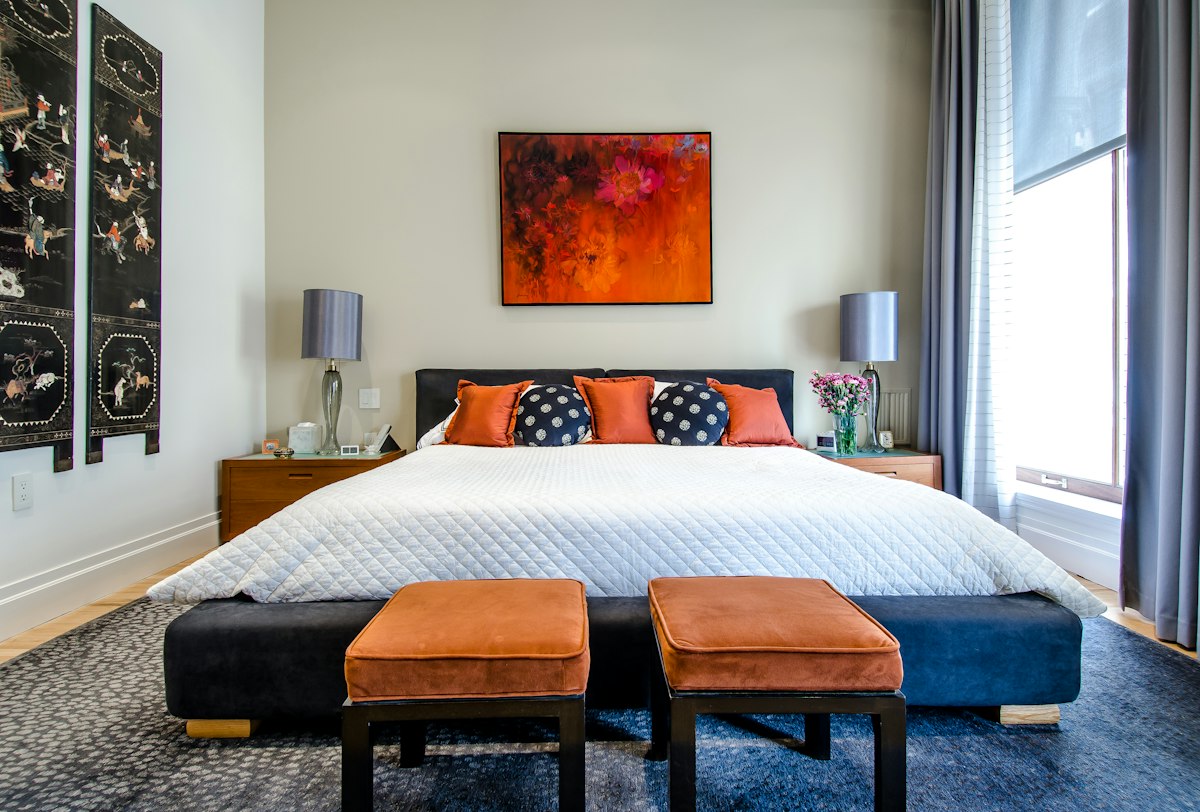 A hotel room that earns its rate — and its return guests — starts with furniture specifications that survive commercial use without compromise. Image: Unsplash
Hospitality fit-out projects offer the clearest profitability case for custom furniture programs. A 150-room hotel specification at an average of $8,000 per room in furniture represents $1.2M in procurement. At a 45% gross margin on custom specification, the gross margin on that single project is $540,000. At a 35% margin on ready-made stock (with the additional logistics, qualification work, and client management the project demands), the gross margin is $420,000. The $120,000 margin difference on a single project justifies significant investment in custom program capability.
Hospitality projects also provide the project portfolio photography and developer references that generate the next hospitality engagement. A successful fit-out delivers not just a margin check but a case study that, properly documented and shared through hospitality industry channels, creates a pipeline of similar projects.
Supplier Relationships and Negotiation Leverage
Working With Premium Brands Like Ethan Allen
Ethan Allen’s trade program structure offers a well-documented partnership model for design professionals and qualifying distribution partners. Their Designer Trade Program requires no minimum order quantities, offers trade discounts on purchases, and provides access to dedicated trade service representatives who manage custom order communication. Their Independent Dealer program requires more formal qualification (business license, W-9, and business verification) and offers deeper margin structures in exchange for the brand investment of an authorized dealership.
The commercial value of an Ethan Allen partnership for a showroom or distributor is primarily in brand equity and program depth — access to 1,000+ custom fabric and finish options, strong warranty backing, and US-based production for a significant portion of their collection. The constraints are minimum display requirements for dealer partners, marketing standards that limit how their brand is presented, and pricing floors that prevent the deep discounting that commodity positioning sometimes requires.
For the right market and business model, these constraints are features rather than limitations — they protect the premium positioning that makes the partnership commercially valuable in the first place.
Minimum Order Requirements and Partnership Expectations
Premium brand custom programs typically require showroom display commitments (a defined number of floor samples in current collection, updated on the manufacturer’s refresh cycle), participation in brand training programs (typically 1–2 days annually for sales staff), and compliance with brand presentation standards for both physical and digital marketing materials.
These requirements represent a real operational cost — floor space committed to samples that may not be your fastest movers, time invested in brand-specific training, and marketing materials that conform to external standards. Evaluate these costs explicitly against the commercial value of the partnership: access to the manufacturer’s design resources, warranty backing, and the brand equity that justifies premium pricing with clients who recognize and trust the brand.
Alternative Custom Manufacturers: Expanding Your Options
Emerging Brands with Competitive Pricing
The custom furniture manufacturer landscape extends well beyond household-name premium brands. A tier of strong, less widely recognized manufacturers — including direct-from-factory programs in China’s established production regions — offers genuine custom capability at wholesale price points that create significantly more distributor margin than partnership programs with major premium brands.
The trade-off is brand recognition: a client who asks “what brand is this?” and receives the name of a manufacturer they don’t recognize requires your expertise and confidence to complete the specification. This is actually an opportunity — it shifts the conversation from brand loyalty to design merit, where your curation and specification skills are the differentiator, not a brand name.
For distributors building long-term competitive positions, manufacturer relationships that are not available to every competitor are more valuable than widely available brand partnerships. Exclusivity — even regional or channel-specific — is worth negotiating for.
Direct-to-Distributor Relationships and Cost Savings
Direct manufacturer relationships — bypassing domestic brand intermediaries and importing directly from quality Asian or European producers — can deliver wholesale price points 30–50% below comparable domestic brand programs. At equivalent quality, this margin differential either flows to your bottom line or allows competitive pricing that wins projects you wouldn’t otherwise reach.
The operational requirements of direct manufacturing relationships are higher than domestic brand partnerships: import logistics management, customs documentation, quality inspection protocols, and longer total lead times require operational investment. The economics favor this investment for distributors with sufficient volume — typically $500K+ annually in custom furniture wholesale purchases — to justify the overhead.
El Jade Ant Furniture direct sourcing program provides distributors and design professionals access to premium custom production capabilities with the manufacturer relationship management and quality control infrastructure already in place — the operational advantage of direct sourcing without building the importer infrastructure from scratch.
Negotiating Better Terms for Your Business
Volume Commitments That Improve Your Margins
Manufacturer negotiations for improved custom program terms typically center on three variables: volume commitment (guaranteed annual purchases that reduce the manufacturer’s revenue uncertainty), exclusivity (geographic or channel protection that justifies their investment in your partnership), and payment terms (upfront payment or shorter payment cycles that improve the manufacturer’s cash flow in exchange for pricing concessions).
A volume commitment of $200,000 annually to a single custom manufacturer — even if distributed across dozens of projects — typically unlocks a 5–10% wholesale price improvement over standard program pricing. At 50% gross margin on the wholesale value, that pricing improvement adds $10,000–$20,000 annually to your gross margin without changing your retail pricing structure.
Exclusive Offerings and Territory Protections
Regional or channel exclusivity — the right to be the only distributor of a specific manufacturer’s products in your geographic market or distribution channel — is the most durable negotiating outcome available in custom furniture partnerships. When you are the only source for a desirable manufacturer’s custom program in your region, you have permanently exited the price comparison conversation for that product.
Achieving exclusivity requires offering something valuable to the manufacturer in return: reliable volume, professional brand representation, a distribution network they couldn’t otherwise access, or investment in showroom display and marketing that generates awareness for their brand. Manufacturers who grant exclusivity without receiving something of comparable value in return will either regret the decision or find ways to work around it.
Risk Management: Protecting Your Business and Client Relationships
Quality Control Risks in Custom Orders
Defect Rates and Warranty Claim Management
Even well-qualified custom manufacturers produce defective pieces — the question is what your process is when they do. A defect management protocol that is defined before your first claim is resolved far more efficiently and at lower cost to your client relationships than one improvised under the pressure of a disappointed client and a hotel opening date.
A practical defect management protocol: photographic documentation of the defect within 24 hours of delivery (preserving your ability to file a manufacturer warranty claim), immediate communication to the client acknowledging the issue and committing to a resolution timeline, manufacturer claim submission within 48 hours of defect identification (most manufacturer warranty claims have a 30-day filing window), and a replacement piece expedite request if timeline permits or a client compensation offer if it doesn’t.
The most common communication failure in defect management is the same as in logistics delays: discovering the problem and waiting to see if it resolves before telling the client. It never resolves that way, and the delay converts a manageable quality issue into a trust crisis.
Communication Gaps Between Design Intent and Execution
The single most common source of custom furniture “defects” that are not actually manufacturing defects is a specification document that was ambiguous about the design intent. A dining table described as “walnut finish” when the designer meant “medium walnut with gray undertones” and the manufacturer applied “warm walnut with amber undertones” is not a manufacturing defect — it is a specification failure. The resolution is not a warranty claim — it is an argument about who approved what, and when.
Preventing specification gaps requires written, visually supported approvals at every decision point: wood species and finish selected from physical samples (not digital images), fabric selected from in-hand swatches (not PDF representations), and dimensional specifications in millimeters rather than “approximately” or “similar to.”
Financial Risks and Payment Terms
Deposit Structures and Cash Flow Management
The industry standard deposit structure for custom furniture is 50% at order placement, 50% at delivery or completion. This structure is well-established, understood by professional clients, and provides reasonable protection for both parties: the manufacturer receives enough upfront to cover material costs before production begins, and the buyer retains 50% as leverage against defect or delivery failure.
For distributors and designers acting as intermediaries — collecting deposits from clients and passing them to manufacturers — the cash flow timing requires careful management. If your manufacturer requires a 50% deposit upfront and you collect a 50% deposit from your client, your exposure is neutral. If your manufacturer requires 60% upfront and you collect 40% from your client, you have a 20% cash flow exposure that needs to be reflected in your pricing or payment terms.
Build deposit flow mapping into your custom program financial model: every custom order should show the timing and amount of cash in (client deposits) against cash out (manufacturer deposits) to ensure no order creates a negative cash flow position that compromises your working capital.
Cancellation Policies and Your Exposure
Custom furniture cancellation policies vary by manufacturer, but the most common structure allows cancellation within 72 hours of order placement for full deposit refund, with escalating non-refundable deposit retention after that point, and full non-cancellability once production begins (typically 1–2 weeks after order confirmation).
Your client-facing cancellation terms should mirror or be more conservative than your manufacturer’s terms, never more permissive. If your manufacturer’s policy retains 100% of deposit once production begins, and you promise your client a 50% refund after production start, you have created a financial exposure that your manufacturer will not share. Review each manufacturer’s cancellation terms explicitly and write your client-facing policy accordingly.
Client Satisfaction Risks and Dispute Resolution
Managing Expectations for Bespoke Projects
The most effective expectation management tool in custom furniture is a signed visual specification document — a compiled reference that includes the exact samples (finish, fabric, hardware) approved by the client, the precise dimensions agreed upon, and the production and delivery timeline with built-in buffer language.
This document accomplishes two things: it prevents the “that’s not what I meant” conversation that arises from ambiguous verbal specifications, and it creates a clear reference point for both parties when “the piece looks different than I expected” situations arise. In the rare case where a genuinely manufactured piece differs from the specification, the document protects your warranty claim. In the more common case where the piece matches the specification perfectly but the client has revised their mental image of the outcome, the document protects you from liability for a subjective preference change.
Documentation Practices That Protect Your Interests
Document everything that matters in custom furniture projects: the initial brief, every specification approval, the deposit receipt, production milestone communications, delivery scheduling confirmation, and delivery completion sign-off. This documentation trail should be stored in a project management system — not in email threads — so that any team member can access the complete project history without searching through inbox archives.
The commercial value of this documentation goes beyond dispute resolution. A well-documented project history makes follow-up sales conversations significantly more efficient — when a designer returns for a second project two years later, your team can pull the exact specifications from their previous project and begin from a position of genuine knowledge rather than starting the specification process from scratch.
Market Positioning: How to Decide What to Offer Your Clients
Assessing Your Target Market’s Actual Needs
 This lobby didn’t happen by accident. It happened because someone in the specification chain knew how to source, specify, and deliver custom furniture to a deadline. Image: Unsplash
Hospitality Projects vs. Residential Design vs. Corporate Fit-Outs
The custom furniture demand profile varies significantly across project types, and your business model decision should reflect the specific segment you serve:
Hospitality projects have the highest average order value, the most rigid specification requirements (commercial-grade materials, dimensional precision for branded room standards, custom branding elements), and the least tolerance for timeline surprises. Custom is not optional in premium hospitality — it is the specification standard. The FF&E market for hospitality is growing at 6.8% annually, with the strongest growth in boutique and lifestyle hotel categories where design differentiation is a core competitive asset.
High-end residential design has the greatest range of customization depth — from simple semi-custom selections to fully bespoke commissions — and the most variable client engagement patterns. Residential clients make emotional decisions about custom furniture, and the specification process is often longer and more iterative than commercial projects. Margins are strong, but time investment per transaction is highest.
Corporate fit-outs combine commercial specification requirements with procurement process complexity — multiple stakeholders, formal RFP processes, and value engineering pressure that can erode custom margins during the procurement phase. Custom wins in corporate environments when it can be justified on TCO grounds or when space-specific dimensional requirements make stock solutions genuinely impractical.
Competitive Landscape Analysis
Identifying Underserved Niches for Custom Solutions
The most commercially valuable insight your competitive analysis can provide is where your local market is underserved for custom furniture capability. If every distributor and showroom in your market offers the same two or three premium brand programs, the opportunity is either a distinctive third brand or a superior direct-manufacturer relationship that creates a product position your competitors cannot match.
If your market’s design professional community is currently traveling to a larger city for premium custom sourcing — a pattern that consistently exists in secondary markets — you have a clearly identified demand signal for local custom capability. The designers and hospitality procurement teams who are leaving your market for custom sourcing will consolidate their purchasing locally the moment a reliable local option exists.
What Other Distributors and Showrooms in Your Area Offer
Conduct a specific competitive audit: visit your top 3–5 competitors and document their custom program depth — which manufacturers they represent, what their lead time commitments are, whether they have genuine COM capability, and how their sales teams present custom options. This audit will almost always reveal gaps that your market’s design professionals are working around rather than solving.
Building Your Unique Value Proposition
Custom + Service Differentiation vs. Price Competition
The furniture distribution and showroom market has no shortage of participants competing on price. It has significant shortage of participants competing on specification expertise, lead time reliability, and custom program depth. These are the competitive dimensions where sustainable advantage is built, because they cannot be replicated by a price reduction.
Your value proposition in custom furniture should be specific and claims-backed: “We offer custom program access with 8–12 week lead times from three manufacturers, COM capability on all upholstered programs, and a pre-shipment quality inspection protocol on every order” is a verifiable value proposition. It tells a professional client exactly what they get from working with you, at a level of specificity that distinguishes you from competitors who can only offer “great quality and service.”
Implementation Strategy: Adding or Expanding Custom Furniture Offerings
Starting Small: Pilot Programs With One Supplier
The most common mistake in adding a custom furniture program is attempting too much simultaneously — multiple manufacturer relationships, full catalog integration, and team training across all product categories at once. This approach creates operational complexity that exceeds the team’s capacity to manage, resulting in execution failures on early orders that undermine confidence in the program before it has a chance to demonstrate its commercial value.
The right starting point is a single manufacturer relationship, a defined subset of your catalog range, and a small number of select clients who are your best candidates for custom program adoption. This pilot approach allows your team to develop genuine expertise in one program before expanding, generates early case study material that demonstrates commercial results, and limits your financial and reputational exposure during the learning curve.
Testing Demand Without Major Capital Investment
A custom program pilot requires minimal upfront capital: showroom samples from a single manufacturer (typically 3–6 pieces representing the range of your program), specification tools (finish and fabric sample kits, a dimensional specification template), and the training investment for your sales team to present the program confidently.
The primary investment is time — the consultation hours your team spends with pilot clients, the learning curve of managing your first custom orders, and the relationship development with your manufacturer partner. These are recoverable costs. The capital risk in ready-made inventory — stock that doesn’t turn and generates carrying cost without revenue contribution — is the more significant financial exposure.
Building Internal Expertise and Team Training
Custom program expertise in a sales team develops through structured practice, not theoretical training. The most effective approach: identify your top 1–2 salespeople, send them to your manufacturer’s product training (most premium brands offer this at no cost for trade partners), have them process your first 3–5 custom orders personally to develop procedural familiarity, then use their experience to develop the training materials and workflow documentation for the broader team.
This champion model is more effective than generic team training because the documentation and training materials created from real experience are operationally accurate rather than idealized — they reflect what the process actually requires, not what the manufacturer’s sales presentation says it requires.
Scaling Your Custom Program
Adding Multiple Suppliers and Product Categories
Expansion from a pilot program to a full multi-supplier custom capability should be sequenced based on client demand signals, not category completeness. Add the second manufacturer relationship when your pilot program is consistently overextended by client demand — when you’re regularly unable to offer a category, finish tier, or lead time that clients need and your pilot manufacturer cannot provide.
Each additional manufacturer relationship adds operational complexity: additional specification workflows, additional lead time management processes, additional warranty claim relationships. Limit your active custom manufacturer portfolio to 3–5 relationships maximum until your operational capacity — specifically your design consultation team’s bandwidth — can genuinely support more.
Investing in Design Tools and Visualization Technology
Custom program scaling is substantially accelerated by design visualization tools that allow clients to see their custom specification before committing to production. 3D configurators that show material and finish options on accurate product renderings, AR (Augmented Reality) tools that place the custom piece in the client’s actual space, and digital specification documents that compile all approved selections in a single shareable reference are all investments that reduce the consultation time per custom order while improving specification accuracy.
Training Your Team to Sell and Service Custom Furniture
Design Consultation Skills for Your Sales Staff
Custom furniture selling requires a consultative skill set that is different from stock furniture presentation. The custom consultation opens not with product but with brief: what is the space, what are the functional requirements, what is the design language the client is working within, and what are the constraints (budget, timeline, dimensions)?
From this brief, a skilled custom consultant builds a specification recommendation — not a product presentation — that demonstrates genuine understanding of the client’s project requirements. The difference between a consultant who leads with “here are our dining tables” and one who leads with “based on your brief, here’s what I’d recommend for that configuration and why” is the difference between a product seller and a design partner.
Managing Client Communication Through the Production Cycle
Define a standard communication touchpoint schedule for every custom order: order confirmation (within 24 hours of deposit receipt), production start confirmation (when manufacturer confirms production scheduling), production completion notification (when the piece completes factory inspection), shipping confirmation (when the piece departs for delivery), and delivery scheduling (48–72 hours before estimated delivery).
This communication schedule can be managed through a simple project tracker — a spreadsheet with each order’s milestone dates and a flag system for upcoming communications — before it requires a dedicated project management software investment. The discipline of the schedule matters more than the sophistication of the tool.
Making the Right Choice for Your Business
The Custom Furniture Decision Framework
The decision to add or expand a custom furniture program is not primarily about whether custom furniture is a good product category — it is. It is about whether your current business has the client relationships, the operational infrastructure, and the market positioning to make the program profitable rather than merely prestigious.
The four questions that should drive your decision:
1. Does your client base include professional buyers — designers, hospitality procurement teams, or commercial specifiers — who regularly encounter projects where ready-made doesn’t meet the specification requirements? If yes, you have an underserved demand you’re currently sending to competitors.
2. Do you have at least one strong manufacturer relationship at the quality tier your clients expect? If no, your first step is manufacturer qualification before program launch.
3. Can your team support the consultation and production management time that custom programs require without reducing your service quality to your existing client base? If no, team development or hiring is a prerequisite.
4. Is your pricing structure built to reflect the true cost of consultation time, so that custom program margins are real rather than apparent? If no, repricing is required before launch.
All four yes answers indicate a business ready to add a profitable custom program. One or two no answers indicate specific prerequisites to address before launch.
Action Steps for the Next 30 Days
- Week 1: Conduct a client needs audit — review your top 20 client accounts and identify the projects in the past 12 months where custom capability would have served them better than stock.
- Week 2: Evaluate 2–3 manufacturer options at the quality tier your target clients expect. Request sample kits and pricing programs. Begin vetting against the quality and lead time criteria this guide outlines.
- Week 3: Calculate your minimum viable custom order value based on your consultation cost structure. Set your custom program pricing floor accordingly.
- Week 4: Identify your internal champion and schedule their manufacturer training. Design your pilot client list — 3–5 professional clients who are strong candidates for early custom program engagement.
Ready to evaluate whether a custom furniture program is right for your business?
Connect with the team at Muebles Jade Ant to discuss your specific market, client base, and business model. Our sourcing specialists work with distributors, showroom operators, and design professionals to build custom program capabilities that are operationally realistic and genuinely profitable — not just aspirationally premium.
Schedule Your Custom Program Consultation →
📺 Video Resource: Is Custom Furniture Profitable? A Real Business Analysis
A practical, numbers-based breakdown of what custom furniture programs actually look like from a profitability standpoint — what works, what doesn’t, and where the margin actually lives:

A candid look at custom furniture business economics — scale requirements, margin realities, and the operational decisions that determine whether a custom program thrives or drags on your bottom line.
Frequently Asked Questions: Custom Furniture for B2B Professionals
What’s the typical markup on custom furniture compared to ready-made stock?
Custom furniture typically supports retail markups of 100–200% over wholesale cost, compared to 20–100% for standard ready-made stock depending on category and positioning. The wider markup range on custom reflects the scarcity value of customization, the expertise premium your specification adds, and the absence of competitive price comparison that characterizes commodity stock. On a $4,000 custom piece at wholesale, a 150% markup generates a $10,000 retail price and a $6,000 gross margin. The same $4,000 spend on stock furniture at 75% markup generates $7,000 retail and $3,000 gross margin. The $3,000 per-transaction margin difference is significant — and it explains why custom programs are worth the operational investment at sufficient volume.
How much lead time should I quote clients for custom orders from major manufacturers?
Quote clients the manufacturer’s standard lead time plus a 20–25% buffer for project planning purposes. Standard custom lead times range from 6–8 weeks for standard pieces with stock fabric, to 8–12 weeks for modified dimensions or COM orders, to 12–20 weeks for fully bespoke pieces. Adding 20–25% buffer: a standard 8-week lead time becomes a 10-week client commitment; a 12-week lead time becomes a 15-week commitment. Never quote a client the manufacturer’s best-case lead time — quote the realistic range and then aim to beat it. Delivering ahead of schedule is a relationship win; delivering behind a tight commitment is a relationship crisis.
Is a partnership with premium brands like Ethan Allen worth the requirements?
It depends on your market position and the commercial value of the brand recognition to your specific client base. Ethan Allen’s trade program offers no minimum orders for qualifying design professionals, access to 1,000+ custom options, dedicated trade service representatives, and US-based production for much of their collection — genuine operational value. The constraints (display requirements for dealer partners, marketing standards, pricing floors) are features of a premium brand partnership that protects the positioning justifying your price point. For a showroom targeting design-conscious residential clients who recognize and trust the Ethan Allen brand, the partnership value is clear. For a distributor serving hospitality procurement teams who make decisions on specification merits rather than brand recognition, a direct manufacturer relationship may deliver better economics at comparable or superior quality.
What percentage of my clients actually want customization vs. ready-made solutions?
Among professional buyers — interior designers and hospitality procurement teams — approximately 40–60% of their specification work has at least one custom dimension requirement, according to 1stDibs designer survey data. The proportion is higher in premium residential and hospitality contexts, lower in corporate and commercial applications where dimensional standardization is more common. For high-end residential designers, custom and semi-custom specifications represent the majority of furniture value on premium projects. The practical implication: if your business is focused on design professionals serving premium clients, more than half your potential order volume has a customization dimension that ready-made programs cannot serve.
How do I handle clients who change their minds mid-production on custom orders?
With a documented specification approval and a clear cancellation policy stated in writing at order placement. Once production begins, most manufacturers treat the order as non-cancellable, and you cannot offer a refund of the manufacturer’s deposit. What you can offer: a specification modification (if the change is minor and production is early stage, the manufacturer may be able to accommodate it at an additional charge of 10–25% of the original order value), a credit toward a future order (if the piece proceeds to completion and is declined at delivery without a valid defect basis), or an agreed resolution if the delivered piece genuinely differs from the approved specification. The protection against mid-production mind changes is the signed visual specification document — when clients have approved specific samples and dimensions in writing, “I’ve changed my mind about the color” does not create your liability.
What minimum order volume do I need to negotiate better custom program margins?
Volume commitment thresholds that typically unlock improved margin structures: $100,000 annually typically achieves 5% improvement over standard program pricing; $200,000 annually typically achieves 8–12% improvement; $500,000+ unlocks regional exclusivity conversations and potential 15–20% below-standard-program pricing. These thresholds are reference points, not industry-wide standards — specific manufacturers have different economics and different threshold sensitivities. The key is presenting a credible commitment backed by data: 12 months of historical purchases from the manufacturer, combined with a reasonable growth projection for the commitment period. Manufacturers respond to reliable volume, not aspirational projections.
Should I stock ready-made inventory or focus exclusively on custom orders?
A hybrid model is almost always the right answer. Maintain in-stock inventory for the 15–20 pieces your clients most frequently specify when timeline is tight — these stock pieces generate immediate revenue and create showroom traffic. Operate your custom program alongside, not instead of, your stock capability. The combination serves the full range of client needs (speed-sensitive and quality-sensitive) without forcing clients into suboptimal choices for their specific project context. The optimal stock/custom split depends on your client mix: hospitality-heavy practices will have higher custom proportions; residential retail practices will have higher stock proportions.
How do I explain the price difference between custom and ready-made to price-sensitive clients?
Lead with TCO (Total Cost of Ownership), not aesthetics. The specific comparison: “This custom solid wood dining table is $3,200 versus $1,100 for the comparable mass-produced option. The solid wood piece will refinish and remain in service for 20+ years; the mass-produced piece typically requires replacement in 7–8 years. Over 20 years, the custom piece costs $160/year; the mass-produced option costs $175–$200/year when you factor in two replacement cycles and procurement time.” This conversation works when the client is making a genuine economic decision. When they’re making a purely budget-constrained decision, move to the semi-custom hybrid option rather than repeating the TCO argument they’ve already processed.
What happens if a custom order arrives with defects — who’s responsible?
The responsibility chain is: the manufacturer is responsible for defects in materials and workmanship covered by their warranty; you (as the distributor or specifying designer) are responsible for specification accuracy; and the client is responsible for approvals made on the basis of correct information. When defects occur: photograph immediately, file a manufacturer warranty claim within 30 days, communicate proactively to the client with a resolution timeline, and do not wait for the manufacturer’s response before communicating. Most premium manufacturer warranties cover structural defects for 5–10 years and surface defects for 1–2 years. Understanding the specific warranty terms of each manufacturer you represent — and communicating them to clients at order placement — prevents the “who pays for this?” conversation from becoming a crisis.
Can I offer semi-custom options to improve margins without full custom program complexity?
Semi-custom hybrid programs — standard solid wood frames with client-selected fabric (COM) and finish choices — deliver approximately 70% of the visual benefit of fully custom furniture at 60–70% of the cost, and with significantly less specification complexity than fully bespoke work. For distributors and showrooms new to custom programs, semi-custom is the ideal entry point: it introduces the custom specification workflow, the COM process, and the client communication cycle at a manageable complexity level. Most premium brand programs offer semi-custom as a standard tier, and most direct manufacturers can accommodate it with minimal MOQ (Minimum Order Quantity — the smallest number of units a manufacturer will accept for a custom production run) requirements.
How do I calculate true profitability when factoring in design consultation time?
Use this formula: For example: $10,000 custom order, $5,000 gross profit (50% margin), 6 consultation hours at $40 fully-loaded hourly rate ($240 consultation cost). True margin = ($5,000 – $240) / $10,000 = 47.6%. The consultation cost is manageable at this order value. Apply the same formula to a $3,000 order with the same consultation time: ($1,500 – $240) / $3,000 = 42%. Still acceptable, but approaching the threshold where a higher retail price or a consultation fee is warranted. Set your minimum custom order value at the point where consultation cost represents no more than 5–8% of gross profit.
What’s the best way to present custom options to hospitality clients without overwhelming them?
Lead with a curated recommendation, not a menu of options. A hospitality procurement manager with a 200-room specification does not benefit from reviewing 400 fabric options — they benefit from a design professional who has pre-filtered to 3–5 options that are appropriate for the project requirements (commercial grade, brand-standard colors, appropriate texture for the application) and can explain concisely why each is the right choice for the context. Present custom capability as a service that removes decision burden rather than adding it. The most effective hospitality custom program presentation opens with “based on your brief, here’s what I’d recommend and why” — then invites feedback on the recommendation rather than asking the client to build their specification from scratch.
Are there custom manufacturers with shorter lead times than traditional premium brands?
Yes — particularly among established Asian manufacturers with modern production infrastructure. China’s major furniture production regions offer 6–10 week production lead times for standard custom work, and some manufacturers specializing in hospitality contracts maintain pre-positioned material inventory that supports 4–6 week production for standard configurations. The total lead time adds ocean freight (3–5 weeks to US ports), making 10–16 weeks a realistic total timeline — comparable to or faster than domestic premium brands for standard pieces. The trade-off is import logistics management and the longer relationship development required to confidently rely on an overseas manufacturer for deadline-critical projects. For distributors with established direct manufacturer relationships — like those built through the Jade Ant Furniture sourcing network — this trade-off is well-managed and the lead time advantage is commercially significant.
How do I protect myself financially if a client cancels a custom order mid-production?
Three contract provisions that provide structural protection: (1) A 50% non-refundable deposit at order placement, collected before any manufacturer deposit is paid, creating a buffer against your manufacturer deposit exposure; (2) A clear written cancellation policy stating that cancellations after production begins result in forfeiture of the full deposit and potential liability for the balance if production is near completion; (3) A specification approval document signed by the client before production starts, which establishes that the order proceeded on the basis of their confirmed approval and limits the “this isn’t what I wanted” basis for cancellation disputes. The 50% deposit structure is industry standard and professionally understood — clients who push back on it are either uninformed about industry norms (an opportunity to educate) or are not genuinely committed to the order (an early warning sign worth taking seriously).
Useful Professional Resources:
- Jade Ant Furniture – Custom Furniture Programs for Distributors — Direct manufacturer relationships and custom sourcing support
- Jade Ant Furniture – Working with Chinese Furniture Manufacturers — Vetting framework for custom manufacturer evaluation
- Ethan Allen Designer Trade Program — No-minimum-order trade program details for design professionals
- CSIMarket – Furniture Industry Gross Margin Data — Current industry margin benchmarks
- Hotel FF&E Market Analysis – Market.us — Hospitality furniture market size and replacement cycle data
- Forest Stewardship Council – Certificate Verification — Verify sustainability credentials of custom manufacturers
© Jade Ant Furniture | www.JadeAnt.com | Financial data sourced from CSIMarket Furniture Industry Profitability Report Q1 2026, Global Furniture USA Wholesale Margin Analysis, Houzz & Home Professional Survey, Market.us Hotel FF&E Market Report 2025, and Hendricks Fine Furniture Custom Lead Time Guide.