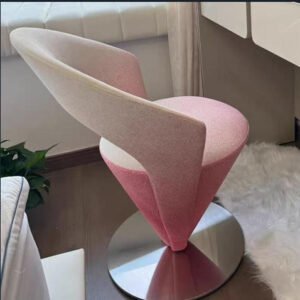
How established importers build sustainable supply chains, secure authentic pieces, and maintain competitive margins in the B2B furniture trade
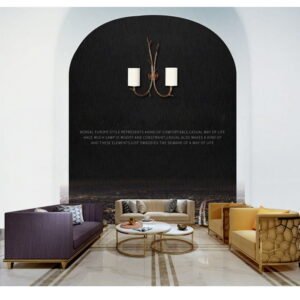
 A meticulously curated showroom floor — the result of years of refined supplier relationships and uncompromising sourcing standards.
Why This Matters to Your Bottom Line
If you’ve been importing Asian furniture for more than a few years, you already know the gap between operators who build durable, profitable businesses and those who quietly exit the market after their third bad container. That gap rarely comes down to product selection or showroom location. It comes down to systems: supplier relationships built over years of trust, logistics frameworks that account for hidden costs before a single order is placed, and quality standards enforced not by inspectors alone, but by a culture of accountability that runs from the factory floor to the final delivery.
This guide is not written for beginners, and it is not written for search engines. It is written for distributors managing multi-container annual volumes, showroom operators building B2B client rosters with interior designers and hotel groups, and importing operations trying to hold margin in an environment of rising tariffs, shifting trade policy, and increasingly demanding professional buyers.
Most distributors and showroom operators struggle with sourcing for the same three reasons: they over-index on price in early-stage supplier negotiations and discover quality problems at inspection or delivery; they underestimate true landed costs and find margins compressed by 15–25% once all fees are accounted for; and they build supplier relationships with one contact at a factory, only to find that relationship evaporates when that person changes roles. What separates profitable importers from those barely breaking even is not access to cheaper factories — it is the depth of process, relationships, and institutional knowledge they have built over time.
This guide addresses each of those pain points directly, drawing on more than three decades of combined experience in the Asian furniture trade and distilling it into the frameworks, checklists, and strategic approaches that actually move the needle.
1. Building Authentic Supplier Relationships in Asia: The Foundation of Everything
The Relationship-First Approach That Saves You Money and Headaches
Western buyers often enter Asian supplier relationships with a transactional mindset: get the best price, lock in terms, enforce compliance. That approach works adequately for commodities. For furniture — where quality is determined by decisions made in real time on the factory floor, where customization requires trust in both directions, and where the handshake still carries weight — the transactional mindset will cost you money within two or three orders.
Experienced importers do not lead with price. They lead with longevity. The first conversations with a new supplier are investments in mutual understanding: what the supplier’s production capabilities actually are, what their quality thresholds look like under volume pressure, and whether their management team shares your standards. A supplier who knows you are a long-term partner with consistent annual volume will allocate their best production line to your orders. A supplier who sees you as a price-shopper will allocate whatever capacity is available.
Why Trust Beats Price Negotiations in Long-Term Partnerships
Here is the math that experienced importers understand: a 3% price concession from a supplier who cuts corners under pressure costs you 15–25% in re-work, claims, and reputational damage with your showroom clients. A supplier who charges 5% more but flags quality issues before shipping, voluntarily upgrades a material when their original source becomes unreliable, and prioritizes your production schedule during peak periods generates significantly more net margin over a three-year relationship than the cheapest quote in the market.
The furniture importers who consistently outperform their competitors on margin are, almost without exception, the ones who have maintained supplier relationships for five, ten, and twenty years — and those relationships were built by treating suppliers as partners, not vendors.
How to Identify Suppliers Who Won’t Disappear or Compromise Quality Mid-Contract
The single most reliable indicator of a supplier’s reliability is not their factory certification — it is their client retention rate. Ask directly: “Who are your longest-tenured customers, and can I speak with them?” A supplier with 10-year client relationships in your product category has earned that tenure by performance. Be skeptical of factories that cannot provide references from clients who have been working with them for at least three years.
Operational red flags to watch for during initial due diligence include: pricing that falls more than 18–20% below market average without a clear explanation of how that cost is achieved; factories that are reluctant to allow video tours of the production floor; ownership structures that are opaque or frequently changing; and suppliers who cannot provide documentation of their primary materials suppliers.
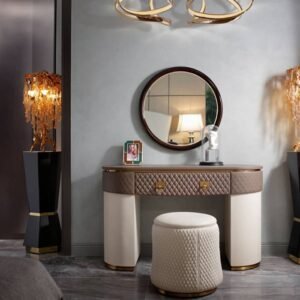
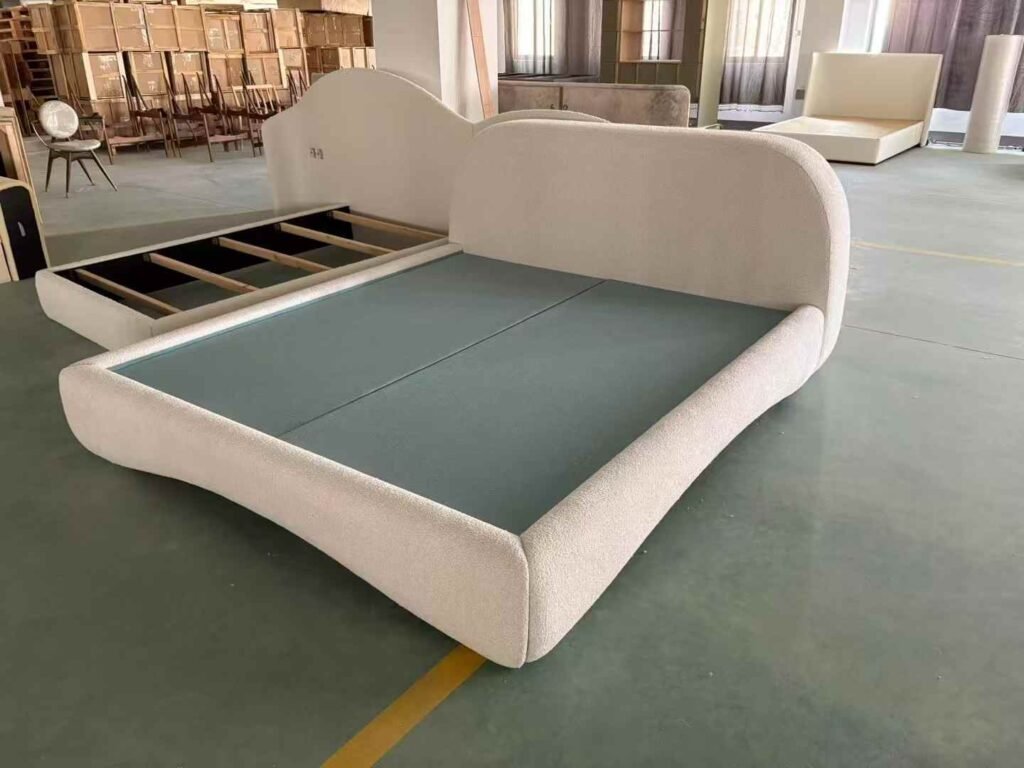
 Hand-finishing details like these are only achievable at manufacturers with experienced artisans — a distinction that separates genuine luxury from mass production.
The Vetting Process That Separates Reliable Manufacturers from Risky Ones
Before placing a first container order with any new supplier, a structured vetting process is non-negotiable. The Muebles Jade Ant due diligence checklist for verifying Chinese furniture factories covers five core dimensions: legal and corporate legitimacy, production capacity and capability, raw materials sourcing and documentation, labor practices and compliance, and financial stability indicators.
Red Flags in Factory Audits That Most Buyers Miss
Most buyers check the obvious boxes: ISO certification, production floor size, equipment inventory. The flags that experienced importers watch for are subtler. A factory that shows a gleaming showroom but has a disorganized production floor is staging for buyers. A supplier that quotes lead times of 20 days for complex custom upholstered pieces either has excess capacity they aren’t disclosing, or they are planning to subcontract your order to a facility you haven’t vetted. Ask to see the subcontractor agreements. Ask about their quality control at the subcontractor level.
Check the ratio of skilled artisans to production workers. For luxury upholstered furniture, hand-sewn seam finishing and matched pattern alignment require experienced labor — not assembly-line workers. A factory competing at luxury price points with a workforce of primarily entry-level workers is not producing what they are selling you.
Questions to Ask Before Committing to a New Supplier Relationship
The questions that yield the most insight are not technical — they are operational. “What happens when you discover a quality problem after production is 70% complete?” The answer tells you about their culture. “Have you ever had a long-term client leave? What happened?” The answer tells you about their accountability. “Who besides your sales manager should I have a relationship with here?” The answer tells you about their succession planning.
Maintaining Relationships Across Language, Culture, and Time Zones
Communication Protocols That Prevent Costly Misunderstandings
The single most common cause of costly specification errors in Asian furniture imports is not bad intent — it is incomplete communication at the specification stage. A color described as “warm walnut” means different things in three different factories. A dimension written as “1800mm” without a tolerance notation becomes a problem when 48 chairs arrive at 1785mm and don’t stack under your client’s existing tables.
Successful importers standardize communication in writing, in metric measurements, with physical reference samples or Pantone/RAL color codes wherever possible, and with photographs of approved samples at every stage. Video calls showing the factory floor, material samples, and prototypes are now standard practice. Never accept verbal confirmation of a specification change — follow every conversation with a written summary.
How to Schedule Factory Visits That Actually Yield Results
Budget $2,000–$5,000 per visit and plan a minimum of two full production days per factory. The most productive visits happen during active production of your order, not during a staged walk-through. Arrive unannounced if your relationship permits it — what you see on an unannounced Tuesday morning is more revealing than a prepared Wednesday presentation. Bring a qualified interpreter who understands furniture manufacturing terminology, not a general business translator.
2. Sourcing Authentic Pieces: Navigating Reproductions, Knockoffs, and Grey Markets
How to Verify Authenticity When Dealing with Traditional and Contemporary Designs
Authenticity in the B2B furniture trade operates on a spectrum. At one end: licensed reproductions, manufactured by factories with explicit agreements from the original designer or brand, accompanied by documentation that your clients can verify. At the other end: outright counterfeits, identical in appearance but carrying zero legal authorization and often using inferior materials masked by convincing surface finishes.
The grey market sits between these poles and represents the most significant sourcing risk for showroom operators. A piece described as “inspired by” a heritage design is a licensed reproduction. A piece described as “original” or bearing the designer’s mark without verified documentation is either a counterfeit or a fraudulent representation — both of which expose your business to legal liability and reputational risk with professional buyers who know the difference.
Documentation and Certification Standards Your Clients Will Demand
Interior designers and hotel procurement teams increasingly require documentation as a condition of purchase. For traditional Asian furniture pieces, this means: certificates of material origin (particularly for hardwoods like teak, rosewood, and ebony, which are subject to CITES regulations); documentation of manufacturing location for tariff classification purposes; and, for any piece marketed as a reproduction of a protected design, written evidence of licensing authorization.
For sustainable materials, Certificación FSC (Forest Stewardship Council) has become a baseline requirement for clients in the hospitality and high-end residential sectors. Build a documentation protocol that captures these certificates at the point of production, not retrospectively when a client requests them.
The Difference Between Licensed Reproductions and Counterfeit Pieces
A licensed reproduction of a mid-century Danish design, produced by a Vietnamese manufacturer with documented authorization and accurate material representation, is a legitimate product that your clients can purchase with confidence. A piece bearing a designer’s name without authorization, or representing itself as authentic when it is not, is a liability that will surface — typically when a knowledgeable interior designer or hotel procurement manager identifies the discrepancy and questions your entire sourcing operation.
 Contract-grade hospitality furniture requires documentation trails, durability specifications, and verified material sourcing — far beyond what retail-grade suppliers typically provide.
Protecting Your Showroom’s Reputation Through Rigorous Sourcing Standards
How to Audit Supplier Claims About Materials, Craftsmanship, and Origin
Do not accept material descriptions at face value. “Solid oak” should be verified by requesting a material certificate from the timber supplier and, for high-value pieces, an independent material test. “Hand-carved” means something very different at a factory with 40 skilled artisans working 8-hour shifts versus one with a CNC router and two finishers applying hand touches. Ask for video of the production process. Request a factory profile that identifies each stage of production and the labor involved.
Building a Quality Control Checklist That Works at Scale
| QC Stage | Qué hay que comprobar | Who Is Responsible |
|---|---|---|
| Pre-production | Material samples, color approval, dimension specification sign-off | Buyer’s representative + factory QC manager |
| Mid-production (30%) | Material usage, joinery methods, upholstery cut patterns | Third-party inspector or factory QC |
| Pre-shipment (100% complete) | Dimensions, finish consistency, hardware function, packaging | Third-party inspection company |
| At-container loading | Packing quality, quantity verification, damage check | Freight forwarder representative |
| At-destination | Surface condition post-transit, hardware integrity | Showroom receiving staff |
The Cost of Cutting Corners (and Why It’s Not Worth It)
Real-World Examples of Sourcing Failures That Damaged Distributor Relationships
A distributor supplying hotel groups in Southeast Asia lost a $280,000 contract renewal when 60 dining chairs from a new, price-competitive supplier began delaminating at the seat joints within 14 months — well within the warranty period the distributor had promised. The root cause: the supplier had substituted a lower-grade MDF core for solid timber at the structural joint, a change that was not visible externally and was not caught at pre-shipment inspection because the inspector did not perform structural stress tests.
The cost of the substitution to the supplier was approximately $12 per chair. The cost to the distributor was the hotel contract, the relationship with the procurement manager, and 18 months of reputation rebuilding.
How to Communicate Quality Standards to Your Suppliers Without Alienating Them
Communicate standards as investment, not policing. Frame quality specifications as the reason you can pay premium prices and place consistent long-term orders. Most factory managers understand that a client who enforces quality rigorously is a client who stays. Provide written specifications in bilingual format. Visit the factory during production to discuss standards in person. Build a relationship with the QC manager, not just the sales contact.
3. Navigating Import Logistics: From Container to Showroom Floor
Understanding the Hidden Costs That Erode Your Margins
The single most common financial mistake in furniture importing is treating the FOB (Free On Board) price as the primary cost variable and treating everything else as a secondary consideration. Experienced importers know that the spread between FOB price and true landed cost can range from 28% to 55% depending on the product, origin, and destination market.
Tariffs, Duties, and Regulations Specific to Furniture Imports from Asia
As of late 2025, US importers of Chinese furniture face a layered tariff structure that requires careful planning. Section 301 tariffs on most Chinese furniture categories carry an additional 25% on top of the base MFN (Most Favored Nation) rate. Section 232 tariffs effective October 2025 added a further 25% on upholstered wooden furniture and kitchen cabinets. This means that for certain upholstered furniture categories sourced from mainland China, importers are facing effective combined duty rates of 50%+.
The strategic response from experienced importers is not simply to absorb these costs — it is to build a diversified sourcing footprint across Vietnam, Malaysia, India, and Indonesia, each of which carries different tariff treatment and different manufacturing strengths.
| Cost Component | % of FOB Price (Typical Range) |
|---|---|
| Ocean freight (FCL) | 8–15% |
| Origin charges (export declaration, terminal handling) | 2–4% |
| Customs duty (varies by HS code and origin) | 0–50%+ |
| Customs brokerage fees | 0.5–1.5% |
| Marine insurance | 0.5–1% |
| Inland freight (port to warehouse/showroom) | 2–5% |
| Inspection fees | 1–2% |
| Currency conversion spread | 0.5–1.5% |
| Total landed cost premium over FOB | 15–80%+ |
Freight Consolidation Strategies That Reduce Per-Unit Shipping Costs
LCL (Less than Container Load) consolidation reduces per-unit freight costs by 20–40% for importers who don’t have sufficient volume to fill a dedicated FCL container. Work with a freight forwarder who specializes in furniture and has established consolidation routes between your primary sourcing regions and destination port. The trade-off is time: consolidation adds 20–40 days to your lead time, making it appropriate for core catalog replenishment but not for time-sensitive project orders.
Timing Your Orders to Match Market Demand Without Overstocking
Lead Time Management for Seasonal Collections and Trend-Driven Pieces
Standard production lead times from Asian manufacturers range from 45–90 days for standard catalog pieces, extending to 90–150 days for highly customized or complex upholstered items. Add 20–35 days for ocean freight to US West Coast, 25–40 days to East Coast, and 15–25 days to Southeast Asian destination markets. Factor in 7–14 days for customs clearance and inland delivery.
For hotel project work — where delivery windows are fixed and delays cost the contractor money in delayed openings — building a 30-day buffer into every lead time estimate is not conservative, it is necessary. Hospitality buyers who experience a supplier-caused delay on a project delivery will not give you a second chance.
How to Forecast Demand When You’re Selling to Interior Designers and Hotel Groups
Interior designer purchasing patterns follow project cycles, not seasonal retail patterns. A designer who places a $45,000 order in March may not place another significant order until October. Hotel groups operate on 3–7 year refurbishment cycles with procurement decisions often made 12–18 months before the actual order. Maintaining a pipeline view of your major clients’ project timelines — through regular account management conversations — allows you to forecast demand with meaningful accuracy and position inventory accordingly.
Warehouse Management That Keeps Inventory Moving
Storage Solutions for Bulky Items Without Tying Up Excessive Capital
Furniture is capital-intensive to store. A 40-foot container of mid-range upholstered furniture occupies 2,500–3,500 cubic feet of warehouse space and ties up $25,000–$80,000 in inventory. Experienced importers use a combination of owned showroom storage for fast-moving display pieces and third-party logistics (3PL) facilities for bulk inventory, paying per-pallet storage rather than fixed overhead.
The target inventory turnover rate for profitable furniture importers is 4–6 times per year. Pieces sitting longer than six months should trigger a markdown strategy, a targeted sales push to your designer client list, or a return negotiation with your supplier.
Inventory Tracking Systems That Prevent Costly Mistakes
| System Type | Lo mejor para | Cost Range |
|---|---|---|
| Basic spreadsheet (Excel/Google Sheets) | Single showroom, <200 SKUs | Free |
| Inventory management software (e.g., Fishbowl, inFlow) | 1–3 locations, 200–1000 SKUs | $150–$500/month |
| ERP system (e.g., NetSuite, SAP Business One) | Multi-location, high volume | $1,000–$5,000+/month |
| Custom WMS integration | Large-scale distribution with 3PL | Custom pricing |
4. Staying Competitive Without Sacrificing Margins
Pricing Strategies That Work in a Crowded B2B Marketplace
How to Calculate True Landed Cost and Avoid Leaving Money on the Table
The landed cost formula is straightforward; the execution is where most importers lose money. Using the formula above, a piece with a $420 FOB price from Vietnam, combined with 12% freight, 12% duty, and 6% handling/insurance/brokerage, arrives at a true landed cost of approximately $588. Applying a 2.4x multiplier to achieve a 58% gross margin yields a showroom price of $1,411 — before display costs, staff time, or showroom overhead are factored in.
Importers who do not build this calculation into every sourcing decision — instead working backward from a desired selling price — consistently underestimate their cost base and erode margins over time.
Competitive Positioning When Multiple Distributors Carry Similar Pieces
When two distributors carry the same or nearly identical pieces from the same production region, the competitive battle fought on price is a race to the bottom that benefits neither party. Experienced importers break this dynamic through three levers: exclusive sourcing arrangements that give you product differentiation; value-added services that shift the buyer’s decision criteria away from unit price; and relationship depth with end clients (designers, hotel groups) that creates switching costs not based on product, but on trust and service reliability.
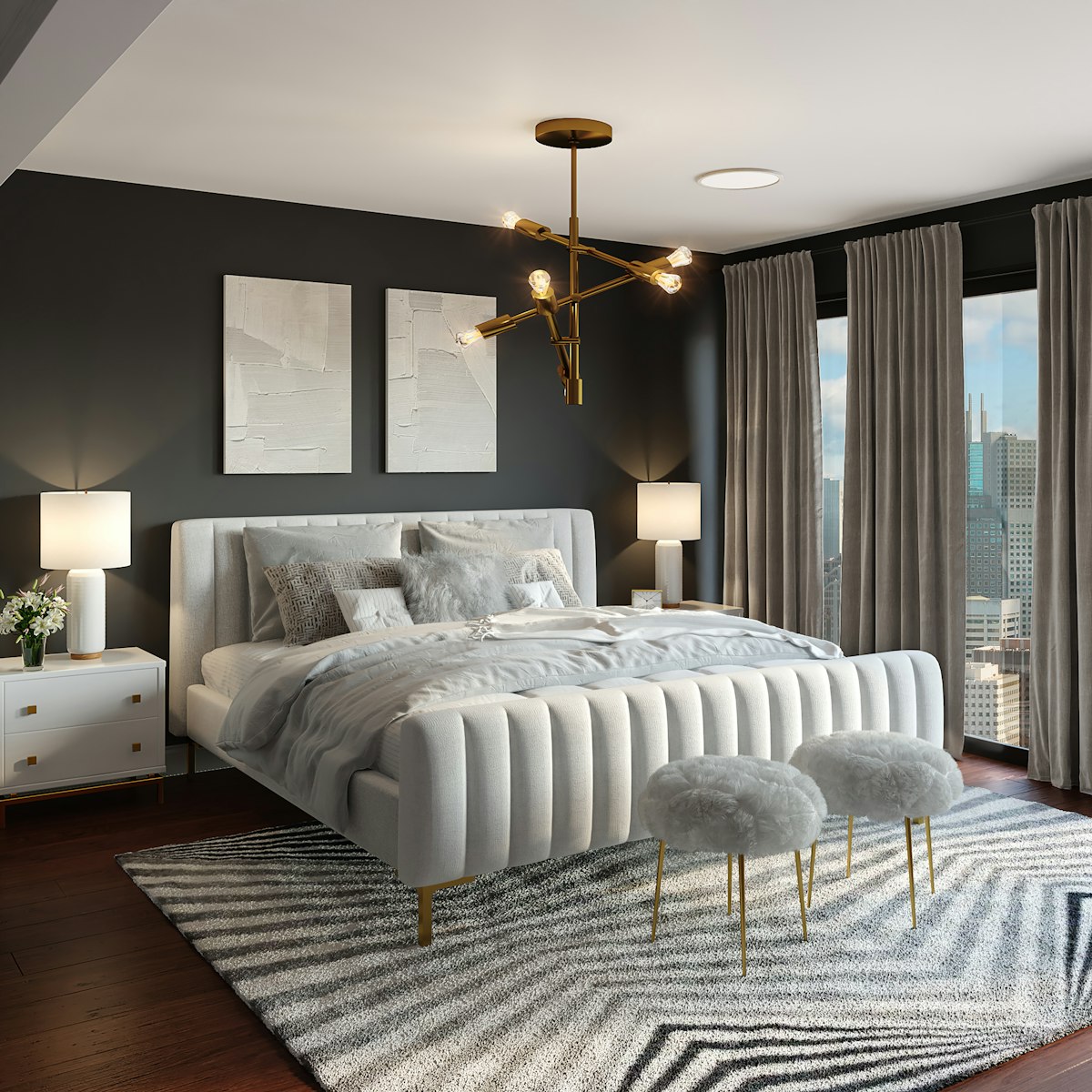 Showrooms that tell a complete design story — not just display product — consistently command higher average transaction values from B2B buyers.
Adding Value Beyond the Product Itself
White-Glove Services That Justify Premium Pricing to Your Clients
The distributors who consistently win hotel group and high-end residential contracts are not those with the lowest prices — they are those who make the procurement process effortless for the buyer. White-glove services that command a premium include: room-ready delivery with assembly and placement, design consultation for furniture specification within a project brief, project management for multi-piece orders with staggered delivery requirements, and post-installation warranty support with a dedicated account contact.
An interior designer who specifies $180,000 of furniture for a high-end residential project is not looking for the cheapest supplier. She is looking for the supplier who will not create problems for her: who will deliver on schedule, whose pieces will look exactly as specified, and who will resolve any issues without requiring her to manage the process.
Custom Sourcing and Bespoke Services That Set You Apart from Online Retailers
Online retailers — including the increasingly capable direct-from-manufacturer platforms — compete effectively on standard catalog pieces at standard sizes. They cannot compete on bespoke dimensions for a specific alcove, custom lacquer matching an architect’s specified Pantone, or a dining table designed to seat 22 in a historic dining room with non-standard ceiling heights. Custom sourcing and bespoke manufacturing services, built on deep supplier relationships, create a differentiated offering that online competitors structurally cannot replicate.
Muebles Jade Ant offers exactly this kind of bespoke manufacturing capability — from custom dimension adjustments to fully original designs developed from your client’s specifications — with low minimum order quantities that make custom work viable even for mid-scale projects.
Leveraging Scale Without Losing Flexibility
Minimum Order Quantities and How to Negotiate Them Strategically
Standard MOQs from Asian furniture manufacturers range from 1 piece (for established clients with track records) to full container loads for new buyers. The negotiating lever is not just current volume — it is committed future volume. A supplier who sees a 3-year volume forecast from a credible buyer will often accept lower initial MOQs in exchange for a volume commitment letter. Structure these commitments with “good faith” language rather than hard contractual obligations if your demand is not fully predictable.
Building a Portfolio That Serves Diverse Client Needs
| Client Type | What They Value Most | Portfolio Priority |
|---|---|---|
| Interior designers | Customization, uniqueness, documentation | Bespoke-capable, certified authentic |
| Hotel groups | Durability, lead time reliability, warranty | Contract-grade, bulk-capable |
| Showroom operators | Price-value balance, display differentiation | Curated catalog, strong visual impact |
| High-end residential developers | Design narrative, premium materials | Heritage pieces, named designers |
5. Adapting to Market Trends While Honoring Tradition
Reading Market Signals That Affect Your Sourcing Decisions
Sustainability Demands from Interior Designers and Corporate Clients
The eco-friendly furniture market was valued at $53.7 billion globally in 2025 and is projected to reach $113.9 billion by 2033, growing at a 10% compound annual rate. This is not a trend — it is a structural shift in how professional buyers specify furniture, driven by corporate sustainability commitments, green building certification requirements (LEED, BREEAM, WELL), and genuine consumer demand from the clients of interior designers and hospitality groups.
For importers, this translates to a concrete sourcing requirement: work with manufacturers who can document their material origins, provide FSC or PEFC chain-of-custody certification for wood products, and demonstrate compliance with VOC (volatile organic compound) limits in finishes and adhesives. Expect to pay 10–20% more for certified sustainable pieces. Position that premium as a feature, not a cost, when presenting to professional buyers.
How Asian Manufacturers Are Responding to Eco-Conscious Buyers
Vietnamese furniture manufacturers, in particular, have invested significantly in FSC certification over the past five years, driven by export requirements from European buyers. FSC certification in Vietnam is now a competitive differentiator in the export market, with certified manufacturers commanding 8–15% premium pricing and preferential consideration from procurement teams at major hotel groups and corporate fit-out firms.
🎥 Watch: Why Asia Remains the Global Leader for Custom, Scalable Furniture Sourcing

This video provides a clear breakdown of why B2B furniture buyers continue to source from Asia, including scale, customization capability, and quality benchmarks — relevant context for any importer building or reviewing their sourcing strategy.
Balancing Classic, Authentic Pieces with Contemporary Demand
Which Traditional Designs Remain Evergreen and Which Are Fading
Ming-style furniture — characterized by graceful proportions, minimal ornamentation, and extraordinary joinery precision — has maintained consistent demand in the high-end hospitality and residential markets for decades and shows no sign of diminishing. Similarly, Japanese tansu chests and lacquered furniture from the Meiji period remain consistently strong sellers with collectors and interior designers working in transitional and contemporary-Asian aesthetic projects.
What is declining: heavily ornamented Qing-period reproduction styles and the maximalist chinoiserie that dominated hotel lobby aesthetics in the 2000s. Contemporary buyers want Asian authenticity expressed with restraint — materiality and craftsmanship over surface decoration.
How to Position Vintage and Heritage Pieces in a Modern Market
The narrative is the product. A console table that can be presented as “hand-lacquered using a technique documented in 17th-century Suzhou workshops, requiring 14 individual applications and a 6-week drying period between stages” commands a fundamentally different conversation than “lacquered console, Chinese manufacture.” Both are accurate. One generates margin; the other invites price comparison.
Technology Integration Without Losing the Craftsmanship Story
Digital Showrooms and 3D Visualization Tools Your Clients Expect
Interior designers and hotel project managers now routinely expect 3D visualization capabilities — the ability to see how a specific piece will look in a specific room, in a specific finish, at a specific scale — before committing to an order. Importers who can provide 3D models of their catalog pieces (in industry-standard formats compatible with SketchUp, AutoCAD, and Revit) remove a significant friction point from the design specification process and become preferred suppliers for time-pressured designers.
How to Communicate Artisanal Value in a Digital-First World
Short-form video content showing the production process — the hands selecting the timber, the artisan applying the lacquer, the joinery being cut without mechanical assistance — creates visceral proof of craftsmanship that no product specification sheet can replicate. Your B2B clients are selling to their clients. Give them the content they need to make that sale.
6. Managing Currency Fluctuations and Economic Volatility
Protecting Your Margins When Exchange Rates Shift
Currency volatility between the USD, CNY, VND, and other Asian currencies directly affects the cost of every order placed in a foreign currency. A 5% unfavorable movement in USD/CNY between order placement and payment due date on a $200,000 order represents a $10,000 cost increase that is invisible until it appears in your bank statement.
Hedging Strategies for Long-Term Supplier Contracts
Forward contracts — agreements to purchase a specified amount of foreign currency at a predetermined rate at a future date — are the standard risk management tool for importers with predictable order volumes. For importers placing $500,000+ annually in Asian currencies, forward contracts through a specialist foreign exchange broker (not your retail bank) can save $15,000–$40,000 per year in unfavorable rate exposure. For smaller operators, currency accounts that allow you to hold USD/CNY/VND balances and time conversions to favorable windows provide a practical alternative.
How to Build Pricing Flexibility Into Your Distributor Agreements
Build currency adjustment clauses into long-term distributor pricing agreements, linked to published exchange rate benchmarks. Define the threshold — typically a 3–5% adverse movement — that triggers a price renegotiation conversation. This protects your margins without creating the adversarial dynamic of unilateral price increases, and professional distributor clients understand and accept these mechanisms.
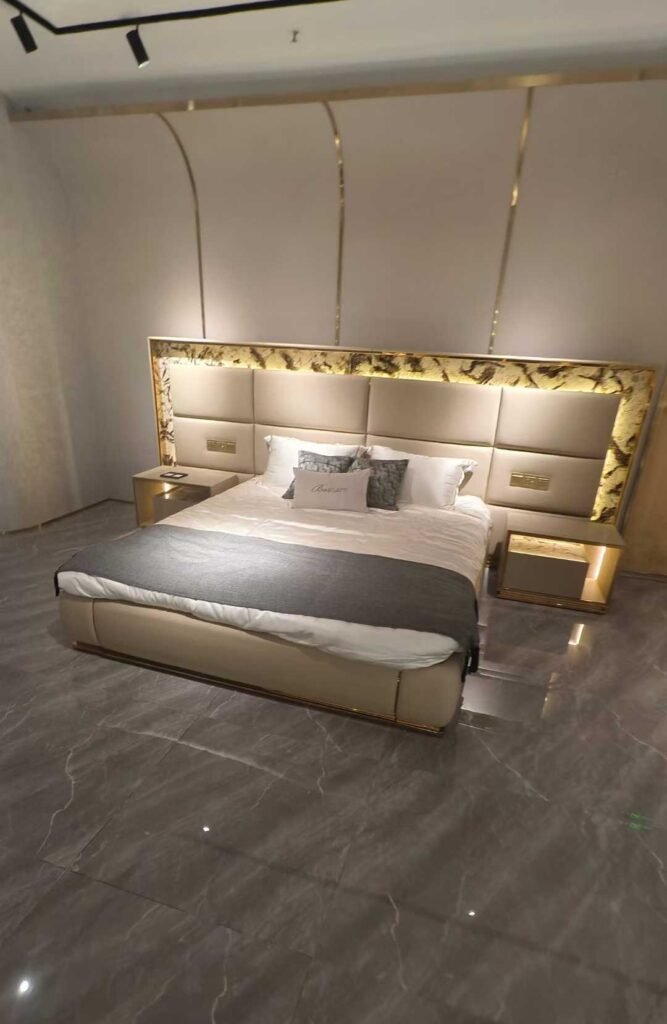
 Bespoke bedroom suites for high-end hospitality clients require verifiable material certification, warranty documentation, and project management capability — not just competitive pricing.
Navigating Tariff Changes and Trade Policy Uncertainty
Diversifying Your Supplier Base to Mitigate Geopolitical Risk
The importers who handled the post-2018 Section 301 tariff increases most effectively were those who had already begun building sourcing relationships in Vietnam, Malaysia, and India — not as a reaction to tariffs, but as a deliberate risk diversification strategy. Today, with Section 232 tariffs adding further layers of cost for Chinese-origin furniture, a multi-country sourcing strategy is not a competitive advantage — it is a business continuity requirement.
Building Supplier Relationships in Multiple Asian Countries
Each major Asian furniture manufacturing region has distinctive strengths. China offers unmatched scale, manufacturing diversity, and supplier sophistication for high-complexity pieces. Vietnam has emerged as the leading alternative for solid wood furniture, with strong FSC certification infrastructure. Malaysia and Indonesia are strong for rattan, bamboo, and teak pieces. India offers exceptional artisanal craftsmanship for hand-carved wood and brass-inlaid pieces. A sourcing footprint that draws deliberately from multiple countries provides both tariff diversification and product differentiation.
Maintaining Relationships During Economic Downturns
How to Support Suppliers While Protecting Your Own Cash Flow
During the 2020 pandemic period, importers who maintained their supplier relationships — even through dramatically reduced order volumes — by communicating transparently about their situation, paying deposits on hold orders as promised, and placing even small transitional orders to keep production lines moving, emerged with strengthened supplier loyalty and priority access to capacity when demand recovered. The importers who simply stopped communicating or cancelled orders unilaterally found their positions at the back of the production queue when the market turned.
Renegotiating Terms Without Damaging Long-Term Partnerships
Approach renegotiation as a shared problem, not a unilateral demand. “My market is facing significant margin pressure — I need to understand where we can find savings together” opens a very different conversation than “I need a 15% price cut or I’ll move to a competitor.” Suppliers who feel respected will find solutions. Suppliers who feel threatened will either comply resentfully — and recover the margin somewhere you can’t see — or walk away.
7. Building a Competitive Showroom That Moves Inventory
Merchandising Strategies That Showcase Imported Pieces Effectively
How to Display Asian Furniture in Ways That Appeal to Designers and Hotel Buyers
Interior designers and hotel buyers do not purchase furniture — they purchase rooms. Your showroom display strategy should reflect this: instead of arranging pieces by category (all sofas together, all dining tables together), create complete room vignettes that demonstrate how pieces work together in a coherent design scheme. A well-executed hospitality vignette — lobby seating arrangement with complementary occasional tables, textile accessories, and lighting — allows a hotel procurement manager to visualize the completed space and reduces the decision friction that fragments large orders.
Creating Room Sets That Tell a Story and Justify Premium Pricing
Every display vignette should have a narrative — a geographic reference point, a historical period, a material story. A room set described as “drawing on Japanese Meiji-era craft principles: blackened steel joinery, quarter-sawn oak, and hand-stitched leather” gives a designer client the story they need to present to their own client. Narrative creates perceived value that price cannot.
Training Your Showroom Staff to Sell to B2B Clients
Product Knowledge That Goes Beyond Dimensions and Materials
A B2B buyer — whether an interior designer, hotel procurement manager, or retail chain buyer — will ask questions that a retail-trained showroom assistant is not equipped to answer: “What’s the standard lead time for a custom order in this finish?” “Does this piece meet contract-grade durability standards for commercial use?” “Can I get GSA pricing documentation for this item?” Train your team to have fluent answers to these questions, and to know which questions require escalation to a senior buyer or account manager.
How to Communicate Sourcing Stories and Craftsmanship to Professional Buyers
Role-play scenarios where your staff presents the sourcing story of a complex piece to a skeptical procurement manager. The goal is not memorization of marketing copy — it is genuine understanding of the manufacturing process, material choices, and the supplier relationship that produced the piece. A salesperson who can say, with confidence, “I visited this factory in Guangdong last March — I watched this finish being applied, and I can tell you exactly why it will hold up better than comparable pieces at this price point” has a competitive advantage no product catalog can provide.
8. Scaling Your Operation: From Single Showroom to Multi-Location Distribution
Systems and Processes That Scale Without Sacrificing Quality
Standardizing Your Quality Control Across Multiple Locations
The primary risk in scaling from one showroom to multiple locations is that quality decisions become decentralized. A system that works because one experienced buyer makes every quality judgment does not scale. Build written quality specifications for every product category you carry, train receiving staff at every location to perform documented incoming inspections, and create an escalation protocol for non-conforming deliveries that routes decisions back to your central sourcing team.
Inventory Management When You’re Supplying Multiple Showrooms or Dealers
At the scale of multiple showrooms or a distributor network serving independent dealers, centralized inventory visibility is not a nice-to-have — it is operationally essential. The cost of misallocated inventory (showroom A has 12 units of a slow-moving piece while showroom B is backordering it) in a furniture operation can reach 5–8% of annual revenue in unnecessary carrying costs, missed sales, and emergency freight.
Managing Distributor Relationships and Channel Conflict
How to Support Showroom Partners Without Undercutting Their Margins
Channel conflict — the distributor discovering that their supplier is also selling direct to the distributor’s end customers — is a relationship-ending event in the B2B furniture trade. Define clear channel rules in your distributor agreements: which sales channels you operate, which you do not, and what happens when an end customer contacts you directly. Refer direct inquiries from a distributor’s territory back to that distributor, consistently and transparently.
Exclusive Territories and Product Allocation Strategies
Exclusive territory arrangements provide distributors with the competitive protection that justifies their investment in building your brand in their market. In return, they provide volume commitments and market development investment. The allocation discipline required — ensuring that exclusive products don’t appear on competing platforms or through unauthorized channels — requires active monitoring and the willingness to enforce agreements when violations occur.
Building a Team That Understands Both Sourcing and Sales
Hiring and Training for Roles That Didn’t Exist 10 Years Ago
The modern furniture importing operation requires a skill set that crosses disciplines that used to be separated: someone who can read a factory audit report and also present to a hotel procurement committee; someone who understands HS code classification and can also advise a designer on period-accurate hardware choices. These hybrid roles did not exist in meaningful numbers a decade ago. Build hiring criteria around demonstrated cross-functional capability, not narrow specialization.
Knowledge Transfer from Long-Term Importers to Emerging Team Members
The institutional knowledge held by a 20-year importer — which suppliers are reliable under pressure, which freight forwarders actually perform, what the warning signs of a compromised container look like — cannot be transferred by an operations manual. Structured mentorship, joint factory visits, and deliberate knowledge documentation (supplier relationship histories, quality issue logs, market insight journals) are the tools that preserve this knowledge through personnel transitions.
9. Technology and Systems That Give You an Edge
Supply Chain Visibility Tools That Prevent Costly Surprises
Real-Time Tracking from Factory to Showroom Floor
The standard in supply chain visibility for furniture importers has shifted significantly. Real-time container tracking (available through platforms like project44, FourKites, or directly through most major freight forwarders’ portals) provides arrival date accuracy within 24–48 hours versus the ±5–7 day estimates that were standard five years ago. For hotel project deliveries and designer project installations with fixed date commitments, this visibility is operationally critical.
Automated Alerts for Quality Issues, Delays, and Inventory Imbalances
Configure automated alerts at the key risk points in your supply chain: production milestone completion, pre-shipment inspection report submission, container loading, vessel departure, vessel arrival, and customs release. A team that is proactively notified of delays has options. A team that discovers delays when the expected delivery date passes has crises.
Data Systems That Inform Better Sourcing Decisions
Sales Analytics That Reveal Which Suppliers’ Products Perform Best
Track performance not just by SKU, but by supplier. Which manufacturer’s pieces have the lowest return rate? Which have the highest repeat order rate from your designer clients? Which generate the most unsolicited referrals? This supplier-level performance data is the most valuable input you have for your next sourcing season — and most importers are not capturing it systematically.
Forecasting Tools That Reduce Overstock and Stockouts
| Métrico | Target Benchmark | Warning Threshold |
|---|---|---|
| Inventory turnover rate | 4–6x per year | Below 3x per year |
| Stockout rate (lost sales) | Below 5% | Above 10% |
| Overstock ratio (>6 months on hand) | Below 8% of inventory | Above 15% of inventory |
| Supplier on-time delivery rate | Above 90% | Below 80% |
| Pre-shipment inspection pass rate | Above 95% | Below 88% |
Digital Communication Platforms That Strengthen Supplier Relationships
Project Management Tools for Complex Orders with Multiple SKUs
For multi-SKU hotel orders — a 280-room property requiring 12 furniture pieces per room across 3 room categories, with 6 different finishes and 4 production facilities — a spreadsheet is a liability, not a tool. Project management platforms like Monday.com, Asana, or Trello, configured with bilingual supplier access, provide shared visibility across the order lifecycle and reduce the communication errors that cause expensive mistakes.
Photo and Specification Databases That Speed Up Ordering and Reordering
A well-maintained product specification database — photographs of approved samples at every angle, material certificates, dimension drawings, finish specifications with physical reference codes — reduces the time required to reorder a proven piece from hours to minutes, and eliminates the specification drift that occurs when orders are placed from memory or incomplete records.
10. The Future of Asian Furniture Importing: What’s Changing and What Remains
Emerging Trends That Will Reshape Your Sourcing Strategy
Nearshoring Pressures and How They Affect Asian Manufacturers
The nearshoring trend — driven by US and European companies seeking to reduce supply chain risk by sourcing from geographically closer markets — has created real pressure on Asian manufacturers, particularly in commodity furniture categories. However, for the luxury custom furniture segment served by operations like Muebles Jade Ant, the competitive advantage of Asian manufacturing is not primarily cost — it is craft, artisanal skill depth, and design heritage that cannot be replicated in Mexico or Eastern Europe at comparable quality points.
Sustainability Certifications and the Cost of Compliance
Sustainability compliance costs are rising across the supply chain. The EU’s Deforestation Regulation (EUDR), effective 2025, requires documented proof that wood-based furniture products do not contribute to deforestation — a due diligence requirement that extends to the forest-of-origin level. For importers supplying European markets or European-brand hotel groups globally, building this documentation capability now is not optional.
Generational Shifts in Family-Owned Suppliers and What They Mean for You
When Long-Term Partners Retire or Pass Operations to New Leadership
Many of the most capable Asian furniture manufacturers are family businesses now in their second or third generation of ownership. Generational transitions — the founder retiring and passing operations to a son or daughter trained in business rather than craft — represent a significant relationship risk for importers whose bond is with the founding generation.
The mitigation strategy is not reactive — it is proactive. Build relationships at multiple organizational levels before the transition occurs. Know the second generation. Understand their business philosophy. When the transition happens, be the supplier relationship they want to preserve, because you have already invested in the relationship with them, not just with their parent.
How to Build Relationships with the Next Generation of Manufacturers
The next generation of Asian furniture manufacturing leadership is educated, internationally connected, and comfortable with digital communication, sustainability expectations, and design collaboration. They respond to partners who treat the relationship as mutual — who bring market insights, design feedback, and business strategy to the table alongside purchase orders. Be that partner.
Positioning Your Business for the Next 30 Years
Staying Relevant as E-Commerce and Direct-to-Consumer Models Evolve
Direct-to-consumer platforms are not your competitors — they are your market intelligence. The models, aesthetics, and price points gaining traction on direct-to-consumer platforms tell you what the end consumers of your B2B clients are responding to. Monitor these platforms for trend signals, and translate those signals into sourcing conversations with your suppliers.
The Enduring Value of Relationships, Authenticity, and Trust in a Digital World
The furniture categories that are most vulnerable to disintermediation by e-commerce are standard-specification, catalog pieces that can be accurately represented in photographs and shipped efficiently. The categories that are most resilient to disintermediation are exactly those in which experienced B2B importers like Muebles Jade Ant specialize: custom dimensions, proprietary finishes, bespoke designs, and pieces whose quality is only fully evident in person. No algorithm replaces the judgment of an importer who has personally visited 40 factories and knows exactly which one to call for a 16-person bespoke dining table in hand-rubbed lacquer.
The Competitive Advantage of Long-Term Thinking
Every shortcut in the furniture import business has a price that gets paid eventually: the supplier who seemed cheaper turned out to be less reliable; the container that skipped pre-shipment inspection arrived with problems that damaged a hotel relationship; the distributor agreement that lacked channel clarity created conflict that took two years to resolve.
The importers who have built sustainable, profitable businesses over 30+ years did so by investing early and consistently in the things that compound: supplier relationships that improve with time, quality systems that catch problems before they reach clients, and reputation with professional buyers that makes you the first call when a significant project is being specified.
Your action plan starts with an honest audit of your current operation against the frameworks in this guide: Where are your supplier relationships deepest, and where are they most exposed? Where are your landed cost calculations most accurate, and where are you operating on assumptions? Where do your systems and processes scale, and where do they depend on institutional knowledge held by one or two people?
The first steps are not dramatic. Formalize your supplier vetting process. Build a complete landed cost template for your primary product categories. Schedule a factory visit with your most important supplier that isn’t driven by a specific order, but by relationship investment. Train one person on your team to answer every question a hotel procurement manager might ask about your sourcing process.
These are the investments that compound. They are also the investments that most competitors are not making — which is precisely why they create durable competitive advantage.
Ready to Strengthen Your Sourcing Strategy and Protect Your Margins?
Whether you are managing a single showroom, scaling across multiple locations, or looking to diversify your supplier base across multiple Asian manufacturing regions, the team at Muebles Jade Ant has worked with distributors, showroom operators, and interior designers across Asia-Pacific to build sustainable, profitable import operations.
Schedule a Consultation | Explore Our B2B Product Range | Learn More About Our Sourcing Process
Preguntas más frecuentes (FAQ)
Q1: How do I know if an Asian furniture supplier is legitimate and won’t disappear mid-contract?
Look for manufacturers with 10+ years of verifiable operation, documented factory locations, and a client reference list that includes buyers who have been working with them for at least three years. Red flags include reluctance to conduct video tours of the factory floor, vague or frequently changing ownership information, pressure to pay large deposits before you have visited or performed any due diligence, and pricing that falls more than 18–20% below market average without a clear cost-structure explanation. Conduct a formal factory audit — either in person or through a qualified third-party inspection service — before placing your first container order. The Jade Ant due diligence checklist is a useful starting framework.
Q2: What is the difference between a licensed reproduction and a counterfeit furniture piece, and why does it matter to my showroom?
A licensed reproduction is manufactured with explicit written authorization from the original designer or brand and is accompanied by documentation that can be verified by your clients. A counterfeit bears a designer’s marks, name, or design without authorization. For your B2B clients — particularly interior designers and hotel procurement teams — authenticity matters legally and reputationally. Selling counterfeits exposes your business to intellectual property liability and, more practically, damages your reputation with professional buyers who identify the discrepancy and question every other piece in your portfolio.
Q3: How much should I budget for factory visits, and how often do I need to go?
Budget $2,000–$5,000 per visit, accounting for flights, accommodation, ground transport, interpretation services, and incidental expenses. Most experienced importers visit key suppliers 1–2 times annually for active production relationships and once every 2–3 years for established partners with strong performance records. Virtual audits — live video walkthroughs of the factory floor, shared in real time rather than staged recordings — are a valuable supplement but do not replace in-person visits for new or high-volume relationships. Nothing substitutes for seeing the factory floor operating normally, meeting the production management team, and reviewing materials inventory in person.
Q4: What are realistic lead times for furniture orders from Asian manufacturers, and how should I manage them?
Standard lead times for catalog pieces from established manufacturers range from 45–90 days for production, depending on complexity and finish requirements. Highly customized or complex upholstered items can require 90–150 days. Add 20–35 days for ocean freight to US West Coast, 25–40 days to East Coast, and 7–14 days for customs clearance. For hotel project deliveries, always build a 30-day buffer into your committed delivery date — the cost of a delay in a hotel opening is orders of magnitude larger than the cost of the furniture arriving early.
Q5: How do I negotiate better pricing with Asian suppliers without damaging the relationship?
Focus on volume commitments and payment terms rather than one-off price cuts. Ask for cost-structure transparency — understanding where the costs are in a complex piece often reveals where savings are possible without compromising quality. Offer early payment discounts, larger purchase commitments, or longer-term volume forecasts in exchange for improved pricing. Never pit suppliers against each other openly — the furniture manufacturing community in any given region is smaller and more interconnected than most Western buyers realize, and suppliers talk.
Q6: What hidden costs should I account for in my landed cost calculations?
The costs most frequently underestimated by importers include: pre-shipment inspection fees ($300–$600 per visit); port handling and terminal fees at origin; marine cargo insurance (typically 0.5–1% of cargo value); customs brokerage fees; tariffs and duties (currently as high as 50%+ for certain Chinese-origin furniture categories under combined Section 301 and Section 232 structures); inland freight from port to warehouse; and currency conversion spreads. Taken together, these can add 28–55% to your FOB price. Use a comprehensive landed cost spreadsheet — updated with current tariff rates — for every sourcing decision.
Q7: Should I consolidate shipments with other importers, and how does that work in practice?
LCL (Less than Container Load) consolidation through a specialist furniture freight forwarder can reduce per-unit shipping costs by 20–40% for orders that don’t fill a dedicated FCL container. The trade-off is time: consolidation adds 20–40 days to your transit schedule, making it appropriate for core catalog replenishment but unsuitable for time-sensitive project orders. Work with a freight forwarder who has established consolidation routes between your sourcing regions and your destination port, and who understands the specific handling requirements of furniture (particularly fragile or high-gloss pieces).
Q8: How do I navigate the current tariff environment and minimize my duty exposure?
Tariff planning for Asian furniture imports requires a qualified customs broker who specializes in furniture and stays current with rapidly evolving policy. Key strategies include: correct HS code classification (misclassification is costly in both directions); sourcing diversification across countries with different tariff treatment (Vietnam, Malaysia, India carry lower effective rates than China for many categories); and tariff engineering, where product specifications are structured to qualify for lower duty rates where legitimately applicable. For high-value orders, engage your customs broker in the sourcing conversation before you place the order — not after.
Q9: How do I train my showroom team to sell effectively to interior designers and hotel buyers?
B2B professional buyers care about fundamentally different things than retail consumers: lead time reliability, customization capability, bulk pricing structures, warranty terms for commercial use, and supply chain documentation. Train your team to answer these questions fluently. Conduct role-play scenarios where staff presents the sourcing story of a complex piece to a skeptical procurement manager. Ensure every team member can articulate the difference between contract-grade and residential-grade construction, explain your quality control process from factory to delivery, and discuss your supplier relationships with specific, verifiable detail.
Q10: What metrics should I track to know which pieces are actually profitable and which are dead weight?
Track units sold per SKU, inventory turnover rate (target 4–6x per year), gross margin by piece, time-to-sell, and return/claim rate. Segment these metrics by supplier to identify which manufacturer’s products perform best in your market. Pieces sitting longer than six months should be flagged immediately — carry costs in a furniture operation compound rapidly. Share this performance data with your suppliers on a regular basis; suppliers who understand what’s working in your market will develop better products for you over time.
Q11: How do I justify premium pricing when competitors are undercutting me on price?
The answer is never to compete on price alone — it is to shift the decision criteria to dimensions where you win. Differentiate on service reliability (consistent lead times, white-glove delivery, dedicated account management), product authenticity (documented provenance, verifiable certifications), and relationship depth (you know their project pipeline, you source specifically for their client base, you solve problems before they escalate). A showroom operator or interior designer who has experienced the cost of a price-optimized supplier delivering late, with quality problems, on a high-stakes project will not make that mistake again. Position yourself as the partner who doesn’t create those problems.
Q12: How do I scale from one showroom to multiple locations without losing control of quality?
Scaling requires converting individual expertise into documented systems. Write quality specifications for every product category. Train receiving staff at every location to perform incoming inspections against documented standards. Implement centralized inventory visibility so stock can be managed across all locations. Establish escalation protocols for non-conforming deliveries. Visit each location regularly — monthly at minimum during the first year of operation. As you grow, hire a dedicated supply chain manager before the lack of one creates problems.
Q13: How do I manage distributor relationships without creating channel conflict?
Define channel boundaries explicitly in your distributor agreements: which sales channels you operate, which territories are exclusive, what price floors apply, and what happens when direct inquiries are received from within a distributor’s territory. Enforce these agreements consistently — every exception creates precedent. Support your distributors actively with marketing materials, product training, and exclusive pieces that give them genuine competitive advantage in their market.
Q14: What happens to my supplier relationship when my long-term factory contact retires or transitions out?
Relationship risk at the individual level is one of the most underestimated risks in the Asian furniture import trade. Mitigate it proactively: build relationships at multiple organizational levels within your key suppliers, not just with your primary sales contact. Meet the second generation of family-owned businesses before the transition occurs. Document all specifications, quality standards, and agreed terms in writing, ensuring that institutional knowledge is not solely held in the memory of one individual on either side of the relationship.
Q15: My designer clients are increasingly asking about sustainable sourcing. How do I respond, and what does it actually cost?
Sustainability is now a baseline expectation, not a premium positioning strategy, for professional buyers in the high-end residential and hospitality segments. Build your response on documented certifications: FSC or PEFC chain-of-custody certification for wood products, VOC compliance documentation for finishes and adhesives, and — for clients targeting LEED or WELL certification — material health documentation. Expect to pay 10–20% more for certified sustainable pieces from manufacturers who have invested in compliance infrastructure. Position that premium accurately to your clients: sustainability compliance has a cost, and the cost of non-compliance — losing a specification to a competitor who can document their materials — is higher.
For more information on building a sustainable, profitable Asian furniture import operation, visit JadeAnt.com or explore our B2B sourcing resources. Additional industry resources: Forest Stewardship Council | HFA Furniture Import Guide | PEFC Sustainable Furniture