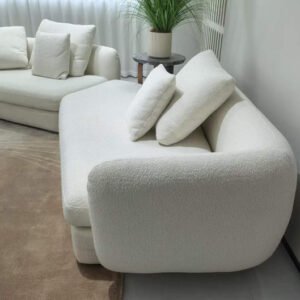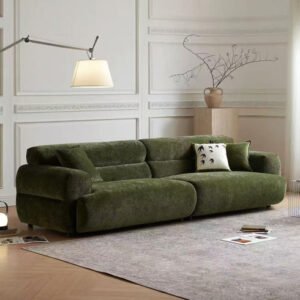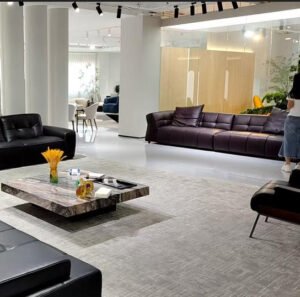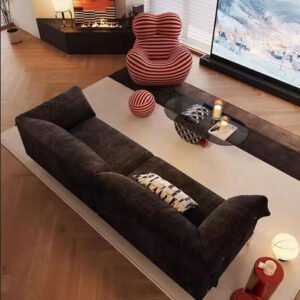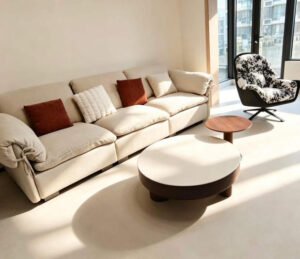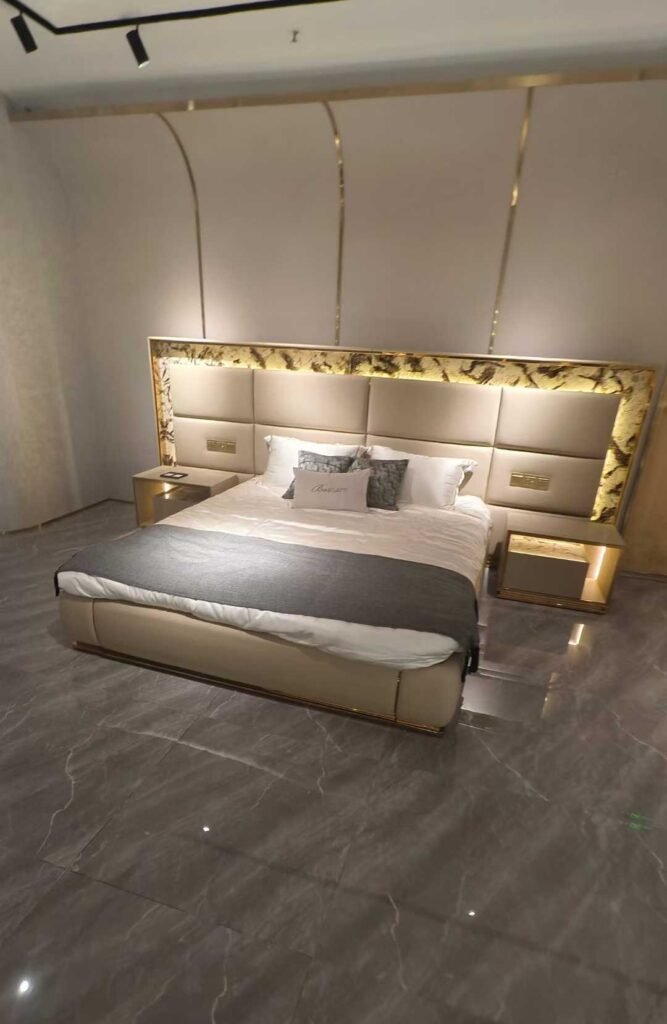
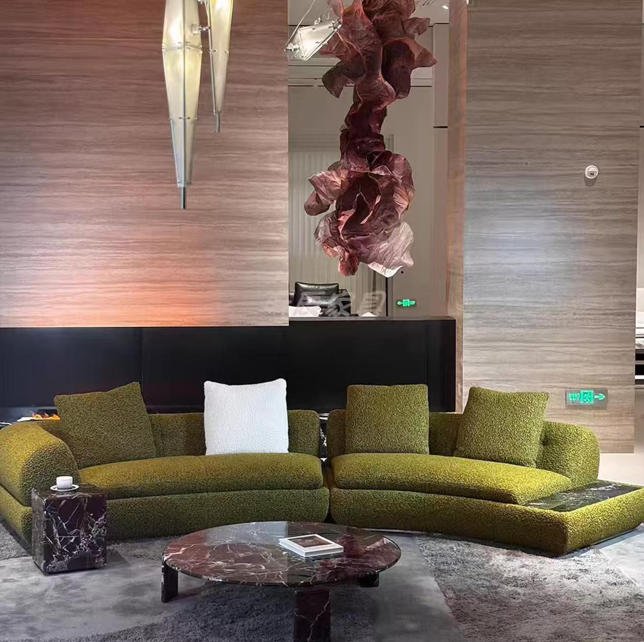
A strategic guide for high-end furniture importers, villa owners, interior designers, FF&E buyers, developers, and design firms.
Choosing the wrong hotel furniture manufacturer is rarely a slow failure. It tends to announce itself at the worst possible moment — a container of guestroom chairs arrives with inconsistent finishes two weeks before opening, or a custom lobby sofa sags after six months under the weight of daily hospitality traffic. The stakes in luxury hotel furnishing are simply too high for trial and error.
The global hotel furniture, fixtures, and equipment (FF&E) market was valued at $63.1 mil millones en 2025 y se prevé que alcance $107 900 millones para 2033 (Investigación de Grand View). Within that, the luxury hospitality furniture segment alone is expected to grow from $7.99 billion in 2025 to $14.99 billion by 2035. This is not a commodity market — it is a precision procurement challenge where brand integrity, guest satisfaction, and ROI all depend on the quality of your manufacturing partner.
FF&E (Furniture, Fixtures & Equipment): The movable items in a hotel or villa that are not permanently attached to the building structure — beds, chairs, desks, lobby seating, lighting fixtures. These items are budgeted and procured separately from the construction cost and represent a significant share of total project spend.
This guide walks through the five factors that differentiate a manufacturing partner worth committing to from one that will cost you more than the invoice price.
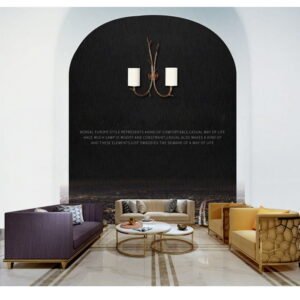
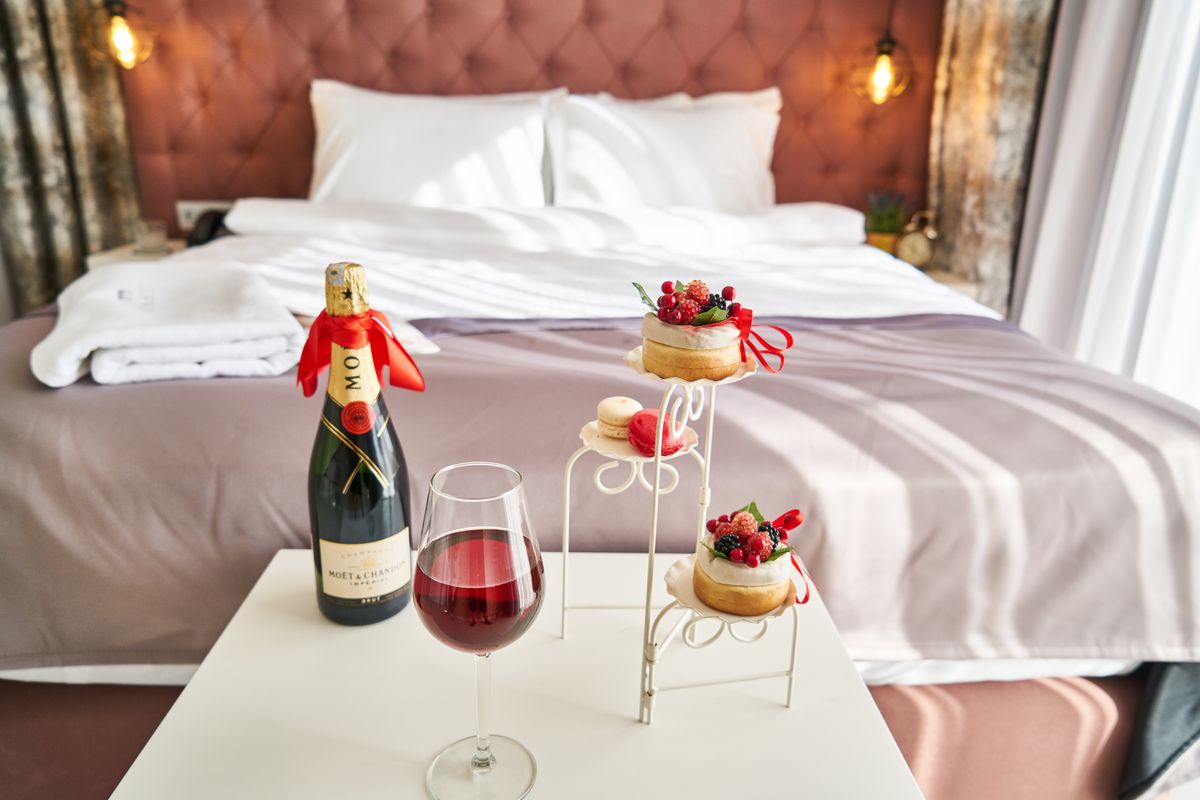 Luxury hotel lobby furniture — the first touchpoint that defines guest perception and brand positioning. Source: Pexels
1. Superior Quality of Materials & Craftsmanship
Why This Is the Non-Negotiable Starting Point
When a guest sits down in a lobby chair, they don’t read the specification sheet. But they feel it. Fabric that pills after three months, a frame that flexes under bodyweight, or a lacquer finish that yellows under UV light — these are the silent signals that erode brand trust faster than any review website.
For FF&E buyers managing multi-property portfolios or villa developers presenting to high-net-worth clients, furniture quality is not about aesthetics alone. It is about total lifecycle cost.
Total Cost of Ownership (TCO): The full financial impact of a furniture purchase over its useful life, including purchase price, installation, maintenance, repairs, and eventual replacement. Formula: TCO = Initial Cost + Maintenance Cost + Downtime Cost − Residual Value (Sunder TCO Model).
A hotel guestroom chair purchased at $180 FOB that requires reupholstering after 18 months will cost more over five years than a $320 contract-grade equivalent that holds its form for five or more years with only routine maintenance.
What to Evaluate — Material by Material
Solid hardwood frames (oak, ash, beech) are the benchmark for premium hospitality seating. Engineered wood cores are acceptable for casegoods (wardrobes, nightstands) when properly sealed, but they should never be used in structural components of weight-bearing chairs or beds.
High-resilience (HR) foam for upholstered pieces should have a density of at least 1.8 lb/ft³ for contract use y 2.0–2.2 lb/ft³ for residential-grade luxury. Foam that falls below these thresholds will lose its shape within 12–18 months of daily use.
Performance-grade fabrics — specified using the Martindale or Wyzenbeek abrasion test — should exceed 30 000 doble fricción for hotel public spaces and 15,000 double rubs for guestrooms. Outdoor hospitality furniture requires solution-dyed acrylic fabrics rated for UV and moisture resistance.
Metal finishes on legs, handles, and frames should specify the coating process: powder coating, PVD (Physical Vapour Deposition), or electroplating. PVD finishes — common in brushed brass and matte black hospitality hardware — offer superior durability over standard electroplating.
Martindale Test: A European standard that measures fabric durability by rubbing a circular piece of fabric against itself under controlled pressure. Higher rub counts = longer fabric lifespan.
The Craftsmanship Checkpoint
Ask any prospective manufacturer for their joinery specification. A mortise-and-tenon joint (where the frame’s tenon slides into a corresponding mortise cavity and is glued under clamp pressure) is the gold standard for chair and sofa frames — far superior to dowel-only or staple-and-bracket construction that is common in budget production.
Request a cross-section sample of the seat construction: from webbing or sinuous spring base through foam density layers to the top fabric. This single request will tell you more about a supplier’s quality commitment than any marketing brochure.
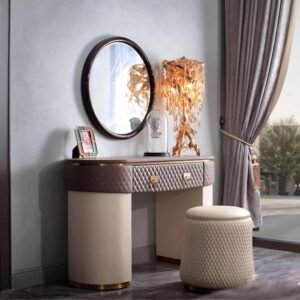
 Contract-grade guestroom furniture — material specification determines whether a 200-room hotel fits out once or twice in five years. Source: Pexels
2. Advanced Customization & Design Flexibility
The Problem with Catalogue Furniture in Luxury Hospitality
A 5-star resort in Bali and a boutique urban hotel in London share one thing: neither of them should look like each other’s lobby. Yet catalogue furniture — pieces manufactured in fixed specifications and sold from stock — pushes both projects toward the same visual middle ground.
For interior designers and design/architecture firms working to a brand brief, this is not just an aesthetic problem. It is a compliance problem. Brand-standard hotel chains typically issue FF&E specifications that define allowable materials, finish codes, and dimensional tolerances. A manufacturer who cannot accommodate these specifications forces compromise at the design stage.
What Real Customization Looks Like in Practice
A capable manufacturer should be able to execute:
- Custom dimensions: A lobby sofa sized to fit a specific architectural alcove, or a guestroom desk calibrated to a 38-inch ceiling recess.
- Custom upholstery: COM (Customer’s Own Material) acceptance, where the designer supplies the specified fabric and the manufacturer upholsters to order.
- Custom finishes: Precise RAL or Pantone paint codes matched and documented for batch consistency across large orders.
- Bespoke hardware: Custom pulls, feet, and decorative details that distinguish a private-label product from anything a competitor can source from the same catalogue.
OEM (fabricante de equipos originales): The manufacturer produces the product to your design specifications and your brand. ODM (fabricante de diseño original): The manufacturer creates the design which you then brand and sell as your own. Both models are valuable for importers building private-label hospitality collections.
Muebles Jade Ant operates with this model in mind — accepting custom dimensions, material adjustments, and finish specifications at the order stage, with technical drawings confirmed before production begins. For developers and hotel operators who need a consistent spec executed across multiple properties, this level of documentation and repeatability is what separates a manufacturer from a vendor.
The Designer-Manufacturer Collaboration Standard
The best manufacturing partnerships in hospitality are not transactional. They are technical collaborations. A manufacturer worth working with should provide:
- Technical drawings (2D plan and elevation) for design approval before cutting begins.
- 3D renderings for complex bespoke pieces where visualization aids client sign-off.
- Pre-production samples for upholstery, finish, and hardware confirmation.
- Documented revision history so that any mid-project change is traceable.
If a manufacturer resists this level of documentation, treat it as a red flag — not a cost-saving measure.
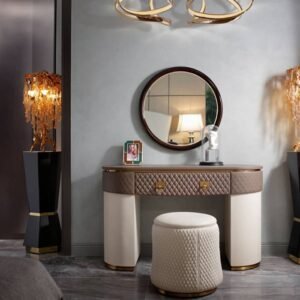
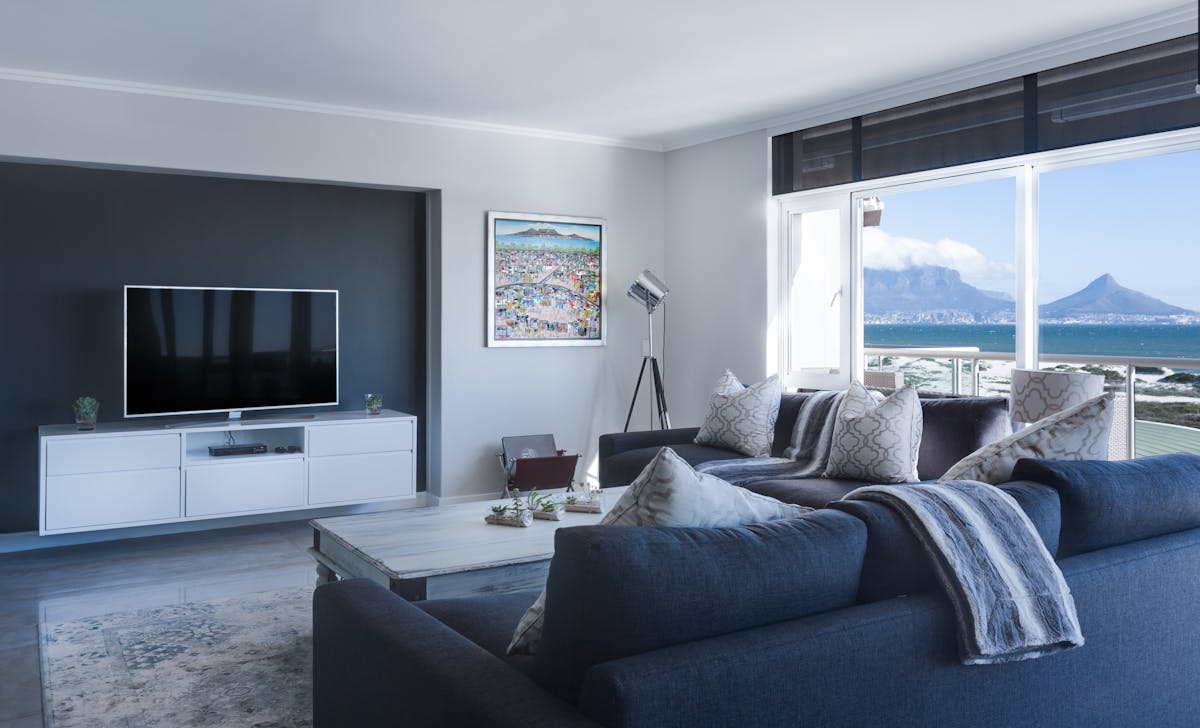 Bespoke suite furniture — executed to exact designer specifications, not adapted from a catalogue. Source: Pexels
3. Transparent & Competitive Pricing Structures
The Hidden Cost Problem in Hotel FF&E Procurement
A $1,200 FOB price per guestroom furniture package looks very different once you add freight, import duty, customs clearance, local delivery, installation, and contingency. Buyers who compare suppliers on FOB price alone without modelling the full landed cost routinely discover mid-project that their budget is 18–25% short.
FOB (Libre a bordo): The price the manufacturer charges up to the point of loading at the origin port. All costs from that point — ocean freight, insurance, import duty, destination charges, last-mile delivery — are the buyer’s responsibility. CIF (coste, seguro y flete): The manufacturer covers freight and insurance to the destination port. DDP (Entrega con derechos de aduana pagados): The manufacturer handles everything, including import duty, to your specified address.
The Full Landed Cost Model — A Practical Table
Use the framework below when evaluating any hotel furniture quotation. Apply it to every supplier on your shortlist using consistent specifications to compare apples to apples.
| Cost Component | Typical Range | Notas |
|---|---|---|
| FOB Unit Price | Varies by spec | The only number most suppliers quote |
| Ocean Freight (20-ft container) | $1,800 – $4,500 | Varies by route and season |
| Customs Clearance | $300 – $800 | Per shipment |
| Import Duty (US) | 0% – 25% of FOB | Varies by HS code and origin |
| Marine Insurance | 0.5% – 1.5% of cargo value | Recommended for all shipments |
| Last-Mile Delivery | $150 – $400 per piece | Floor-level delivery to install point |
| Installation Labour | $50 – $200 per hour | Region dependent |
| Contingency (10–15%) | Based on total above | For delays, reinspection, damage |
| Total Landed Cost | FOB + all above | Use this number to compare suppliers |
Source: Industry data from hotel FF&E procurement benchmarks and logistics cost averages, 2025.
MOQ, Tooling Fees & Volume Economics
MOQ (cantidad mínima de pedido): The smallest quantity a manufacturer will accept for a specific item. For standard pieces, MOQs can range from 20 to 50 units. For bespoke custom designs, some manufacturers — including Muebles Jade Ant — accept as few as 1 piece per item type, which is critical for villa projects or showroom sampling.
Ask every prospective manufacturer to itemize:
- Tooling or setup fees for custom molds, CNC routing programs, or custom hardware dies. A one-time tooling fee of $800–$2,000 is normal for genuinely bespoke components. If a supplier claims there are none, the “customization” is likely superficial.
- Tiered volume pricing: What does the per-unit cost look like at 10, 50, and 200 units? A manufacturer who offers no meaningful volume discount on large hotel orders has thin production capacity or is not interested in scaling with you.
- Condiciones de pago: The industry standard for custom manufacturing is 50% deposit at order confirmation and 50% balance before shipment. Net-30 terms become available once a 12–18 month verified payment history is established.
Value Over Price — The TCO Argument
A mid-range hospitality chair that requires reupholstering after 24 months costs roughly 40% more over five years than a premium equivalent that holds its specification for 60+ months. For a 200-room hotel with four chairs per room, that difference compounds into a six-figure capital decision. Request full lifecycle cost data — not just the invoice price — before committing.
4. Reliable Lead Times & Production Capacity
The Cost of Delay Is Not Just the Invoice
A furniture delivery that arrives two weeks after a hotel’s opening date is not an inconvenience — it is a revenue event. Rooms that cannot be handed over cost money every single day. Facebook posts from a manufacturer have described furniture delays adding up to 30% to a project’s total cost when rooms cannot be opened on schedule.
For a 200-room hotel projecting an average daily rate (ADR) of $250 with 75% projected occupancy at opening:
$$\text{Daily Lost Revenue} = 200 \times $250 \times 0.75 = $37,500$$
A two-week delay at that scale represents $525,000 in lost room revenue — before factoring in cancelled bookings, penalty clauses, or the reputational cost to the design firm responsible for the project.
This is not a hypothetical. It is the operational context in which every lead time commitment from a manufacturer should be evaluated.
What to Verify Before You Sign
Production lead time for custom hotel furniture typically runs 60–90 days for a 100-room order, as documented across the FF&E procurement industry. Top-tier manufacturers can compress this with proper pre-production planning and buffer capacity management.
Before committing to a supplier, ask:
- What is the current factory utilization rate? A manufacturer running at 95% capacity has no buffer for your urgent re-order or design change.
- How are production milestones communicated? Weekly photographic updates at each production stage — cutting, framing, upholstery, finishing, packing — are a standard expectation with reliable partners.
- What is the contingency protocol for material shortages or QC failures? A credible supplier will have documented answers. Vague assurances are a warning sign.
Red Flags to Watch For
Watch for any of the following during initial supplier conversations:
- Lead times quoted without reference to current production load
- No system for real-time order tracking or milestone photography
- Reluctance to provide a binding production schedule in writing
- No documented QC (Quality Control) checkpoint process between production stages
QC Checkpoint: A formal inspection at each stage of furniture production — raw material arrival, frame assembly, foam and spring installation, upholstery, finishing, and pre-shipment packing — designed to catch defects before they compound into delivery-stage failures.
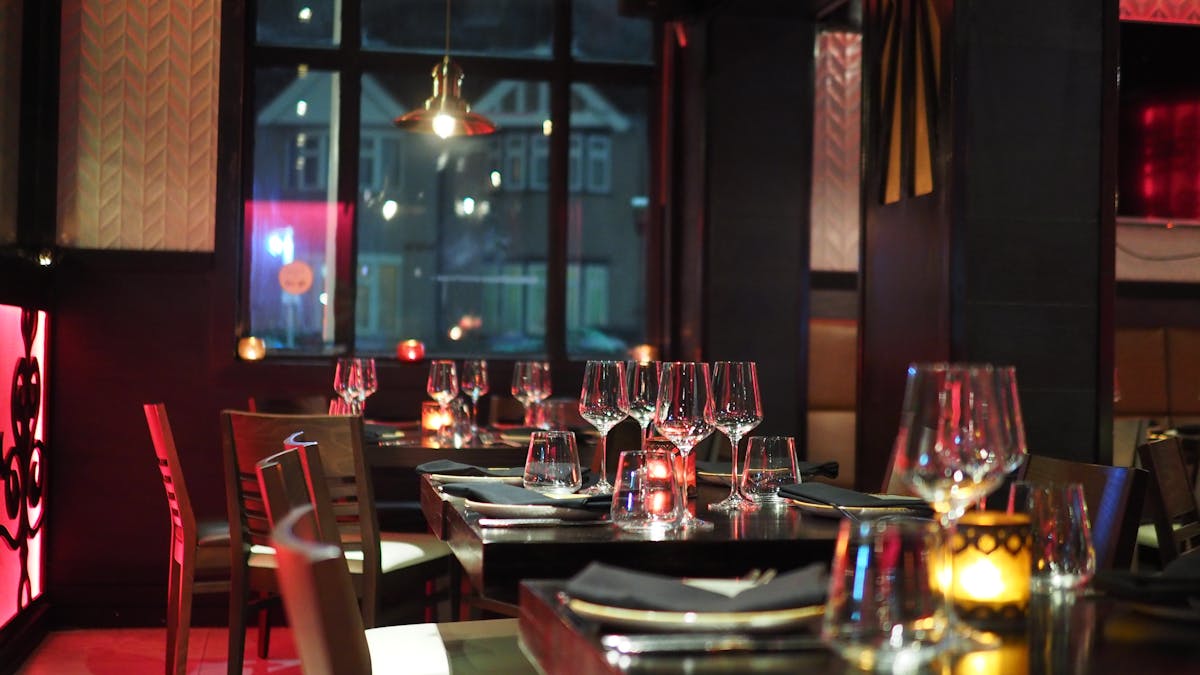 Luxury hotel dining room — every piece requires documented QC sign-off before loading. Production delays here affect opening timelines and investor confidence. Source: Pexels
5. Proven Customer Reviews & Industry Reputation
Why Reputation Is the Only Reference That Matters
In luxury hotel procurement, you are not just purchasing furniture. You are co-signing the manufacturer’s track record with your client’s project. If the finish quality falls short of the specification, you will be the one managing that conversation with the hotel operator or villa owner — not the factory.
Third-party reviews on a manufacturer’s own website are a starting point, not a conclusion. Direct reference verification is the only credible vetting method.
How to Verify a Manufacturer’s Reputation Without Relying on Their Marketing
Step 1 — Request project-specific client references. Ask for the names and contact information of at least three buyers who placed orders of comparable scale (room count, customization complexity, delivery geography) within the past 24 months. Speak to them directly.
Step 2 — Ask the right reference questions.
- Did the final delivered pieces match the approved sample and technical drawing?
- Was the production schedule adhered to? If not, how was the delay communicated and resolved?
- How did the manufacturer respond to any defects or damage discovered at delivery?
- Would you place another order with this supplier? Why or why not?
Step 3 — Look for international hospitality project evidence. A manufacturer serving 5-star international hotel chains will have documentation — branded installation photography, project handover reports, or verifiable hotel names they can reference. This level of project history indicates production capacity, export experience, and the quality standards required for major brand approvals.
Step 4 — Cross-reference against industry listings and trade directories. Reputable manufacturers appear on verifiable trade platforms, have documented export history, and are findable through industry publications like Hospitality Design or global FF&E directories.
The Testimonial Trap
Inflated or fabricated online testimonials are common in the furniture manufacturing sector. Indicators include uniformly positive language with no specific project detail, reviewer profiles with no verifiable business identity, and testimonials that read more like marketing copy than operational feedback. Treat these as noise and rely only on direct-verified references.
6. Bonus Factor: Compliance & Sustainability Standards
Certifications Are Now a Client Expectation, Not a Differentiator
International hotel groups, luxury villa developers, and design firms specifying for European or North American markets increasingly treat sustainability and fire safety certifications as baseline requirements — not premium add-ons. Failing to source certified furniture can result in project approval delays, insurance complications, or outright rejection from brand-standard audits.
The Core Certifications Table
| Certificación | Qué cubre | Where Required |
|---|---|---|
| FSC (Forest Stewardship Council) | Sustainable timber sourcing chain of custody | Global — EU, UK, US premium projects |
| GREENGUARD Gold | Low VOC emissions for indoor air quality | US healthcare, hospitality, and educational projects |
| CAL 117 (TB 117-2013) | Smolder resistance for upholstered furniture foam | California (US) — often required globally |
| BS 5852 | Cigarette and match flame resistance for upholstery | UK and international projects with UK brand standards |
| ISO 9001 | Quality management system certification | General — indicates documented manufacturing process control |
| Fase 2 del CARB | Formaldehyde emissions from composite wood products | US and Canada — critical for casegoods with MDF components |
| REACH | Chemical safety compliance | EU market requirements |
Always verify certifications directly through the issuing body — FSC certificates can be checked at info.fsc.org, y UL GREENGUARD certificates are searchable through UL’s public database.
VOC (Volatile Organic Compound): Chemical emissions released from paints, lacquers, adhesives, and foam materials used in furniture manufacturing. High VOC levels in enclosed hotel rooms or office spaces can cause health issues. GREENGUARD Gold certification ensures products meet the strictest indoor air quality standards.
Sustainability as a Project Differentiator
For villa developers and luxury resort operators, FSC-certified timber and GREENGUARD-certified finishes are increasingly featured in marketing materials and brand positioning — particularly in eco-sensitive destinations. Sourcing certified furniture is not just a compliance exercise; it is a story your clients can tell their guests.
7. Bonus Factor: After-Sales Support & Warranty Policies
What Happens After Delivery Is Where Long-Term Partnerships Are Decided
A strong pre-delivery relationship means little if a supplier becomes unresponsive the moment the container is unloaded. For FF&E buyers managing multi-property portfolios, after-sales support is an operational requirement — not a nice-to-have.
Evaluating Warranty & After-Sales Capability
Use this framework to compare after-sales commitments across manufacturers:
| Criterios de evaluación | Minimum Acceptable | Best-in-Class |
|---|---|---|
| Frame warranty | 2 years | 5–10 years |
| Upholstery warranty | 1 year | 2–3 years |
| Finish/lacquer warranty | 1 year | 2 years with UV clause |
| Response time to defect claim | 5–7 business days | 24–48 hours |
| Spare parts availability | On request | Held in buffer stock for 3 years |
| Replacement shipment for defects | Negotiated per case | Included in contract terms |
| Repair support in destination country | Not offered | Available via local agent |
For hotel operators managing a phased renovation where 30 rooms are refurnished per year, spare parts availability and finish-batch consistency over a 3-year period are as important as the initial delivery quality.
8. How to Vet a Manufacturer: A Step-by-Step Checklist
Use the checklist below as your standard evaluation framework before placing any significant hotel or villa furniture order.
✅ Pre-Qualification Checklist
Documentation Review
- Request ISO 9001 certificate and verify via issuing body
- Request FSC, GREENGUARD Gold, CAL 117, and CARB Phase 2 certificates as applicable
- Review export documentation from at least three comparable projects (bill of lading, packing lists)
Sample Evaluation
- Request a physical production sample — not a showroom piece — of the key items you intend to order
- Inspect frame joinery, foam density, fabric abrasion rating, and finish quality under raking light
- Perform a basic load test: sit in the sample chair; open and close drawers 20+ times; check for play in joints
Factory Assessment (Virtual or In-Person)
- Review CNC equipment availability for custom cuts and precision components
- Assess finishing department: spray booth environment, curing protocols, finish thickness measurement tools
- Observe QC documentation: are checkpoints recorded and photographed at each production stage?
- Evaluate workforce stability: ask about average production staff tenure (high turnover = inconsistent quality)
Commercial & Logistics Review
- Confirm export experience to your destination country, including customs documentation capability
- Verify logistics partnerships and obtain freight rate benchmarks from their preferred forwarders
- Review payment terms, defect replacement policy, and warranty documentation in writing
Communication Assessment
- Conduct a timed response test: send a detailed technical inquiry and measure response quality and speed
- Confirm English proficiency of the key account and technical drawing team
- Ask for a sample production update — the format they use to communicate milestone progress mid-order
📺 Watch: Inside a Real Hotel Furniture Factory — What Quality Control Looks Like on the Production Floor

▶ Watch on YouTube: Inside a Chinese Hotel Furniture Factory — a real look at materials, finishes, and quality control for hotel FF&E projects.
9. A Manufacturing Partner, Not Just a Supplier
The right hotel furniture manufacturer is not the one with the lowest FOB price or the most impressive showroom catalogue. It is the one whose production process, communication standards, certification portfolio, and after-sales commitment align with the demands of your specific project.
The professionals who consistently deliver luxury hotel and villa projects on time, on brief, and within budget share one common approach: they treat manufacturer selection as a strategic decision — not a procurement shortcut.
Start with a pilot order. Validate quality, timeline adherence, communication, and defect resolution before committing to a full hotel build. Once you have found a manufacturer that performs consistently at scale, the relationship compounds in value — faster turnaround, better pricing, priority scheduling, and access to new product development.
Muebles Jade Ant is built around exactly this model — a China-based custom and luxury furniture manufacturer with 15+ years of experience serving hotel operators, villa developers, interior designers, and FF&E buyers who need predictable quality, documented production processes, and a team that handles the logistics complexity so you can focus on your clients.
For professionals ready to evaluate a manufacturing partner against the criteria in this guide, the starting point is a detailed project brief and a sample request — not a sales call.
→ Request a Custom Hotel Furniture Quotation from Jade Ant
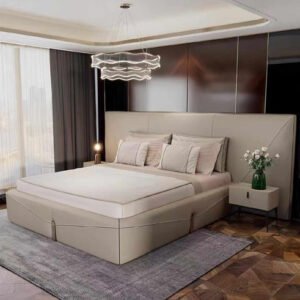
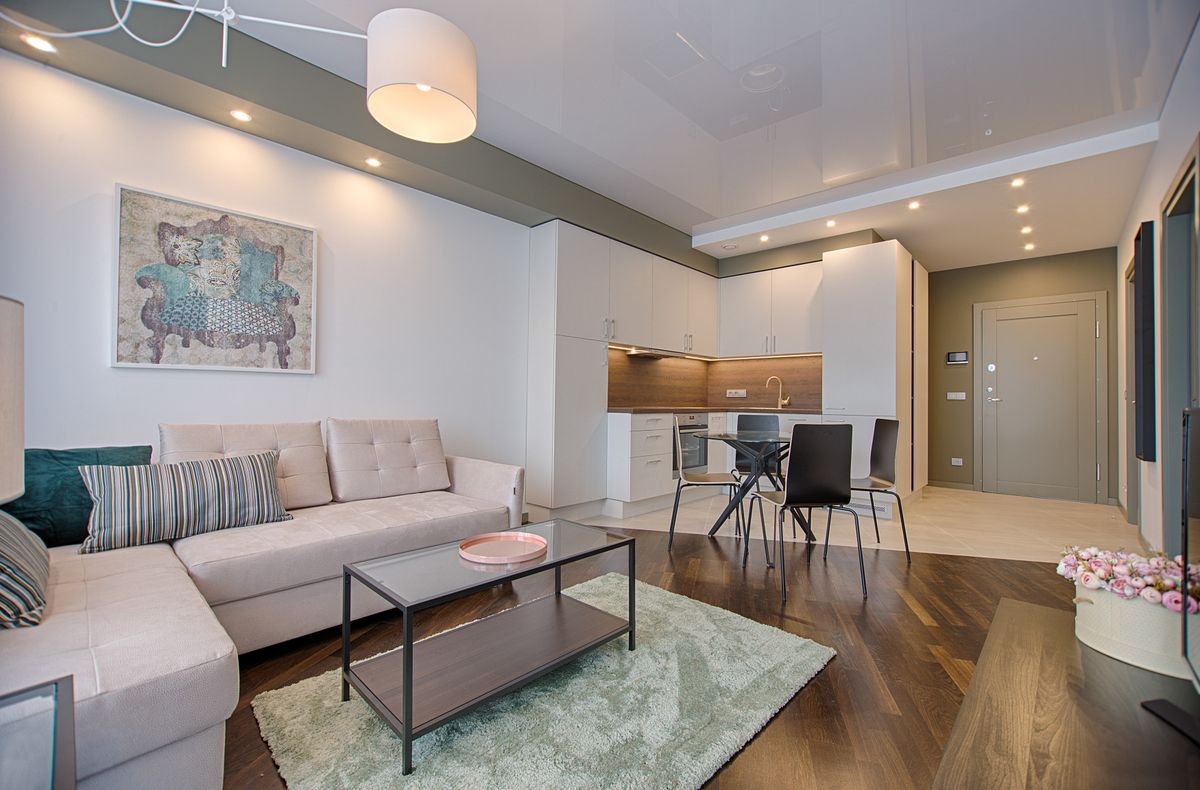 Luxury villa living room — bespoke furniture executed to a specific design brief, not adapted from stock. Source: Pexels
📥 Downloadable Resource: Supplier Evaluation Checklist
Use the table below as a printable, shareable evaluation tool when comparing hotel furniture manufacturers side by side. Score each supplier from 1 (poor) to 5 (excellent) in each category.
| Evaluation Category | Criterios | Supplier A | Supplier B | Supplier C |
|---|---|---|---|---|
| Materials Quality | Frame construction, foam density, fabric abrasion rating | /5 | /5 | /5 |
| Profundidad de personalización | COM acceptance, custom dimensions, finish matching | /5 | /5 | /5 |
| Certificaciones | FSC, GREENGUARD Gold, CAL 117, ISO 9001, CARB | /5 | /5 | /5 |
| Pricing Transparency | Itemized quotation including tooling, MOQ, payment terms | /5 | /5 | /5 |
| Lead Time Reliability | Production schedule, milestone updates, buffer capacity | /5 | /5 | /5 |
| Verified References | Direct client contacts, project history, hospitality track record | /5 | /5 | /5 |
| Communication Quality | Response speed, English proficiency, technical accuracy | /5 | /5 | /5 |
| After-Sales Support | Warranty terms, replacement policy, spare parts availability | /5 | /5 | /5 |
| Logistics Capability | Export experience, customs documentation, logistics partners | /5 | /5 | /5 |
| Factory Assessment | CNC equipment, QC documentation, workforce stability | /5 | /5 | /5 |
| TOTAL SCORE | Maximum: 50 points | /50 | /50 | /50 |
Scoring guide: 45–50 = Preferred partner; 35–44 = Acceptable with conditions; Below 35 = Do not proceed without significant due diligence.
Glossary of Key Terms
| Término | Definition |
|---|---|
| FF&E | Furniture, Fixtures & Equipment — movable project items budgeted separately from construction |
| TCO | Total Cost of Ownership — full financial cost of a purchase over its useful life |
| FOB | Free on Board — price up to the origin port; buyer pays all costs from that point |
| CIF | Cost, Insurance & Freight — seller covers freight and insurance to the destination port |
| DDP | Delivered Duty Paid — seller handles everything including import duty to your address |
| OEM | Original Equipment Manufacturer — produces to your design and brand specification |
| ODM | Original Design Manufacturer — designs and produces; you brand and sell |
| Cantidad mínima de pedido | Minimum Order Quantity — smallest quantity a manufacturer accepts per item |
| COM | Customer’s Own Material — client supplies the fabric; manufacturer upholsters to order |
| COV | Volatile Organic Compound — chemical emissions from furniture finishes and adhesives |
| QC | Quality Control — formal inspection process at each production stage |
| CAL 117 | California Technical Bulletin 117 — US smolder resistance standard for upholstered furniture |
| FSC | Forest Stewardship Council — international certification for sustainable timber sourcing |
| GREENGUARD Gold | UL certification for low VOC emissions — required for many US and international hotel specs |
| Fase 2 del CARB | California Air Resources Board — formaldehyde emission standard for composite wood products |
| Martindale Test | European standard measuring fabric durability by rub count — higher = more durable |
| Mortise-and-Tenon Joint | High-quality frame joinery where the tenon fits precisely into the mortise cavity — stronger than dowel construction |
| ADR | Average Daily Rate — the average revenue per occupied hotel room, used to calculate delay costs |
Preguntas frecuentes
1. How do I verify the quality of materials a manufacturer claims to use?
Request physical production samples — not showroom display pieces — and inspect them independently. Ask for lab test reports confirming foam density (IFD rating and lb/ft³), fabric abrasion count (Martindale or Wyzenbeek), and finish adhesion. If the manufacturer hesitates to provide test documentation, treat that as a significant quality-control concern. For high-value projects, commission an independent third-party pre-shipment inspection through a firm like Bureau Veritas or SGS.
2. Can I customize furniture dimensions and finishes for a specific villa or hotel project brief?
Yes — but the capability varies significantly between manufacturers. Look for suppliers with in-house CNC routing equipment (which enables precision custom cutting at low incremental cost) and a dedicated technical drawing team that can produce dimensioned production drawings for your approval before manufacturing begins. COM (Customer’s Own Material) acceptance for upholstery is also essential for design-led projects. Jade Ant Furniture accepts custom dimension, material, and finish specifications, with drawings confirmed before mass production.
3. What is the typical lead time for a 100-room hotel furniture order?
60–90 days is the standard production lead time for a 100-room hotel furniture package, from order confirmation to completed loading at the origin port. Top-tier manufacturers can compress this to 45–60 days with thorough pre-production planning — final drawings confirmed, all materials pre-ordered, and no mid-production specification changes. Always add 3–4 weeks for ocean freight, customs clearance, and last-mile delivery when planning your project timeline. More detail on hotel furniture production timelines and planning.
4. Do hotel furniture manufacturers provide 3D renderings or CAD drawings before production?
Reputable manufacturers will provide at minimum 2D technical drawings (plan, elevation, section) before cutting begins. More advanced suppliers offer 3D rendered visuals for complex bespoke pieces — particularly useful for client presentations and design approval. Always require written design sign-off before production commences, and ensure the signed drawing is referenced in your purchase order to protect against post-production disputes.
5. How do I minimize the risk of furniture delivery delays on a time-critical hotel opening?
Build a contingency of at least 4–6 weeks into your procurement schedule beyond the manufacturer’s quoted lead time. Choose a manufacturer with documented buffer production capacity — meaning they are not operating at 100% utilization when they accept your order. Require weekly milestone updates (with photographic evidence) at each production stage: frame completion, upholstery, finishing, and packing. Finally, arrange independent pre-shipment inspection before loading to catch defects before they travel.
6. Are there MOQs (Minimum Order Quantities) for custom hotel furniture designs?
MOQ requirements vary by manufacturer and by product type. For standard catalogue items, MOQs typically range from 20 to 50 units. For fully bespoke custom designs, some manufacturers require higher minimums to justify tooling and setup costs. However, manufacturers oriented toward the luxury project segment — particularly those serving villa developers and boutique hotel operators — often accommodate smaller quantities for custom pieces. Muebles Jade Ant accepts as few as 1 piece per item type for custom orders, subject to project confirmation.
7. Can I private-label hotel furniture under my own brand?
Yes — OEM and ODM manufacturing models are standard practice in the hospitality furniture sector. Under OEM, you provide the design and the manufacturer produces it under your brand identity (packaging, labeling, documentation). Under ODM, the manufacturer offers existing designs that you rebrand and sell. Both models support private-label importers, hotel groups building proprietary furniture collections, and distributors seeking differentiated product lines. Confirm the manufacturer’s willingness to sign a non-disclosure agreement and agree to exclusivity terms for truly proprietary designs.
8. What certifications should I require from a hotel furniture manufacturer?
The baseline certification set for international hotel projects should include: ISO 9001 (quality management), FSC (sustainable timber), GREENGUARD Gold (indoor air quality / low VOC), and CAL 117 (upholstery fire safety for US projects) or BS 5852 (UK and international projects). For US casegoods with composite wood components, also require Fase 2 del CARB compliance. For EU-market projects, verify REACH chemical compliance. Always verify certifications directly through the issuing body — do not rely on PDF copies supplied by the manufacturer alone.
9. How do I compare pricing across multiple hotel furniture suppliers accurately?
Require every supplier to quote using identical specifications: the same materials, the same dimensions, the same finish, the same packing standard, and the same shipping terms (FOB, CIF, or DDP). A supplier quoting FOB while another quotes DDP cannot be compared on unit price alone — the DDP quote includes freight, insurance, and import duty that the FOB buyer must calculate and add separately. Use the full landed cost model in this article as your comparison framework, and ensure all quotes include tooling fees, sampling costs, and packaging specifications.
10. Do hotel furniture manufacturers handle international shipping and customs clearance?
This capability varies by manufacturer. Many China-based manufacturers can arrange ocean freight to any major destination port and support customs documentation (commercial invoice, packing list, bill of lading, certificate of origin). Fewer manufacturers offer true DDP service — where they manage import duty, customs clearance, and last-mile delivery on the buyer’s behalf. For buyers without in-house logistics experience, DDP arrangements significantly reduce procurement complexity, though they typically add 8–15% to the FOB cost. Review China furniture export logistics practices for a detailed overview of the typical export process.
11. What happens if a batch of hotel furniture arrives damaged or with quality defects?
This is where a manufacturer’s after-sales policy becomes financially critical. Before placing an order, obtain written documentation of the supplier’s defect resolution process: what percentage defect rate triggers a replacement shipment, what the response timeline is, and whether replacement pieces are shipped at the manufacturer’s cost or shared. Marine cargo insurance (arranged either through your freight forwarder or the manufacturer’s logistics partner) covers transit damage. In-factory defects should be addressed through the pre-shipment inspection process — catching problems before loading is far less costly than managing them after international delivery.
12. Can I visit the manufacturing facility before placing a hotel furniture order?
Yes — and for orders above a threshold that makes the trip economically rational (typically $50,000+ in FOB value), a factory visit is strongly recommended. Reputable manufacturers actively welcome buyer audits because transparency reinforces trust. During a factory visit, focus on: production floor organization, finishing and QC department protocols, equipment condition, and the production team’s familiarity with international export standards. Virtual factory tours — conducted via video call with a structured walkthrough agenda — are an increasingly accepted alternative for international buyers. Learn more about factory audit best practices.
13. How do I ensure color and fabric consistency across a large multi-room hotel order?
Require the manufacturer to document and retain the approved finish standard — including the RAL or Pantone code, the application method, and the approved color chip — before production begins. For fabric, ensure all yardage for the full order is cut from the same dye lot. Mid-production fabric changes (due to stock depletion) are a common source of color inconsistency across large orders. A reliable manufacturer will source sufficient fabric at order placement — not order it incrementally as production progresses. A pre-shipment inspection covering 100% of finished pieces for color and finish consistency is the final quality gate before loading.
14. Do hotel furniture manufacturers work directly with interior designers and architecture firms?
The best manufacturers in the hospitality segment have dedicated design liaison teams — project managers who are fluent in the language of interior design specifications, material schedules, and FF&E procurement workflows. This means they can receive a designer’s specification document and translate it into a factory production brief without repeated clarification. For architecture and engineering firms managing complex fit-outs, this technical translation capability is as valuable as the furniture itself. Muebles Jade Ant was founded by an architect with 10+ years of residential and commercial project experience — the design-to-production communication gap that frustrates many designers is a problem the company was built to solve.
15. Is after-sales service available for hotel furniture installed overseas?
Leading hotel furniture manufacturers address post-installation support in one of three ways: a network of local agents in key markets who can coordinate repairs or replacements, a spare-parts program that holds buffer stock for up to 3 years post-delivery, or a documented replacement-shipment process for defects identified within the warranty period. For hotel operators managing properties across multiple countries, confirm before ordering which countries the manufacturer has active agent relationships in, and whether replacement parts can be shipped individually (for single-piece replacement) rather than requiring a full container minimum.