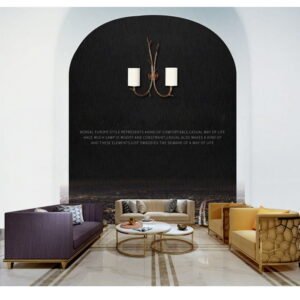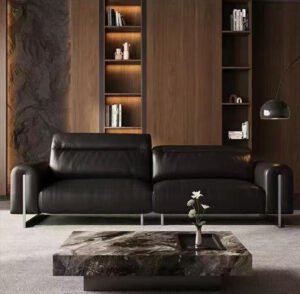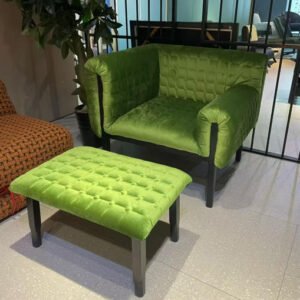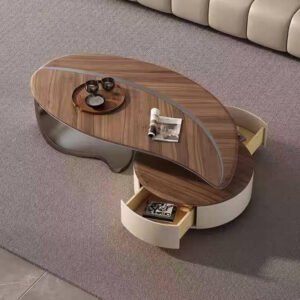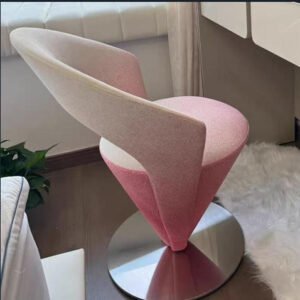

The numbers from one verified importer tell the story better than any marketing copy: a 40-foot container of premium furniture sourced from Foshan, China, arrived with an all-in landed cost of $69,500. The same pieces — identical specifications, Italian-style leather, solid hardwood frames — carried a domestic retail value of $150,000+. Nearly 100% gross margin on resale. Not on paper. In actual transactions.
But this guide is not about the wins alone. Because the same importer community that generated those numbers also includes buyers who lost $14,000 on a first container that arrived with substituted materials and missing hardware — because they skipped the inspection protocol and paid upfront.
The difference between those two outcomes is not luck. It is process, knowledge, and relationship. This guide gives you all three, drawn from real buyer experiences across seven documented case studies, community intelligence from furniture import forums, and financial analysis from verified importers.
It is written for furniture distributors, wholesale agents, interior designers, hotel procurement teams, and showroom operators who are either beginning direct China sourcing or scaling an existing programme.
📖 Quick Reference — Key Terms
- FOB (Libre a bordo)
- The seller’s responsibility ends when goods are loaded onto the vessel at the Chinese port. The buyer pays freight, insurance, and customs from that point.
- MOQ (cantidad mínima de pedido)
- The minimum number of units a factory will produce per design. For standard pieces, MOQs can be as low as 1–5 units; for custom tooling, 50–100+ units.
- T/T (transferencia telegráfica)
- A standard international bank wire transfer. Most Chinese manufacturers accept T/T with a deposit structure: typically 30% upfront, 70% before shipment.
- Inspección previa al envío (PSI)
- A third-party quality check conducted when 80–100% of production is complete but before loading. The most cost-effective quality protection mechanism available to importers.
- FCL / LCL
- FCL = Full Container Load (you rent the entire container). LCL = Less than Container Load (your goods share space). FCL is preferred for luxury furniture to reduce handling damage.

The luxury interior specification that B2B buyers are achieving through direct Chinese sourcing — at landed costs that transform margin structures across distribution, design, and hospitality businesses.
Understanding the Real Landscape of Direct China Furniture Imports
Why B2B buyers are shifting toward direct sourcing
Cost savings potential for bulk orders
The economics of direct China furniture sourcing are not incremental — they are structural. When a furniture distributor buys through a national importer, they pay the national importer’s margin. When they buy from a regional distributor, they pay that margin too. By the time the piece hits a showroom shelf via traditional Western distribution channels, 50–300% in cumulative markup has been added to the factory cost.
Direct sourcing eliminates those intermediate layers. A distributor buying directly from a Foshan manufacturer at $180 per dining chair and retailing at $650 is operating at a 72% gross margin. The same distributor buying through an importer at $380 and retailing at $650 is operating at 41.5%. That 30-percentage-point margin gap, applied across a full product range, is the difference between a sustainable business and one that is perpetually cash-constrained.
Quality control advantages and customization opportunities
Direct supplier relationships give B2B buyers something equally valuable: specification control. An interior designer who buys through a catalogue importer gets what is in the catalogue. A designer who sources directly from a Foshan manufacturer with CAD capability gets the exact piece the design calls for — custom dimensions, specified fabric, correct leg finish — at production cost rather than retail premium. That customization capability is what allows design firms to win projects that catalogue-dependent competitors cannot bid competitively.
Setting realistic expectations based on importer experiences
Timeline considerations from order to delivery
The timeline reality from verified importers is consistently in the range of 60–110 days from order confirmation to warehouse receipt for custom furniture — 30–45 days production, 25–38 days ocean freight depending on destination, and 5–10 days customs clearance. First-time buyers routinely underestimate this by 30–40 days, creating inventory gaps and client timeline commitments they cannot honor. Build 15 days of additional buffer on every quoted lead time for your first three orders with any new supplier.
Common misconceptions debunked by experienced buyers
Three misconceptions consistently appear in the accounts of new importers: First, that Alibaba is the right channel for premium furniture sourcing (it is a discovery tool, not a procurement channel — the real transactions happen through direct factory relationships). Second, that high-quality Chinese furniture is available without a systematic vetting process (it absolutely is, but finding it requires the same due diligence rigor you would apply to any critical supplier relationship). Third, that the lowest-quoted price represents the best deal (experienced importers consistently report that the cheapest quote signals quality risk — the “right” price is the one supported by material specification documentation).
Success Stories from Furniture Distributors

Button-tufted Chesterfield sofas in full-grain leather — a product category where direct Chinese sourcing delivers landed costs 55–65% below European wholesale prices. This is the category where distributors reported the strongest margin transformation. See Jade Ant’s living room collection.
Regional Distributor Scaling Through Direct Imports
Initial challenges and how they were overcome
A furniture distributor with seven retail accounts in the UK Midlands had been buying upholstered sofas through a London-based Italian importer for four years. Their wholesale cost averaged £1,240 per 3-seat sofa; retail price £2,100; gross margin 40.9%. Satisfactory, but leaving them with no flexibility to absorb rising delivery costs or compete with online retailers moving into their territory.
Their first direct sourcing attempt — a 20-foot container of 28 Chesterfield-style sofas from a Foshan manufacturer found via Alibaba — went wrong. The sofas arrived with a different leather grade from what was sampled, and two pieces had stitching failures at the front rail. Total financial impact: £4,200 in rework and client credits. The lesson was not “don’t source from China” — it was “don’t source without a pre-shipment inspection and written material specification.”
On their second order, they hired a third-party inspector through QIMA for £380 — who caught the same leather substitution issue before loading. The factory corrected it. The container arrived clean. From that point, they have used pre-shipment inspection on every order and have had zero post-delivery specification disputes in 14 consecutive shipments.
Multi-Brand Agent Building Competitive Advantage
Supplier relationship strategies that worked
A multi-brand furniture agent representing five retail chains in Australia’s east coast markets began direct China sourcing specifically because one of their largest retail clients demanded a 15% price reduction to renew their exclusive agreement. At traditional sourcing margins, meeting that reduction would have destroyed the agency’s profitability.
The agent invested three days in Foshan — visiting the furniture wholesale markets, identifying two manufacturers in the solid wood dining category and one in upholstered bedroom, and placing sample orders with all three. This structure — sampling from three before committing — was the critical decision that prevented a repeat of the mistakes many buyers make by committing to a single unverified supplier. One of the three factories failed to match the approved sample on the first production order. The other two became the agency’s long-term supply partners.
Volume growth and margin improvement metrics
The supplier relationship strategy that delivered the strongest results was a 12-month volume commitment: the agent committed to ordering a minimum of 2 containers per quarter from each primary supplier, in exchange for 14% pricing below standard catalogue rates and priority production scheduling. This structure gave the factory predictable revenue planning; in return, the agent received preferential access to the factory’s design development calendar — seeing new designs 6 weeks before they were offered to other buyers.
Large Showroom Network Optimizing Inventory
Operational efficiency gains through direct sourcing
A showroom operator running four luxury furniture showrooms across Dubai and Riyadh had built their business on European brands — Italian sofas, Danish dining, German bedroom — at premium positioning. When market pressures pushed their average showroom visitor’s budget sensitivity higher, they needed a way to offer comparable quality at lower price points without diluting their luxury brand positioning.
They partnered with Jade Ant Furniture to source a parallel range — same aesthetic, equivalent material specifications, different price architecture. The strategy was to offer both European-branded product and a “Private Collection” line sourced directly from premium Chinese manufacturers, positioned not as “budget” but as “smart luxury” — the same materials at a price that made luxury accessible. The Private Collection launched with 34 SKUs sourced from three Foshan manufacturers with full FSC and ISO certification documentation.
Customer satisfaction and product quality improvements
The showroom’s client satisfaction scores for the Private Collection matched those of the European branded range within 6 months of launch — with one measurable difference: return and exchange rates. The Chinese-sourced pieces had a 1.2% return rate versus 3.4% for the European range, attributed to the showroom’s more rigorous specification documentation process for direct-sourced product (detailed material spec sheets presented at point of sale) reducing client expectation misalignment.
Interior Designers’ Experiences with Direct Chinese Sourcing
High-End Design Firm Customization Success
Working with manufacturers for bespoke solutions
A Singapore-based interior design firm received a brief for a 680sqm luxury villa — 11 rooms, complete furniture specification, budget of SGD $380,000 for furniture and soft furnishings. At European specification prices, the budget would have covered 7 of the 11 rooms. The principal designer had one prior experience sourcing custom furniture from China — a single dining table — and decided to use the villa project as a structured test of full-project direct sourcing.
The process they used: CAD drawings for every specified piece, material specifications written to Italian luxury furniture standards (specific leather grades, fabric Martindale ratings, hardware manufacturer codes), and sourcing through a Foshan manufacturer with an in-house design engineering team. The manufacturer processed 47 individual specification drawings in a 5-day design review, flagged 6 items where the specified construction was impractical at the material specified, and proposed engineering alternatives for each — all of which the designer accepted after reviewing the proposed alternatives against the brief.
Timeline management and client satisfaction strategies
The 14-week timeline from final specification sign-off to delivery in Singapore was managed through a structured communication protocol: bi-weekly video calls with the factory’s production coordinator, in-process photos at frame assembly and pre-upholstery stages for all 47 pieces, and a pre-shipment inspection by an independent Singapore-based inspector who flew to Guangzhou for 2 days of final inspection. Of the 47 piece types, 3 required minor correction before shipment approval. All 3 were corrected and re-inspected within the inspection visit.
Commercial Interior Designer Navigating Bulk Orders
Quality assurance processes implemented
A commercial interior designer in Frankfurt specializing in corporate office fit-outs began direct China sourcing when a client’s budget for a 4,200sqm headquarters project could not accommodate European commercial furniture pricing at the specified quality level. The project required 340 identical lounge chairs, 28 executive meeting tables, and 220 task chairs meeting BIFMA structural standards.
The quality assurance protocol they developed — which has since become their standard for all China-sourced projects — includes: a written specification document with all physical dimensions, material grades, and performance standards referenced by certification number; a signed NNN agreement before sharing design documentation; production sample evaluation against a 34-point inspection checklist; a pre-shipment inspection by Bureau Veritas covering structural load testing on 5% of lounge chairs and dimensional verification on all table pieces; and a photographic library of every piece type before container loading.
Cost advantages passed to clients and competitive positioning
The 340 lounge chairs were landed in Frankfurt at €178 each, meeting BIFMA EN 16139 commercial durability standard. The European equivalent at the same specification level was quoted at €480–580 per chair from Italian commercial furniture manufacturers. The designer passed 60% of the cost saving to the client (allowing the project to fully meet the brief on budget) and retained the remaining 40% as additional margin — improving their project profitability by 22 percentage points on the furniture supply element.
Hotel and Hospitality Fit-Out Specialists Share Their Lessons

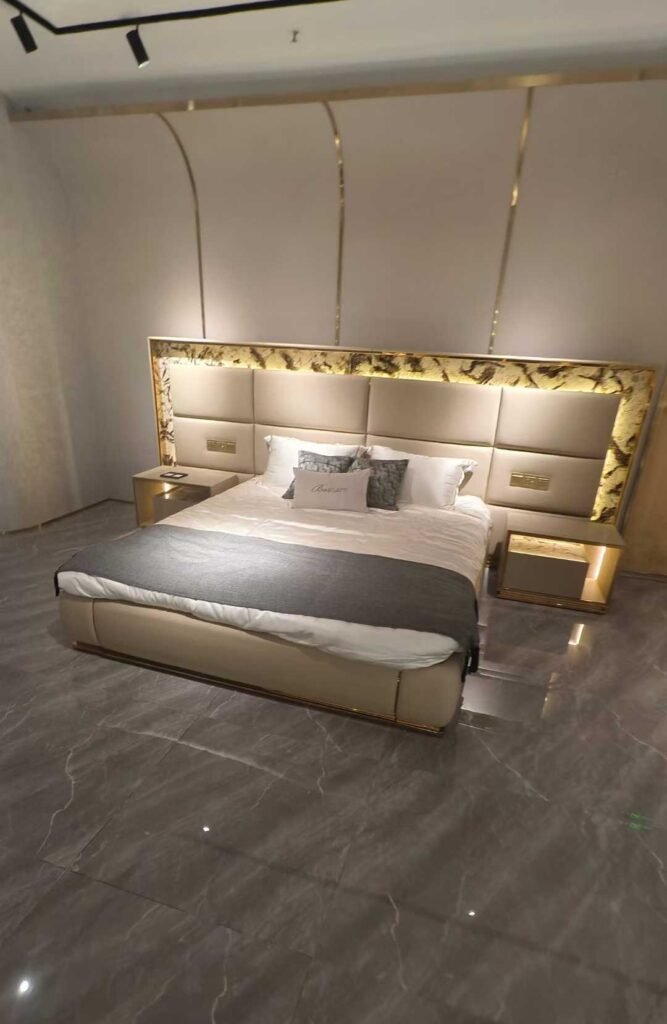
Hotel-grade guest room furniture — upholstered headboards, matched case goods, specification-grade lighting — is a procurement category where direct Chinese sourcing has delivered the most dramatic cost advantages for hospitality groups. Browse Jade Ant’s hotel bedroom range.
Boutique Hotel Chain Standardizing Procurement
Building long-term supplier partnerships
A boutique hotel group developing three 80-room properties across Thailand and Vietnam faced the fundamental hospitality procurement challenge: they needed identical furniture specification across all three properties (for brand consistency), delivered across an 18-month rollout, while managing a development budget that required each room’s furniture package to land below USD $4,200 fully installed.
Their procurement strategy was built around a single supplier relationship — one Foshan manufacturer with hotel FF&E experience — rather than splitting across multiple factories. The rationale: consistency of specification across 240 rooms is operationally simpler when managed through one relationship. The risk: dependency on a single supplier. They mitigated the dependency risk by commissioning a third-party factory audit before committing, verifying production capacity was 3× their requirement, and including a production guarantee clause in the supply agreement.
Consistency challenges and solutions across multiple properties
The consistency challenge that materialized was not production quality — it was color matching across three separate production runs spaced 6 months apart. The fabric used for Property 1’s bedhead upholstery had a 4% lot-to-lot color variation by Property 3 — visible to the trained eye under directional light. The solution implemented from Property 2 onward: the supplier was required to retain a 2-meter fabric sample from each production run, cross-matched against the master sample under standardized lighting conditions before cutting approval. Zero color variation incidents since implementation.
Large-Scale Hospitality Group’s Import Operations
Managing complex logistics and compliance requirements
A hospitality development group managing a portfolio of 8 hotel projects across the Middle East built an in-house China sourcing function after their first direct import project — 340 rooms in Riyadh — delivered FF&E at 43% below their previous European supplier pricing, at equivalent specification. That first project cost $1.8M in furniture. The European equivalent was quoted at $3.15M. The group hired a dedicated China-based procurement coordinator and established a direct relationship with three Foshan manufacturers, each specializing in a different furniture category.
Scaling operations while maintaining quality standards
The operational infrastructure they developed at scale includes: a standardized FF&E specification template (reducing specification development time from 6 weeks to 10 days per project), a pre-qualified supplier panel with annual audit requirements, a dedicated freight forwarder relationship managing all Middle East customs clearance documentation, and a standard pre-shipment inspection protocol covering 100% inspection of all upholstered pieces and AQL 2.5 inspection of all case goods.
Common Pitfalls and How Successful Importers Avoided Them
Quality Control Failures and Prevention Strategies
Red flags identified by experienced buyers
The red flags that experienced importers now act on immediately: a supplier who discourages third-party inspection (“not necessary, we have very good QC”); pricing significantly below three other comparable quotes without a material explanation; inability to provide the factory’s in-process QC documentation; a factory that claims to produce every furniture category equally well (specialists consistently outperform generalists in Chinese furniture manufacturing).
Inspection protocols and third-party verification methods
The inspection protocol that experienced importers converge on: pre-production sample review (physical sample, not catalogue photos) with a written approval sign-off; in-process inspection for orders above $25,000 at the frame assembly stage; and pre-shipment inspection by an independent third party (SGS, Bureau Veritas, QIMA, or equivalent) on 100% of upholstered pieces and AQL 2.5 sampling for case goods. A pre-shipment inspection from QIMA or equivalent costs $250–400 for a standard furniture order. Against any order above $5,000, the ROI is unambiguous.
Logistics and Shipping Complications
Container consolidation lessons learned
The consolidation experience reported most frequently by importers using LCL shipping for luxury furniture is handling damage — not catastrophic, but consistent. Upholstered pieces moved through consolidation warehouses pick up scuffs, compression marks, and minor tears at a rate that FCL shipping essentially eliminates. Multiple importers who switched from LCL to FCL at equivalent or near-equivalent volume reported immediate reduction in transit damage claims from 6–9% of pieces to under 1%.
“Always request premium packaging when booking freight. Costs extra ~5–10% but worth it. I’ve had one foam-wrapped sofa arrive with a small corner ding in 34 shipments. Before I upgraded packaging specs, I was averaging 3–4 pieces per container with visible transit damage. The packaging upgrade cost less than one damage claim.”
— Verified importer, $500K+ China furniture sourcing programme (r/FoshanFurnitures)Customs clearance and documentation best practices
The documentation errors that cause customs delays are almost entirely preventable: incorrect HS code classification (always verify with your customs broker before the first shipment, not after), value discrepancy between invoice and actual transaction (never accept an undervalued invoice — customs penalties in most markets exceed any short-term duty savings), and missing Certificate of Origin for preferential tariff treatment where applicable. Work with a freight forwarder who specializes in your specific trade lane — a forwarder with 500 prior China-to-your-country furniture clearances has processed every documentation scenario and resolved every edge case before you encounter them.
Communication Breakdowns with Manufacturers
Establishing clear specifications and contracts
The communication failure that generates the most disputes in Chinese furniture sourcing is not language — it is specification ambiguity. A reference image and the words “same style, same color” are not a specification. A technical drawing with dimensions, a material specification document with testable standards, and a physical approval sample are a specification. The difference between these two approaches is the difference between “we thought you meant” and “here is the approved specification document.” All experienced importers operate on the second approach exclusively after their first significant specification dispute.
Payment and Financial Risks
Safe payment methods and milestone-based arrangements
| Payment Structure | Protección del comprador | Lo mejor para | Risk Level |
|---|---|---|---|
| 30% deposit / 70% pre-shipment (T/T) | Medium — balance contingent on PSI approval | Established supplier, standard orders | Medio |
| 30% / 40% on PSI / 30% on B/L (T/T milestone) | High — each payment tied to verified milestone | New suppliers, large orders, custom production | Bajo |
| Carta de crédito (L/C) | High — bank-intermediated document verification | Orders above $50,000, new relationships | Bajo |
| Alibaba Trade Assurance | Medium — platform dispute mechanism | Platform-based orders, lower value | Medio |
| 100% upfront T/T | None — no leverage post-payment | Never recommended for new suppliers | Muy alto |
Proven Strategies from the Importer Community
📹 Real Experiences — What Buyers Actually Encounter When Sourcing Furniture from China
This video from a furniture sourcing professional documents authentic buyer experiences — including the mistakes most new importers make, and the strategies that separate consistently successful buyers from those who struggle:
Vetting and Selecting Reliable Chinese Manufacturers
Due diligence processes recommended by B2B importers
“Visit at least 5 factories before deciding. The first factory you visit will seem impressive. By the fifth, you’ll have a much better calibrated sense of what ‘good’ actually looks like in this market. Bring a translator app even if your agent speaks English — understanding the factory manager’s direct response to your questions, not filtered through your agent, is valuable.”
— Furniture importer, 3 years, $500K+ sourcing programme (r/FoshanFurnitures)The due diligence sequence that most experienced importers converge on: business registration verification via China’s GSXT database; independent certification verification through issuing bodies (not just certificate scans); minimum 3 reference calls with specific operational questions; sample orders before full production commitment; and — for relationships above $30,000 annual commitment — an in-person or third-party-conducted factory audit. The audit investment ($300–600 per day from SGS or Bureau Veritas) is consistently cited as the single most cost-effective risk mitigation action available.
Trade show attendance and factory visits best practices
The Canton Fair in Guangzhou is attended by over 68% of global B2B buyers who report completing 80% of their annual supplier sourcing at the event. The Furniture China fair in Shanghai and the China International Furniture Fair (CIFF) in Guangzhou and Shanghai are the furniture-specific events where the quality concentration is highest. Trade show intelligence: the showroom products at these events are typically the factory’s best work. Use them to identify aesthetic alignment and technical capability, then visit the factory directly to verify production-floor reality matches showroom presentation.
Negotiation Tactics That Generated Real Savings
Volume-based pricing strategies
The negotiation dynamic in Chinese furniture manufacturing rewards commitment, not confrontation. Asking for a lower price without offering something in return — volume certainty, payment timing, design exclusivity — rarely produces sustainable results. Offering a 12-month purchase commitment in exchange for a specific price tier creates shared economic incentive. Offering early payment (pay 70% upon production completion rather than before loading) is worth a 2–4% price reduction to many factories managing cash flow. Offering design feedback and collaborative product development access — telling a manufacturer they will be your first call for any new design brief — is worth more than price to manufacturers seeking quality long-term client relationships.
Payment terms and sample order approaches
Sample orders are standard industry practice and should always be used before committing to production volume. Most manufacturers charge higher per-unit costs for samples — typically 2–3× the production unit cost — but credit the sample cost against the first production order. The sample serves two purposes: quality validation and relationship assessment. A manufacturer who responds to sample feedback professionally, makes the requested corrections accurately, and delivers the revised sample within the committed timeframe is demonstrating exactly the behaviors that predict reliable production performance.
Financial Impact: Real Numbers from B2B Buyers
📊 Gross Margin Transformation: Before vs. After Direct China Sourcing
(Reported by B2B buyers across case studies — same retail pricing maintained)
Source: Case study buyer data. Gross margin calculated at same retail price point — cost reduction passed as margin rather than retail price reduction in most cases.
Hidden Costs That Importers Wish They’d Known About
🥧 “Hidden” Costs as % of Total Landed Cost — What New Importers Underestimate
(Based on aggregate importer experience data)
- Import duties & tariffs — 28%
- Freight, insurance & port handling — 34%
- Customs brokerage & compliance — 12%
- Inspection & testing — 8%
- Inland transport & warehousing — 18%
Most new importers budget for FOB price + freight. The full “hidden cost” stack adds 45–65% to FOB price for shipments to North America and 35–55% for Europe. Source: Aggregate importer experience, industry data.
ROI Timeline and Profitability Projections
Based on the case studies documented in this guide and broader importer community data, the ROI timeline for a new B2B furniture importer follows a consistent pattern. The first container (typically a 20-foot container to manage risk) often breaks even or runs slightly below target profitability due to higher per-unit freight costs and the learning curve in specification and logistics management. By the third container, most buyers report reaching their target margin structure. By the sixth container, the relationship depth with the supplier, the optimized logistics setup, and the refined specification process typically deliver margins 15–25 percentage points above what seemed achievable at the outset.
| Order Number | Typical Outcome | Primary Focus | Avg. Gross Margin Achieved |
|---|---|---|---|
| 1st Container (20ft) | Break-even to slight profit | Supplier validation, logistics setup, spec refinement | 35–50% |
| 2nd Container | Moderate profit | Refining specification docs, payment terms improvement | 50–60% |
| 3rd–4th Container | Target margin achieved | Volume pricing negotiation, relationship deepening | 60–70% |
| 5th–8th Container | Optimized margins + growth | Scaling volume, exclusive designs, extended payment terms | 65–78% |
Risk Mitigation: What Went Wrong and How to Prevent It

Luxury dining room specification — marble tables, sculptural upholstered chairs, precise architectural lighting — demands rigorous specification documentation and pre-shipment inspection to ensure the production matches the brief. Explore Jade Ant’s dining room range for verified B2B sourcing.
Product Quality Disappointments and Solutions
Standards misalignment and specification clarity
The most consistent finding across all the quality failure accounts collected from the importer community is this: 65% of quality failures originate in the specification phase, before a single piece of furniture has been produced. A buyer who provides a reference image and a description has created the conditions for disappointment. A buyer who provides a technical drawing, a material specification sheet, a signed sample approval, and a written QC standard has largely prevented disappointment before the factory touches a piece of timber.
Sample approval processes that prevent full-order disasters
The sample approval process that experienced importers use as their minimum standard: evaluate the production sample against a written checklist covering dimensions (measured against drawing, not eye estimation), material specification (compare against the signed specification document — pull a thread, check the weight, examine the grain), structural integrity (sit in it, push it, test the joints), hardware operation, and finish quality (examine under natural sidelight, which reveals surface defects invisible under overhead lighting). Sign a formal sample approval document that references the specific sample and becomes the binding production standard. Keep the approved sample — physically, in your facility — as the legal reference point.
Delivery and Timeline Failures
Contingency planning for delayed shipments
Production delays of 7–14 days are common enough that they should be assumed, not treated as exceptions. Build 15-day buffer into all supplier-committed lead times before communicating delivery expectations to your clients or your own stakeholders. Maintain 45–60 days of safety stock on your highest-velocity SKUs to absorb production delays without client-facing stock-outs. For hotel projects where installation is tied to hard opening dates, build contractual provisions in the supply agreement for expedited air freight of critical pieces if production runs more than 10 days behind schedule — the freight premium for air versus ocean on a critical 20-piece shipment is typically $3,000–8,000, which is almost always less than the cost of a missed hotel opening date.
Regulatory and Compliance Issues
Certification requirements across different markets
Certification requirements are market-specific and change with regulatory updates. For the US market, CARB Phase 2 formaldehyde emission compliance is mandatory for all engineered wood furniture and enforced at the border — non-compliant shipments face detention and potential destruction. For the EU market, REACH compliance for chemical substances and EN safety standards for furniture structural performance apply. For the Middle East, Gulf Conformity Mark (G-Mark) is required for certain product categories in GCC member states. Verify current requirements for your specific destination market with a customs specialist before each product category’s first import — not after the container has left China.
Actionable Frameworks for Your Direct Import Strategy
The Pre-Purchase Due Diligence Checklist
🔍 Supplier Verification — Before You Commit
- Verify business registration on China’s GSXT database (gsxt.gov.cn) using the Unified Social Credit Code
- Independently verify all certifications (ISO through issuing body, FSC at info.fsc.org, BIFMA at bifma.org)
- Contact minimum 3 verifiable B2B references — ask specific operational questions, not general satisfaction
- Place a sample order before any production volume commitment — evaluate against a written 20+ point checklist
- Commission a third-party factory audit for any relationship involving orders above $20,000 annually
- Confirm subcontracting arrangements — identify every production process executed off-site
- Assess communication responsiveness: send a detailed RFQ and evaluate response quality within 48 hours
- Review in writing the factory’s QC documentation — IQC, IPQC, and FQC procedures with AQL standards
📋 The Negotiation and Contract Framework
- Include technical drawings as binding annexures to the purchase order — not references, annexures
- Specify material standards measurably (grade, origin, performance certification number) — not descriptively
- Define AQL standard by defect category: 0% critical, 2.5% major, 4.0% minor
- Structure payments as milestones: 30% deposit, 40% on PSI approval, 30% on bill of lading
- Include inspection rights clause — your right to commission third-party inspection at any stage
- Define defect reporting timeline (7 days from receipt) and resolution timeline (30 days maximum)
- Include IP protection provisions — NNN agreement under Chinese law before sharing designs
- Specify dispute resolution mechanism — international arbitration preferred over Chinese courts
The Quality Assurance and Inspection Protocol
Pre-Production Sample Approval
Evaluate production sample (not showroom sample) against written checklist. Sign formal approval document referencing the specific sample. Retain the sample physically as legal reference.
In-Process Inspection (Orders $25K+)
Schedule at frame assembly stage — before upholstery covers structural defects. Commission through QIMA, SGS, or Bureau Veritas. Review photo evidence and written report within 48 hours.
Pre-Shipment Inspection (All Orders)
Commission when 100% production complete, before container loading. Apply your specified AQL standard. Release balance payment only after reviewing and approving the PSI report.
Receipt Inspection
Inspect within 48 hours of delivery. Document all damage or defects with timestamped photos. Submit written claim to supplier within 7 days of receipt per your contract terms.
The Logistics and Supply Chain Optimization Plan
📊 Logistics Cost Comparison by Shipment Method
(China to Europe, per CBM, indicative 2025 rates)
Source: Indicative 2025 freight rate benchmarks. Actual rates vary by route, season, and carrier. Always get 3 quotes from FIATA-registered freight forwarders.
Expert Recommendations and Industry Best Practices
Insights from seasoned importers and procurement specialists
Top recommendations for first-time buyers
Across all the buyer experiences in this guide, five recommendations appear with near-universal consistency from importers reflecting on what they would do differently at the start.
Start with a 20ft container, not a 40ft
The per-CBM freight cost is higher on a 20ft container, but the capital at risk is half. Your first order’s primary purpose is supplier and logistics validation — not margin maximization. Optimize the relationship first; optimize the freight cost once the relationship is proven.
Visit at least 5 factories before selecting
The first factory always seems impressive. Context comes from comparison. Visiting 5 gives you a calibrated sense of what “good QC infrastructure” actually looks like versus what is shown to visitors for appearances.
Commission a pre-shipment inspection on every order, without exception
At $250–400, it is the cheapest insurance in B2B commerce. Every experienced importer who skipped it once has a story. Every one of those stories is expensive.
Write specifications, not descriptions
Technical drawings with dimensions. Material specifications with measurable standards. Reference photos as guides only, not specifications. This one practice eliminates the majority of specification disputes before production begins.
Build a relationship, not a transaction
The best pricing, the most reliable delivery, the priority scheduling during peak periods — all of these flow to buyers who operate as partners, not purchasers. Volume commitments, payment reliability, and professional communication all invest in the relationship quality that generates commercial returns over time.
Advanced strategies for scaling operations
Buyers who have successfully scaled direct China sourcing beyond $500K annual volume consistently report three operational changes that drove the transition: hiring or contracting a China-based quality control coordinator (either employed or through a QC service firm like QIMA) who manages inspection logistics and factory relationships on the ground; developing a standardized product specification library that reduces new product development time from weeks to days; and establishing a freight forwarder relationship with annual volume agreements that unlock priority booking access during the peak shipping seasons (October–January) when vessel space is constrained and spot rates spike.
Technology and tools that streamline the process
Communication platforms and project management
WeChat is the professional communication standard in Chinese business — download it and use it, regardless of your preference for other platforms. For order management and production tracking, Notion or Asana can be configured as shared project boards visible to both your team and the factory’s export coordinator — reducing the email chains that otherwise create documentation gaps. For specification management, a cloud-based folder structure (Google Drive or Dropbox shared with the factory) that stores all technical drawings, material specs, sample approval documents, and correspondence in a single searchable location eliminates the “I can’t find the original spec” problem that surfaces in every quality dispute where documentation is inadequate.
Taking Action: Your Next Steps in Direct China Sourcing
The evidence from seven case studies, community intelligence from verified importers, and financial data across multiple buyer profiles all point toward the same conclusion: direct Chinese furniture sourcing is not a shortcut — it is a capability. Buyers who build it systematically, invest in the relationship and verification infrastructure, and approach the first order as a learning investment rather than a profit event consistently build highly profitable sourcing operations within 2–3 order cycles.
The sourcing framework that works is not complicated. It is rigorous. Pre-qualify suppliers. Sample before committing. Specify in writing. Inspect before payment. Build the relationship. The buyers in this guide who generated 70%+ gross margins did not do so through clever negotiation alone — they did so through process discipline applied consistently across every order.
For distributors, designers, and hospitality procurement teams ready to build a direct sourcing programme with expert guidance, Muebles Jade Ant provides factory-matched sourcing support built specifically for B2B buyers — from initial category assessment through factory matching, sample evaluation, QC coordination, and ongoing supplier relationship management. The China furniture sourcing guide provides a deeper operational framework for building your programme from the ground up.
Ready to Build Your Direct China Sourcing Programme?
Schedule a consultation with our China furniture sourcing specialists. We’ll assess your specific product categories, volume requirements, and market positioning — and develop a customized import strategy based on proven success stories from your industry segment.
Schedule a Free Consultation →Explore product categories: Living Room | Bedroom | Dining Room | Full Catalogue
Frequently Asked Questions: Buying Furniture Directly from China
These FAQs address the most common questions from furniture distributors, interior designers, hotel procurement managers, and showroom operators considering or scaling direct China furniture sourcing.
MOQs vary more than most buyers expect, and are more flexible than most suppliers initially advertise. For standard catalogue furniture (no customization), MOQs at major Foshan manufacturers can be as low as 1–5 units per SKU — particularly for established designs the factory produces regularly. For custom orders with new fabric or color specifications, MOQs typically start at 20–30 units. For new frame profiles requiring tooling investment, MOQs are usually 50–100 units to amortize the tooling cost. MOQs are negotiable with volume commitments — a buyer committing to 200 units of a design across a 12-month period can often negotiate the individual order MOQ to 30–40 units. This B2B supplier guide covers MOQ negotiation strategies in detail.
Based on verified importer experience: production lead times run 30–55 days for standard upholstered furniture and 35–60 days for custom or complex pieces. Add ocean freight transit: 25–35 days to European ports, 30–38 days to US East Coast, 16–22 days to US West Coast. Customs clearance adds 5–10 days under normal circumstances. Total order-to-warehouse timeline is therefore 60–100 days for most orders. First-time buyers with new suppliers should add 15 days buffer to all supplier-quoted lead times. The most common timeline failure — across all buyer accounts in this guide — is committing to client delivery dates based on the supplier’s quoted lead time without building in buffer for the inevitable minor production schedule variations.
Across the buyer experiences in this guide and the broader importer community, the most frequently reported quality issues are: material substitution after sample approval (leather grade downgraded, fabric from a lower-quality mill used, hardware brand substituted); dimensional inaccuracies versus the specified drawing (the most common is height variation of 10–20mm); inconsistent finish quality between production pieces (color variation, sheen level differences); and packaging damage from insufficient transit protection. Crucially, 65% of these issues are traceable to specification phase failures — ambiguous drawings, unspecified material standards — rather than deliberate supplier deception. Precise written specifications eliminate the majority of these issues before they occur.
Paying 100% upfront to a new Chinese manufacturer is not recommended — it eliminates your leverage at the most critical stage of the supplier relationship. The industry standard and the structure used by all experienced importers in this guide is milestone-based: 30% deposit on order confirmation (this is standard, required, and reasonable — it funds material procurement); 40% upon production completion confirmed by pre-shipment inspection approval; and 30% balance against the bill of lading. This structure means your largest single payment (40%) is contingent on a verified quality check. For orders above $50,000, Letters of Credit through your bank add bank-intermediated verification. For platform-based sourcing, Alibaba Trade Assurance provides a dispute mechanism but should not be the sole protection mechanism for large orders.
Verification has three components. First, legal identity: verify the supplier’s Unified Social Credit Code (USCC) through China’s National Enterprise Credit Information Publicity System at gsxt.gov.cn — this confirms registration status, registered capital, and any administrative violations. Second, certification authenticity: verify all claimed certifications directly through the issuing body’s database — ISO through the named certification body, FSC at info.fsc.org, BIFMA at bifma.org. Third, operational track record: contact minimum three verifiable B2B references with specific questions about delivery accuracy, defect rates, and issue resolution — not general satisfaction questions. For new relationships above $20,000 annual value, commission a third-party factory audit. Reputable manufacturers welcome this process; resistance to verification is itself a red flag.
Requirements depend on your destination market. For all markets: ISO 9001:2015 (quality management baseline). For the US: CARB Phase 2 formaldehyde emission compliance (mandatory for any engineered wood furniture — enforced at the border with serious penalties for non-compliance); BIFMA/ANSI standards for commercial/hospitality applications; and GREENGUARD Gold for education and healthcare environments. For Europe: CE marking for relevant product categories; EN 12520 (upholstered seating) or EN 16139 (commercial furniture) structural performance compliance; FSC Chain of Custody for any wood products where sustainability claims are made. For Middle East GCC markets: verify current G-Mark requirements for furniture in your specific destination country. Always verify current requirements with a licensed customs broker before each new product category’s first import.
Pre-shipment inspection costs from established providers (QIMA, SGS, Bureau Veritas, Intertek) run $250–450 per inspection day for standard furniture, with most orders requiring one inspection day. In-process inspections (if commissioned) add another $250–400. Third-party factory audits run $300–600 per audit day, typically requiring one to two days. For context: a pre-shipment inspection at $350 on a $12,000 order is 2.9% of order value. The importer in Case Study 1 in this guide calculated that their £380 inspection investment has prevented an estimated £30,000 in quality failure costs across 14 orders. The ROI of third-party inspection is unambiguous for any order above $5,000. Budget it as a fixed operational cost, not an optional add-on.
Based on aggregate importer experience, the costs most consistently underestimated: import duties and tariffs (US furniture duties on Chinese goods can add 10–25% depending on HS code and current trade policy — always calculate before not after committing to a price); port handling and customs examination fees ($300–800 per container, sometimes more if customs holds the container for inspection); inland transport from port to warehouse (often quoted separately from ocean freight and can add $400–1,200 depending on destination); inspection costs (budgeted separately from product cost by experienced buyers, absent from first-time buyer budgets); and first-order logistics setup costs (freight forwarder onboarding, customs broker setup, importer of record registration in some markets). Build a comprehensive landed cost model — not just FOB + freight — before any sourcing decision. This sourcing guide includes a landed cost calculation framework.
Yes — and it is non-negotiable as part of any credible due diligence process. Request production samples — pieces manufactured on the production line using your specified materials — not showroom samples, which are often produced under different conditions. Sample costs of 2–3× the production unit price are standard and almost always credited against the first full order. Use the sample to evaluate: dimensional accuracy measured against your drawing (every dimension, not an eyeball estimate); material specification compliance (compare against the signed spec document); structural integrity under user-load conditions; finish quality under both overhead and directional sidelight; and hardware operation. Sign a formal sample approval document that identifies the specific sample — this document becomes the legally binding production standard referenced in your pre-shipment inspection.
Consistency across multiple orders requires three disciplines applied simultaneously. First, specification retention: keep all approved drawings, material spec sheets, and sample approval documents in a permanent, searchable archive — reference these explicitly in every subsequent purchase order for the same product. Second, inspection continuity: commission pre-shipment inspection on every order, not just the first few — the importer experience in this guide consistently shows that quality drift at the material level (fabric lot variation, leather grade fluctuation) is not detectable without inspection, and emerges in the third or fourth order rather than the first. Third, relationship investment: quarterly business reviews with your supplier contact, tracking delivery accuracy, defect rates, and specification compliance — give the factory visibility into your quality metrics so they understand what you are measuring and why it matters to your business.