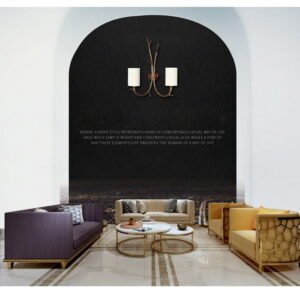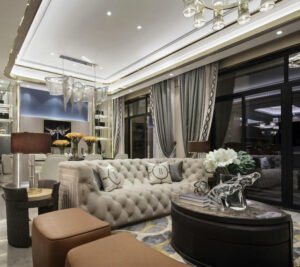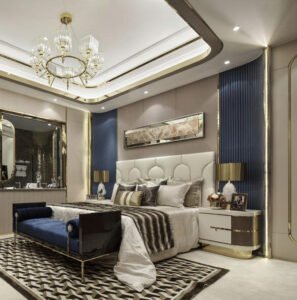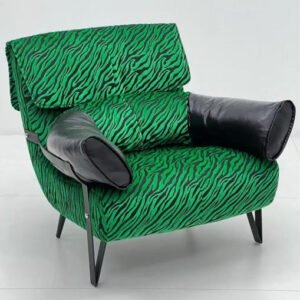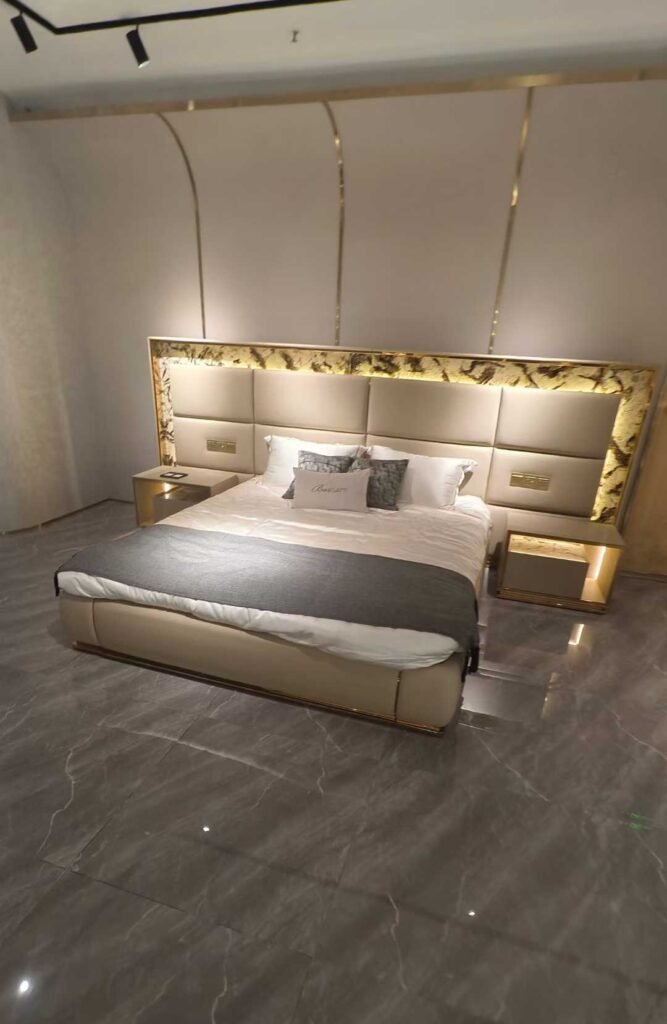
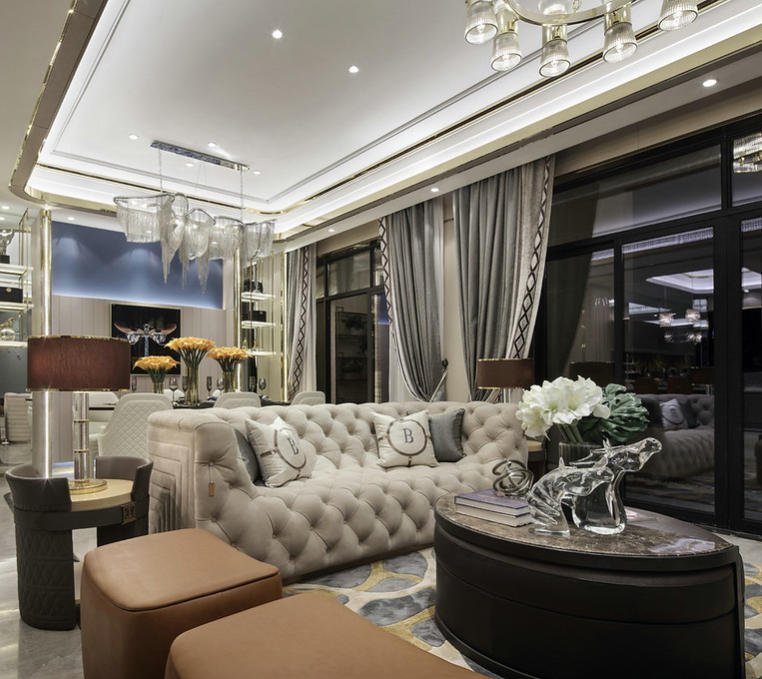
One lobby sofa. Two quotes. A brand dealer asks 4,800 USD. A factory that owns the same pattern asks 2,300 USD.
The frame is kiln-dried beech in both. The leather is the same Italian hide. The difference sits in the channel, not in the chair.
That gap is what this guide is about. It is written for the people who sign the purchase order: importers, distributors, villa owners, interior designers, private label brands, FF&E buyers, hotel operators and developers.
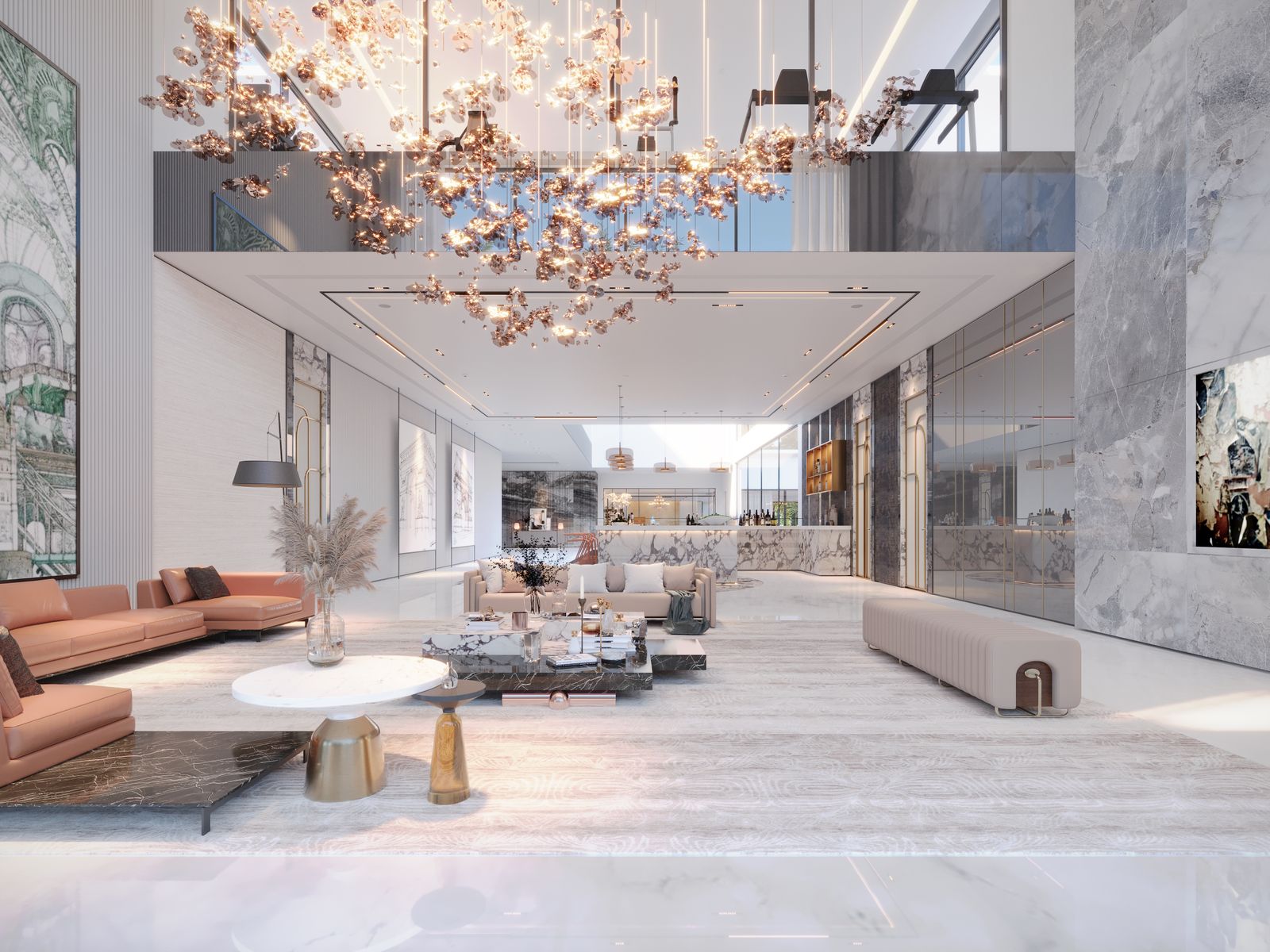
A finished lobby is the end of a chain of decisions. Most of the cost was set before the first crate arrived.
I. What “Affordable Luxury” Really Means
Affordable luxury is a high specification bought at a price set by an efficient channel, not by a lower standard.
The words get used loosely. A hotel owner hears “affordable” and thinks cheaper. A designer hears “luxury” and thinks safer. Both miss the point.
Cheap furniture is built to hit a price. The factory starts with the target and works backwards. Material gets thinner. Foam gets softer. The frame loses a rail.
High-value furniture is built to a specification. The saving comes from who you buy from, how much you buy, and when you buy.
The math is simple. A dealer retail price carries brand margin, showroom cost and two levels of distribution. Remove one layer and the same chair drops 30 to 45%. Remove two and it drops more.
For a 120-key hotel, that difference is often the entire loose furniture budget for the spa.
The category is huge, and the top of it is thin. The global furniture market is measured in hundreds of billions of dollars a year, yet only a small share of it is built to a hotel or villa standard. That shortage is why the same drawing prices so differently across suppliers.
Thesis: For high-end buyers, affordable luxury is not a compromise. It is strategic sourcing, real craftsmanship knowledge, and insider channels used with discipline.
II. Decoding Quality: How to Spot True Luxury Craftsmanship
You cannot negotiate a good price on a bad piece. Value starts with knowing what you are looking at.
The trade has no single definition of what makes a piece luxury furniture. It has tests, and the tests are the useful part.
Material analysis: read the label, then read the spec sheet
Full-grain leather is the top layer of the hide, with the grain intact. It breathes, it ages, and it shows character. Top-grain leather is sanded to remove marks, so it is thinner on character but more uniform.
Corrected-grain leather has a stamped pattern. Bonded leather is leather fiber glued to a backing. The last two are the ones sold as “leather-like” or “premium leather match”.
Ask for thickness in millimeters. Seat and arm faces want 1.2 to 1.4 mm. A 0.9 mm hide on a contract sofa will crack at the seam inside three years.
Wood is the same story. Solid walnut and solid oak hold a screw, take a repair and carry load. A veneered panel is fine on a cabinet side. It is not fine on a chair rail.
Ask three questions:
- Which species, and what is the density in kg/m³?
- What is the moisture content after kiln drying? Under 10% is the safe range for most markets.
- Which parts are solid and which are veneered? Ask for a drawing with the parts marked.
For foam, ask for density and compression set. A hotel seat cushion wants 35 to 40 kg/m³. A 25 kg/m³ cushion feels good in the showroom and flattens in the second year.
This comparison of solid wood versus engineered wood shows where each material belongs in a real specification.
Joinery and finishing: the parts you cannot see in a photo
A dovetail joint is an interlocking corner where angled tails fit into pins. It resists pull-out without glue. A mortise-and-tenon joint is a tab cut into one piece that fits a matching slot in the other. Both are slow. Both are strong.
Mass production replaces them with staples, screws and dowels. That is not always wrong. It is wrong when the price claims hand joinery.

A hand-cut joint takes minutes, not seconds. That time is visible in the price and invisible in the photo.
Finish is the second tell. A hand-rubbed finish is oil or wax worked into the timber in thin layers. It feels dry, not plastic. A sprayed lacquer looks even under showroom light and shows every ring mark within a year.
Check the stitching too. Eight to ten stitches per inch on a seam is a good sign. Six is fast, and it pulls open under load.
Weight and stability: the simplest test in the room
Pick up the chair. A solid beech frame with hardwood rails is heavy. A softwood frame with particle board panels is light.
Weight is not a vanity metric. It predicts how the piece behaves when 80 kg lands on it 40,000 times. It also predicts freight damage, because light frames flex in transit.
Watch the video below. It follows one Chesterfield from bare frame to finished hide. Notice the beech frame, the jute webbing, the steel springs and the hand tufting. Those four stages are where a cheap sofa differs from a good one.
https://www.youtube.com/watch?v=M-R3rpfJ7i0
Análisis del sector: Most quality failures in imported furniture are not material failures. They are specification failures. The buyer never wrote the requirement down, so the factory supplied what it normally ships.
III. Strategic Sourcing: Where to Find High-End Pieces for Less
Every channel carries a different price and a different risk. The skill is matching the channel to the project stage.
Direct from the manufacturer
Buying from the factory that builds the piece removes the brand license, the dealer margin and the showroom cost in one step.
This is where the cost and quality trade-off becomes visible. The same materials, drawings and finishing steps can land at 40 to 55% of dealer retail when the order goes straight to the line.
The catch is work. Someone has to approve drawings, check samples, book inspection and manage freight. That work is real, and it is the reason the discount exists.

Illustrative split for a licensed designer chair sold through a dealer. More than two-fifths of the price never touches the product.
Brand outlets and sample sales
A brand sample sale sells floor models and end-of-season stock at 35 to 60% off. The piece is genuine. The price is real.
The limits are less obvious. Stock is one-off, so you cannot repeat it across 40 rooms. Warranty terms are often shortened. And the piece has been sat on by every visitor since it arrived.
Good use: a single hero piece for a show unit or a private residence. Bad use: a hotel guest room type that must repeat for a decade.
Estate auctions and vintage
Auction houses sell signed mid-century and antique pieces with a documented history. Some of it appreciates. Sotheby’s publishes realised prices, and 1stDibs listings give you a live asking-price reference before you bid.
Two numbers decide the deal. The buyer’s premium is usually 20 to 26% on top of the hammer price. Restoration and shipping come after that. A 3,000 USD hammer price can become 4,200 USD on the floor.
For developers who buy staged show-flat furniture by the lot, model home auctions work on the same logic: fast, cheap, and only useful if you can accept what is in the room.
| Canal | Typical price index | Lead time | Main risk | Best for |
|---|---|---|---|---|
| Brand dealer retail | 100 | 4–16 weeks | Margin you cannot remove | One signature piece, fast |
| Brand outlet or sample sale | 40–65 | Immediate | No repeat stock, short warranty | Show units, single rooms |
| Estate auction | 30–60 plus premium | 2–8 weeks | Condition, provenance, no returns | Collectors, heritage interiors |
| Factory direct, project order | 40–55 | 12–20 weeks | Specification and QC work sits with you | FF&E, private label, villas |
| Factory, repeat program | 35–45 | 10-14 semanas | Tooling and forecast commitment | Multi-site operators, brands |
Index values come from recent project quotes and retail price lists, normalised to dealer retail. Freight and duty are excluded.
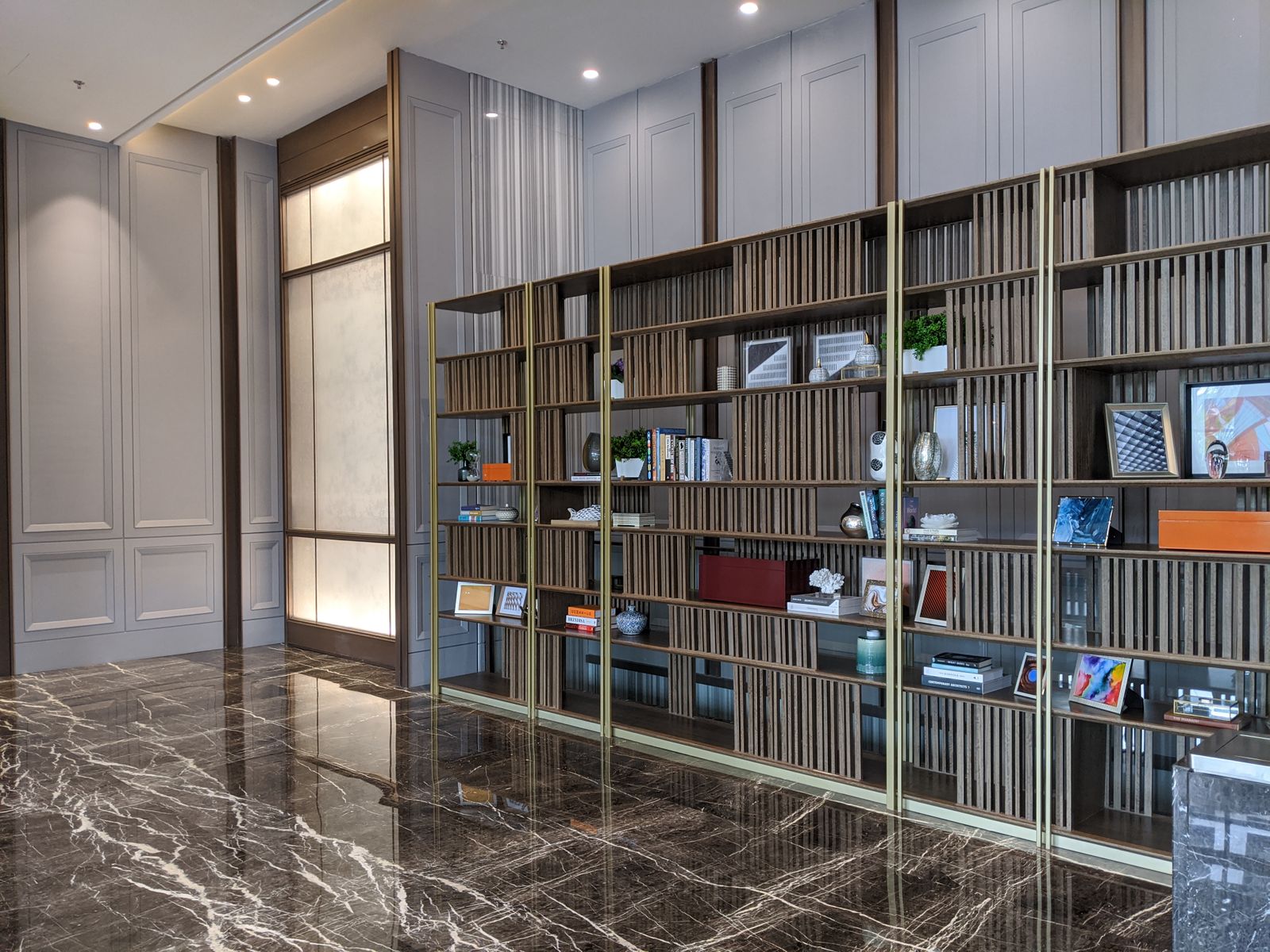
A showroom charges for the room as well as the furniture. That cost is inside every retail price.
IV. The Art of Negotiation for B2B and High-Net-Worth Buyers
A discount is not the only lever. Professional buyers trade volume, timing and commitment for price, and they keep the relationship intact.
Volume leveraging
Factories price in tiers. A 40-unit order usually sits in the second tier. A 300-unit program sits in the fourth.
Ask for the tier table, not a single number. Then ask what volume moves you up one tier. You will often find the gap is smaller than expected, and a second property or a phase-two order closes it.
Payment terms and lead times
A 30% deposit with the balance before shipment is standard. A larger deposit or an earlier payment can buy 2 to 4%.
Delivery flexibility works the same way. A factory fills its calendar unevenly. If your hotel opens in November, an order placed against a June production slot costs less than one that must ship in September.
Trade the thing you have for the thing you want. Cash and calendar are what you have.
Long-term partnership
The best price is rarely in the first order. It is in the fourth, when the factory holds your drawings, your foam spec and your fabric references.
Buyers who place a repeat program get three things: priority slots, spare parts for the replacement cycle, and a fixed price for twelve months. That fixed price is often worth more than a one-time discount.
For buyers new to factory negotiation, this negotiation playbook sets out the questions that move a quote, and the ones that only annoy the sales team.
Análisis del sector: Furniture factories plan capacity eight to twelve months ahead. A buyer who books a slot early pays for certainty, and certainty is cheaper than air freight.
V. Online vs. In-Store: Optimizing the Procurement Experience
Both channels do a job. The mistake is using one for the other’s work.
The digital advantage
Online catalogs let you build a mood board in an afternoon and compare twenty suppliers against the same brief. You can check dimensions, finishes and lead times without a flight.
Digital is also the fastest way to compare landed cost, because you can model freight and duty before you commit. The detail that decides a project is often in a spec sheet, not in a showroom.
The showroom necessity
A high-ticket piece needs a body in the room. You need to sit, lean back, and feel whether the seat holds you or lets you sink.
Three checks only work in person:
- Seam alignment across a curved arm.
- Color under the project’s own lighting, not showroom downlights.
- Frame flex when two people sit on one end of a sofa.
Returning a container of 60 chairs is not a customer service event. It is a project delay.
The hybrid model
Most professional buyers now run a hybrid route. They shortlist online, request finish panels and a 1:1 corner sample, then visit one factory or one showroom to confirm.
Sample shipping costs 150 to 400 USD per parcel. A single wrong leather decision on a 120-key project costs far more.
This analysis of online versus showroom buying explains how to split the work between the two channels without losing either advantage.
VI. Avoiding the “Cheap Luxury” Trap: Red Flags to Watch For
A low price on a luxury-looking piece is a question, not an answer. These are the signals that usually explain it.
Vague material language
“Leather-like”, “leather match”, “engineered wood”, “solid wood frame” and “premium fabric” are all legal descriptions that say almost nothing.
Engineered wood means a board product. Solid wood frame can mean three solid rails and a particle board panel. Neither is a crime. Both become one when the listing implies otherwise.
Ask for the bill of materials with part names. A supplier who cannot send it in 48 hours has not built the piece often enough to know it.
Unrealistic lead times
A bespoke walnut table with a hand-rubbed finish takes 10 to 16 weeks. If a supplier offers four weeks on a made-to-order piece, one of three things is true. The piece is stock. The finish is sprayed. Or the order will slip.
Made-to-order means the factory builds after you approve. That takes time, and the time is the quality control.
Missing certification
FSC certification proves the timber comes from a responsibly managed forest. OEKO-TEX covers textile safety. UL GREENGUARD Gold covers low emissions, which matters in sealed hotel rooms. BIFMA standards cover contract furniture strength and durability.
One detail matters more than the logo. Certificates belong to a factory and a product line, not to a brand. Ask for the certificate number and the scope, then check it on the FSC o OEKO-TEX register.
Buyers comparing suppliers can use this list of supplier red flags as a screening tool before the first call.
VII. Customization and Private Labeling: Creating Exclusive Value
Custom work is the most direct route to a luxury look at a controlled cost. It is also the route with the most ways to go wrong.
Semi-custom modifications
Most factories hold frames in standard sizes. A semi-custom order changes the finish, the fabric and one or two dimensions without new tooling.
That is enough to make a piece feel bespoke. A 2,600 mm sofa in a specific bouclé, with a 20 mm brass plinth, reads as custom in a room where nobody measures it.
White-label strategy
White label means the factory builds to your drawing and your label goes on the piece. You own the design file and the range. The factory owns the production risk.
The margin change is the reason brands do it. A dealer selling a licensed brand might hold 25 to 35% gross margin. A private label brand buying the same build quality often holds 55 to 65%, because it sets the retail price.
This private label guide walks through the ownership, tooling and packaging decisions that come with it.

Quiet materials, controlled palette, one strong gesture. This is the look that survives a trend cycle.
Scaling a bespoke design
The first prototype is expensive. The tenth unit is not.
Tooling, pattern making and sample approval are fixed costs. Spread them across a production run and the per-unit cost falls fast. A sofa that costs 3,100 USD as a single piece can land near 1,900 USD at 60 units, because the pattern, the cutting plan and the jig are already paid for.
Jade Ant furniture builds private label programs this way: one drawing set, one sample sign-off, then a production run that holds the same specification across every unit.
VIII. Logistics and Installation: Protecting the Investment
A saving of 40% disappears if eight of forty chairs arrive with cracked legs.

A finished lounge looks effortless. Behind it sits a delivery schedule, a lift survey and a crate list matched to the floor plan.
White-glove delivery
White-glove delivery means the carrier unpacks, places, assembles and removes the packaging. For oversized pieces it is not a luxury. It is damage control.
A 3.2-meter table cannot be tipped through a standard door. A stone-top console weighs more than two people can safely carry up a stair. Plan the route before you plan the delivery date.
Inspección previa al envío
An inspection before the container leaves the factory is the cheapest insurance in the project. A standard check covers dimensions, finish, hardware, labeling and a sample load test.
Use a written pre-shipment inspection checklist and require photos of every defect found. A report with no photos is a report you cannot act on.
At Jade Ant furniture, the inspection report and its photos reach the buyer before the balance payment is requested. That order of events settles most disputes before they start.
Coordination with the construction schedule
Furniture should arrive after wet trades finish and before the final clean. On a villa that means a delivery window, not a delivery date.
Store nothing in a room that still has painters. Dust bonds to oiled timber, and no polish removes it.
For multi-site operators, this logistics planning guide covers consolidation, container loading and site sequencing.
What the piece really costs
Total landed cost (TLC) is the full cost of a piece once it sits in the room: unit price, packing, freight, insurance, duty, port charges, inland delivery, installation and the cost of defects.
| Line item | Per unit (USD) | Note |
|---|---|---|
| Ex-works price, custom lounge chair | 620 | 120 units, one fabric |
| Packing, export grade | 28 | Carton, foam, corner protection |
| Ocean freight, 40HQ shared | 46 | Based on 1.9 m³ per 12 chairs |
| Insurance | 9 | 0.6% of CIF value |
| Duty at destination | 62 | 10% of goods value, market dependent |
| Port, customs, inland delivery | 34 | Consolidated truck to site |
| Installation and packaging removal | 22 | White-glove crew |
| Total landed cost | 821 | Before retail or project margin |
Illustrative figures from a recent 120-unit project. Rates move with route, season and tariff code.
The same chair at dealer retail in the destination market often sells for 1,450 to 1,700 USD. That is the space affordable luxury works in.
Our guide to hidden import costs lists the charges that appear after the quote is signed.
IX. Sustainability and Longevity: The ROI of Quality
Affordability is measured over years, not at the till.
Cost per use
A mass-market sofa at 1,600 USD, replaced every four years, costs 462 USD a year once you add delivery and disposal. A brand sofa at 8,000 USD, kept for eighteen years, costs 444 USD a year.
The same specification from a private label factory costs 5,600 USD. Add one re-cover at year ten and the annual cost falls to 383 USD.
Annual cost, not sticker price. Mass-market figure includes three delivery and disposal cycles over the same period.
Buyers rarely put the disposal fee, the access damage or the three weeks of disruption in the spreadsheet. The annual figure hides all of it.
Quiet luxury versus trend
Trend-led pieces date in three years. The sofa shape, the leather and the stone top do not.
Quiet luxury is the design language that avoids logos, bright color and seasonal shapes. It looks expensive because the proportions are right and the materials are honest, not because it announces a brand.
For a hotel, that choice protects the refurbishment cycle. For a developer, it protects resale value.
Maintenance and restoration
A well-built piece can be reupholstered. A cheap frame cannot, because the joints will not survive the strip-down.

Restoration is only possible when the frame is worth saving. That is a purchasing decision, made years earlier.
Set a care routine from day one. Leather wants cleaning twice a year and a conditioner that does not contain silicone. Oiled timber wants re-oiling every 12 to 18 months. Stone wants sealing before the first spill.
These care and restoration routines extend a good piece by a decade. Buyers who plan for a second life also protect resale value, and this investment checklist sets out how to judge that before purchase.
X. Conclusion
Affordable luxury is a method, not a discount.
Three skills carry it:
- Read quality. Materials, joinery, weight and finish decide the lifespan.
- Choose the channel. Factory direct, sample sale and auction each solve a different problem.
- Negotiate the whole deal. Volume, payment terms, timing and commitment all move the number.
The final point is simpler. A luxury piece is an investment in daily experience and in years of service. The price tag is only the entry ticket.
Next step: Audit one line of your current sourcing pipeline. Take the item you buy most often. Compare its landed cost against a factory-direct quote at your real annual volume. Most buyers find 20 to 35% sitting in that one line.
Send us the drawing and the quantity, and our team will price it against your current specification. You can start the conversation here or browse the current range.
Glossary of Terms Used in This Guide
| Término | Plain meaning |
|---|---|
| FF&E | Furniture, fixtures and equipment: everything supplied to a project that is not part of the building |
| Private label | A product built by a factory and sold under your own brand |
| Total landed cost (TLC) | Unit price plus freight, duty, delivery and installation, once the piece is in the room |
| Full-grain leather | The top layer of the hide with the natural grain left intact |
| Veneer | A thin slice of real wood glued over a board core |
| Dovetail joint | An interlocking corner joint that resists being pulled apart |
| Cantidad mínima de pedido | Minimum order quantity: the smallest run a factory will accept |
| White-glove delivery | Delivery that includes unpacking, placement, assembly and waste removal |
| Quiet luxury | Understated design that relies on proportion and material instead of logos |
Preguntas frecuentes
How do I verify if a supplier’s “solid wood” claim is authentic?
Ask for the part list, then ask which parts are solid. Look at an end grain photo of a hidden edge. Solid timber shows continuous grain through the thickness. A veneered board shows a straight glue line and a different core. A factory that builds solid pieces will send the photo the same day.
What discount should I expect when ordering FF&E for a boutique hotel?
For 40 to 80 rooms, expect 35 to 50% below dealer retail when you buy direct from the factory that builds the piece. The exact number depends on the frame, the fabric and the delivery window. Ask for the tier table so you can see what volume buys.
How can I distinguish high-quality Italian leather from cheaper alternatives?
Ask for the tannery name, the thickness in millimeters and the finish type. Full-grain aniline leather at 1.2 to 1.4 mm is the top of the range. Press a thumb into the surface: good leather wrinkles softly and recovers. Corrected-grain leather feels flat and plastic.
What are the risks of sourcing luxury furniture directly from overseas manufacturers?
The risks are specification gaps, quality drift between the sample and the production run, and freight damage. All three are manageable. Write a specification with tolerances, approve a 1:1 sample, book a pre-shipment inspection, and use export-grade packing.
How do I negotiate with a high-end brand without damaging the relationship?
Ask for value, not a discount. Request an ex-display piece, a fabric from the standard range, or a delivery slot in a quiet month. Brands protect their price list, and they protect a buyer who makes their schedule easier.
Which certifications should I look for in sustainable luxury sourcing?
Look for FSC chain of custody on timber, OEKO-TEX Standard 100 on textiles, and UL GREENGUARD Gold on emissions. Ask for the certificate number and the product scope, and check it on the issuing body’s register. A logo on a website proves nothing.
How do I handle a quality dispute with an international supplier?
Photograph the defect against the approved sample and the signed specification. Raise it before the balance payment, not after delivery. Most contracts allow a repair credit or a replacement in the next shipment. A written QC report from the pre-shipment inspection is your strongest evidence.
How does private labeling differ from standard wholesale buying?
Wholesale means you buy someone else’s product and resell it. Private label means you own the drawing, the specification and the label, and the factory builds to your file. Private label costs more in set-up and less per unit at volume.
What are the most reliable indicators of a “timeless” piece?
Check three things: the proportion, the material and the joinery. A timeless piece looks right in a plain room, uses a material that ages well, and can be repaired. If it depends on a color trend or a logo, it has a date on it.
How do I calculate total landed cost for imported luxury furniture?
Add the ex-works price, export packing, freight, insurance, duty, port charges, inland delivery, installation and an allowance for defects. Divide by the number of usable units. The result is the number you compare against retail, not the quote.