
A marble dining table with a ring burned into the surface is a common sight at villa handovers. A guest puts down a glass of orange juice. A cleaner wipes it with an all-purpose spray.
The stain does not come out. Neither does the dull patch around it.
A table like that can cost more than the car in the driveway. The damage takes four seconds.
This is the pattern in high-end interiors. Furniture fails from small, ordinary actions: the wrong cloth, the wrong spray, a window without a film, a room with dry air. None of these look like damage at the time.
This guide is for the people who own that risk: FF&E buyers, hotel operators, villa managers, interior designers, developers, importers and private label owners. It sets out what each material needs, how often it needs it, and what it costs when care is skipped.
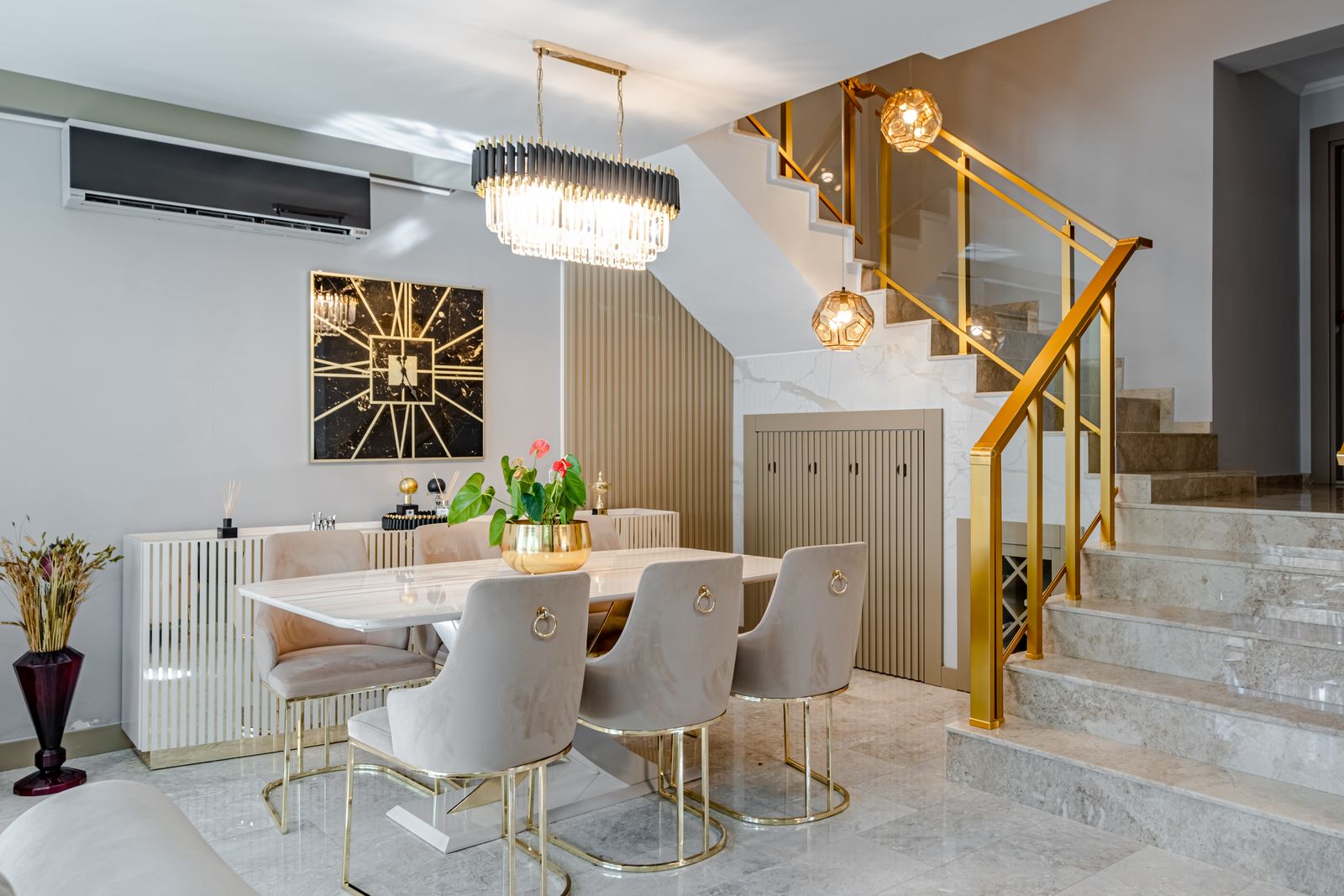
Marble, brass and velvet in one room. Three materials, three different care routines, one cleaning trolley.
The short answer: luxury furniture does not fail because it is delicate. It fails because it is treated like ordinary furniture.
I. Why High-End Furniture Needs a Different Routine
Preservation means protecting a material before it shows damage, not repairing it afterwards.
Most cleaning is reactive. Something spills, someone wipes it. Preservation works the other way. You control the environment, the products and the schedule, so the spill never becomes a stain.
Three things make high-end pieces different.
The materials are less forgiving. Aniline leather absorbs liquid in seconds. Honed marble etches on contact with acid. Hand-painted lacquer clouds under a solvent. A polyurethane finish on a cheap desk survives all three.
The finishes are thinner. A designer piece often carries a hand-rubbed oil or a catalysed lacquer with three coats. An industrial finish has six. Thin finishes look better and wear faster.
The replacement cost is not linear. A re-cover on a custom sofa can cost 40% of the original price. A full restoration of a lacquered cabinet can cost more than the piece is worth.
The cost of getting it wrong
Most damage in luxury interiors comes from four sources.
- The wrong product. An alkaline all-purpose cleaner strips wax and dulls lacquer within a few passes.
- Too much water. Water wicks into veneer seams and swells the core.
- The wrong tool. A yellow sponge or a paper towel leaves micro-scratches on gloss.
- The wrong environment. Dry air cracks wood. Sun fades fabric. Both act slowly, so nobody notices until the damage is set.
The good news is that all four are cheap to fix. A pH-neutral cleaner, a microfiber cloth, a hygrometer and a window film cost less than one re-cover.
The material mix is also shifting. Dezeen tracks how often new collections use unsealed stone, raw brass and high-gloss lacquer, and each of those finishes raises the care requirement.
If you are still deciding which pieces deserve a formal care plan, this guide to what makes furniture genuinely luxury explains which construction details reward long-term care and which ones cannot be saved.
II. Textiles and Upholstery
Fabric damage is mostly mechanical, not chemical. Fiber crushing, pilling and abrasion do more harm than dirt.
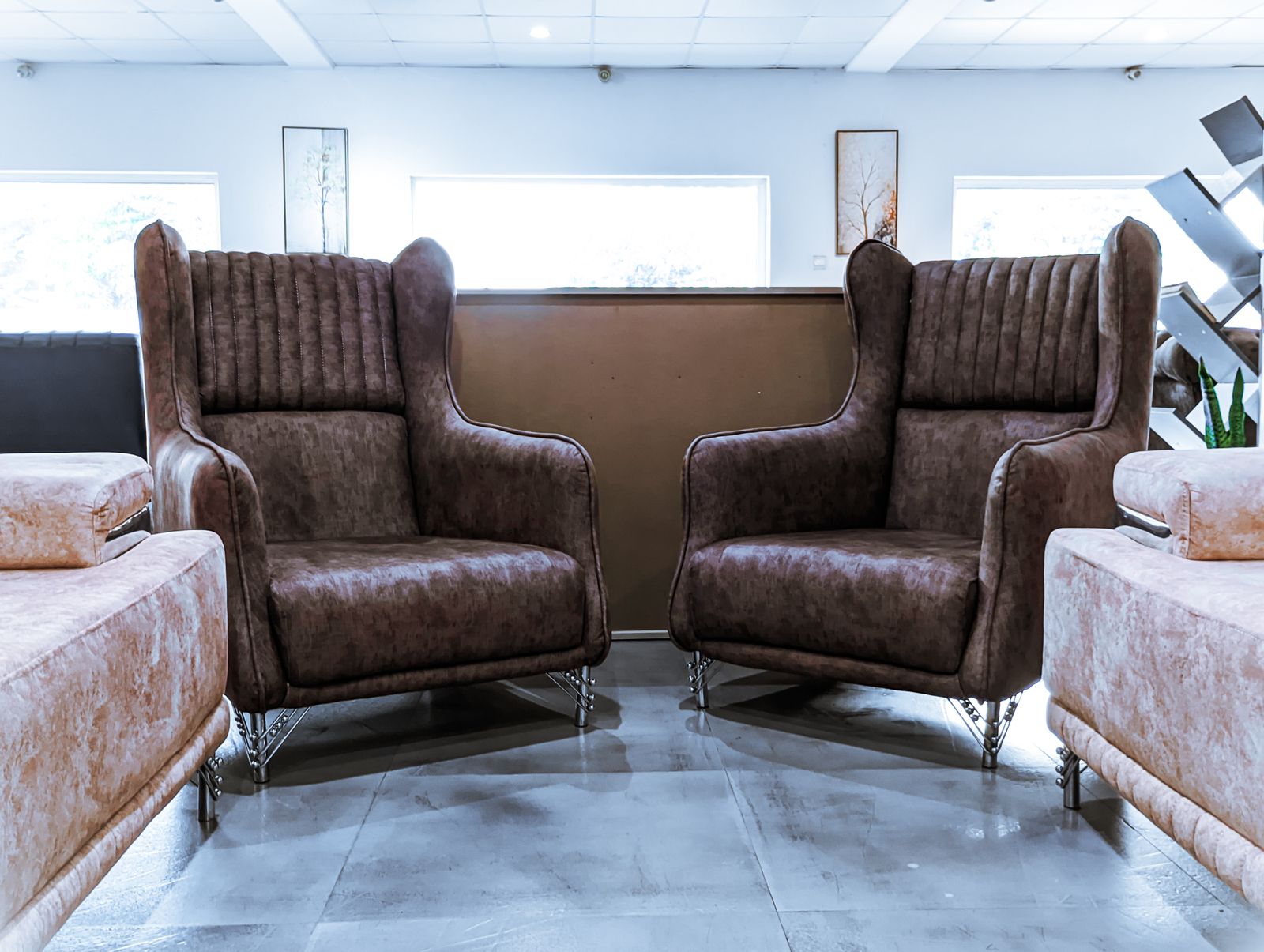
Velvet pile shows every touch. The crushed band on a seat edge is wear, not dirt, and it does not vacuum out.
Velvet and bouclé need low suction, not strong suction
Velvet is a cut-pile fabric. Each fiber stands up. When the pile bends and stays bent, the mark is permanent.
Bouclé is a loop-pile fabric. Each loop can snag and pull.
Both need the same tool: a soft upholstery nozzle on the lowest suction setting, with the beater bar switched off. A rotating brush pulls loops and flattens pile.
Move the nozzle in one direction. Do not scrub back and forth over the same spot. Work in short passes, and lift the tool between them.
For velvet, brush the pile back up with a soft clothes brush after vacuuming. Do this while the fabric is dry. Steam on crushed velvet can set the crease.
Silk and linen blends need pH control
Silk is a protein fiber. Linen is a plant fiber. Both dislike alkaline cleaners.
Use a pH-neutral textile shampoo diluted to the maker’s ratio. Test it on the back of a cushion first. Blot, do not rub. Rinse with a cloth wrung almost dry, then dry the panel evenly with a hair dryer on cool, because uneven drying leaves a water ring.
Water rings on silk come from minerals, not from the spill. Distilled water avoids most of them.
| Fabric | Tool | Producto | Never do this |
|---|---|---|---|
| Velvet | Soft nozzle, no beater bar | Dry soil removal, low-moisture foam | Scrub, steam, or sit on a damp cushion |
| Bouclé | Soft brush attachment | pH-neutral foam | Pull loose loops, use a lint roller hard |
| Silk | Microfiber cloth, barely damp | pH-neutral textile shampoo | Wet the whole panel, or rub a stain |
| Linen blend | Soft nozzle, then cloth | Mild neutral detergent | Bleach, or dry in direct sun |
| Wool | Soft nozzle | Wool-safe neutral shampoo | Hot water, which shrinks the weave |
Protectants: useful, but not a shield
A fabric protector slows liquid absorption. It does not stop it.
Fluoropolymer protectants work on the surface and need reapplication every 12–24 months in a hotel. They change the hand of the fabric slightly. On silk and fine velvet, test a hidden panel before you treat the whole piece.
The test is simple. Treat a 200 mm square, let it cure for 48 hours, then compare the feel and the colour under daylight. If the pile looks flatter or the shade shifts, do not proceed.
Leather is the other upholstery material that fails early. The video below shows a full clean and condition on a leather sofa. Watch the two details that matter most: the barely damp cloth, and the dry buff at the end.
https://www.youtube.com/watch?v=Il-oyGEp4ek
Jade Ant furniture prints the cleaning code on the fabric card that ships with every piece, so housekeeping does not have to guess the product.
For a deeper routine by fabric type, our professional care routines for luxury furniture set out the products and the timings we use on project deliveries.
III. Natural Stone and Rare Marble
Marble is porous and acid-sensitive. Acid eats the surface. That is not a stain. It is a change in the surface itself.

Polished marble reflects light until it etches. The dull patch near a table leg is usually the first sign.
Sealing is a schedule, not a one-off
A penetrating sealer fills the pores below the surface. It buys you time to wipe a spill. It does not make the stone acid-proof.
| Stone and zone | Sealer type | Reseal interval |
|---|---|---|
| Polished marble, villa dining table | Penetrating solvent-based | 12 months |
| Honed marble, hotel bathroom | Penetrating, water-based | 6–9 months |
| Limestone, lobby floor | Penetrating | 6 months |
| Granite, bar top | Penetrating | 12 months |
| Quartz composite, any zone | None needed | Not applicable |
Test before you reseal. Put a 50 mm water bead on the surface. If the stone darkens within five minutes, the sealer has failed. If the bead stands, the sealer is still working.
El Natural Stone Institute publishes the care and sealing standards that most stone contractors work to. Ask your contractor which one they follow.
Acid spills: neutralize, do not scrub
Citrus, wine, vinegar, cola and most bathroom cleaners etch marble. The mark is dull and slightly rough. Scrubbing makes it bigger.
The sequence is the same every time:
- Blot the liquid with a dry cloth. Do not wipe it across the surface.
- Flush with distilled water and blot again.
- Apply a pH-neutral stone cleaner.
- Dry the area fully.
- If the surface feels rough, call a stone finisher. Etching needs honing, not cleaning.
A polished surface can be restored by a diamond pad and a trained hand. A homeowner with a supermarket “marble polish” will make it worse.
For pieces with historic or artistic value, the American Institute for Conservation lists accredited conservators by material. A conservator costs more per hour and less per mistake.
Polishing cycles
High-traffic stone needs mechanical attention, not just sealer. Lobby floors in a five-star hotel usually need a light polish every 12–18 months. Dining tables in a villa need it every two to three years, or when the sheen stops being even.
Never use an abrasive cream on a polished surface unless the label names the stone. Most “universal” creams are too aggressive for calacatta and too weak for granite.
IV. Exotic Woods and Bespoke Veneers
Wood moves with humidity. It swells in wet air and shrinks in dry air. The movement never stops.
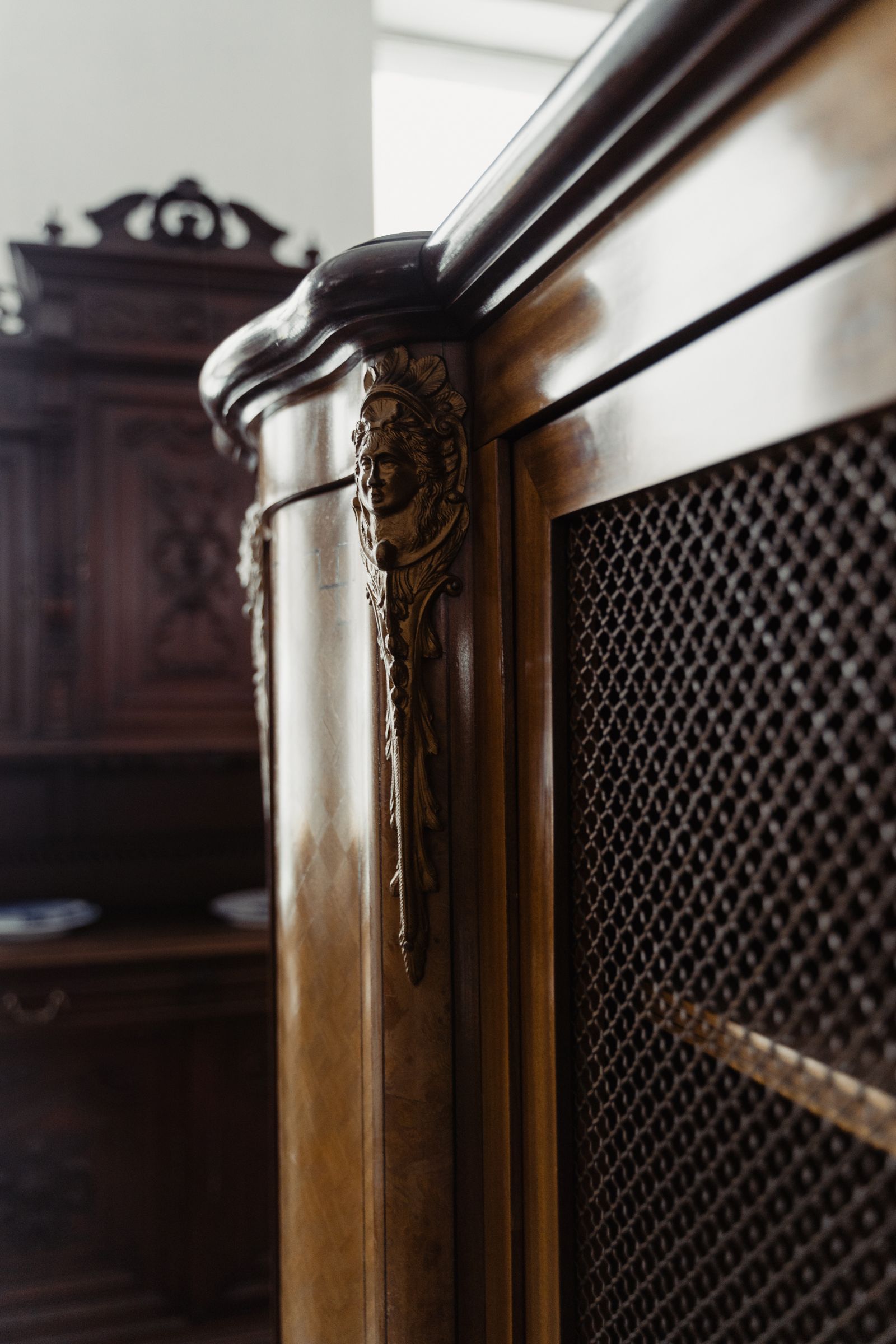
Veneer and ormolu on a period cabinet. The veneer lifts at the edges when the room swings between wet and dry.
The humidity number
Keep indoor relative humidity between 45% and 55%. Below 35%, veneer shrinks and seams open. Above 65%, the core swells and mould starts behind the panels.
A 10% swing across a 2-metre tabletop can move the timber by 2–3 mm. That is enough to open a glue line that has held for twenty years.
Villas in hot climates fail here first. The air conditioning runs all day, the room drops to 30% humidity, and the veneer cracks along the grain. A cheap hygrometer and a humidifier cost less than one repair.
The damage can also start before delivery. A sealed container crossing the equator can sit above 60°C for days, and the veneer takes that stress into the building. Our import roadmap covers the packing and acclimatisation steps that prevent it.
Dust and polish: keep silicone out
Dust is abrasive. Lift it with a dry microfiber cloth, then a slightly damp one. Work with the grain.
Avoid silicone-based polishes. They leave an oily film that traps dust, and they contaminate the surface for future refinishing. A refinisher who finds silicone gets “fish eyes” in the new lacquer, and the whole panel has to be stripped again.
Use a wax-free furniture cream, or a hard wax on oiled finishes. Apply thin. Buff dry.
UV is the silent problem
Sunlight fades pigment and dries the lignin in the wood. A walnut table in a glass-walled room will lose depth in three to four years.
Three fixes, in order of cost:
- Move the piece out of direct sun. The cheapest option, and often the only one nobody tries.
- Fit a UV film to the glass. A good film blocks up to 99% of UV and still passes visible light.
- Rotate the piece twice a year, so one face does not take all the light.
For sun-drenched rooms, this guide to furnishing a modern luxury villa covers layout choices that keep high-value pieces out of the worst light.
V. Metals and Lacquers
Metal care is about removing oil without removing finish. Most damage on brass and gold leaf comes from polish, not from dirt.
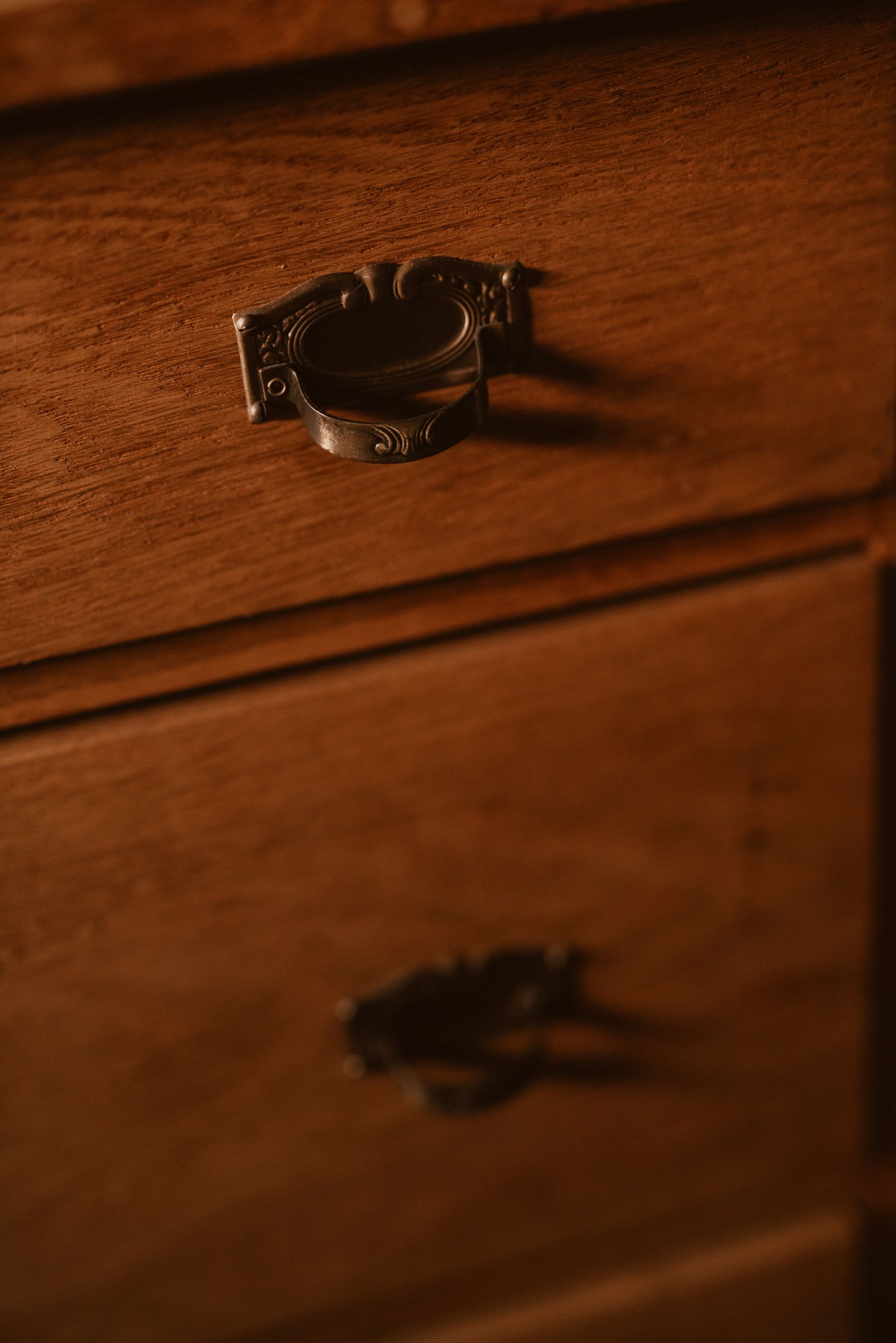
Lacquered brass needs a damp cloth. An abrasive polish takes the coating with the tarnish.
Fingerprints on polished metal
Skin oil sits on the surface. It does not need a metal polish.
Wipe with a microfiber cloth dampened with distilled water and a drop of pH-neutral soap. Dry immediately with a second cloth. Buff in straight lines, not circles, so any fine marks stay consistent.
For unlacquered brass that has tarnished, a proprietary brass cleaner is fine. For lacquered brass, it is not. Solvents and abrasives break the coating, and then the whole surface tarnishes in patches.
Gold leaf and gilding
Gold leaf is thinner than a human hair. It cannot be rubbed.
Use a soft sable brush to lift dust. Use a dry cloth only. Never use water on gilding on gesso, because the water softens the ground layer and the leaf lifts.
High-gloss lacquer
Hand-applied lacquer, especially the high-gloss Italian type, is a thin film over a pigmented base. It shows every mark and punishes every solvent.
| Producto | Effect on gloss lacquer |
|---|---|
| Glass cleaner with ammonia | Clouds the surface over time |
| Alcohol-based sanitiser | Softens the film, leaves a dull patch |
| Abrasive cream | Leaves fine scratches that catch the light |
| Wax polish | Builds a smeary layer in the grain of the finish |
| pH-neutral soap and water, barely damp | Safe when dried immediately |
Clean with a microfiber cloth wrung almost dry. Dry in the same pass. Do not let water sit on an edge or a seam.
Mirrored and high-gloss surfaces need a clean microfiber with no tag and no stitching on the wiping face. A paper towel is wood pulp. It scratches.
VI. Environmental Control
The room is part of the furniture. Temperature, humidity and light decide how long a finish lasts.

Illustrative split from project inspections. Only one of the four causes is dirt.
HVAC settings that protect materials
Set the building to hold 20–24°C and 45–55% relative humidity, all year. Hotels often run colder and drier in summer, which is exactly when wood and leather need moisture.
Air quality matters too. Finishes and adhesives release volatile organic compounds, or VOCs, for weeks after installation. Specify low-VOC products and check for GREENGUARD Gold on the finish schedule, especially in sealed guest rooms.
Three practical rules:
- Do not blow conditioned air directly onto furniture. A diffuser 1.5 metres from a leather sofa will dry one panel faster than the rest.
- Keep leather and wood at least 300 mm from a radiator or a heat vent.
- Check humidity at the furniture, not at the thermostat. A hygrometer on a side table tells you what the piece actually feels.
Window film
UV film is the single best investment for a sun-facing room. It protects upholstery, veneer, artwork and stone. It also costs a fraction of a re-cover.
Specify the film by numbers: UV rejection above 99%, visible light transmission above 70% for living areas, and a warranty that names interior fading.
Zonal care
Not every square metre needs the same routine. Split the property into zones and write a different schedule for each.
| Zone | Traffic | Vacuum | Deep clean | Inspection |
|---|---|---|---|---|
| Lobby and lounge | Very high | Daily | Quarterly | Monthly |
| Restaurant and bar | Very high | Daily | Quarterly | Monthly |
| Guest rooms | Medio | Daily | Every 6 months | Quarterly |
| Suites and residences | Medio | 3 times a week | Every 6 months | Quarterly |
| Private study or formal room | Bajo | Weekly | Yearly | Yearly |
The savings come from the low-traffic rooms. Most housekeeping teams clean everything to the same standard, which overworks delicate pieces and underworks the busy ones.
VII. Operations for Hotels and Facility Teams
A care plan only works if the person holding the cloth can follow it. That means a short document, a photo for each material, and a named owner.
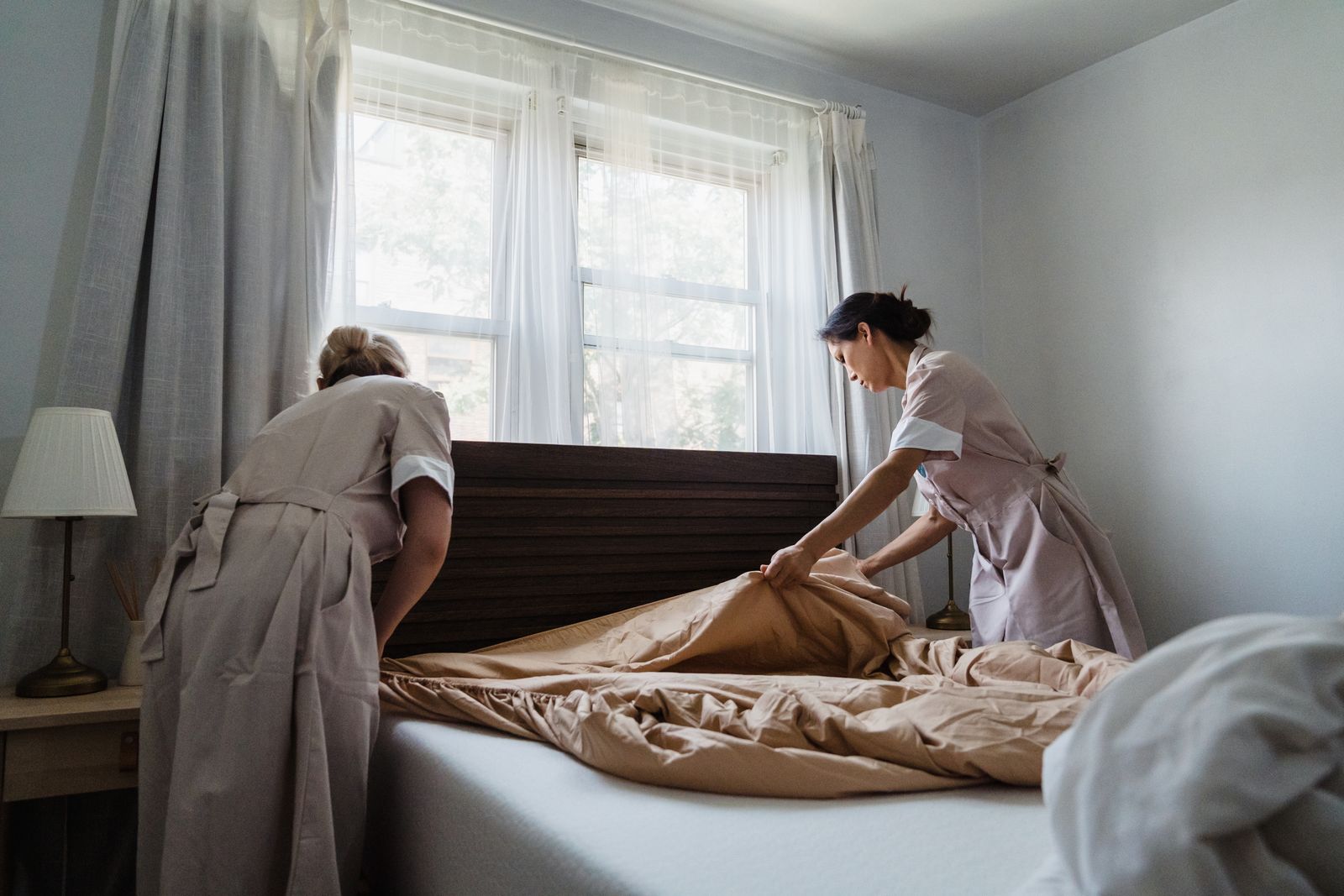
Housekeeping decides whether a piece lasts ten years or three. The difference is usually the product on the trolley.
Build a material matrix
A material matrix is a one-page table that tells staff what to use on what. It sits in the housekeeping folder and on the wall of the linen room.
| Material | Approved product | Approved tool | Escalate if |
|---|---|---|---|
| Aniline leather | pH-neutral leather cleaner | Soft cloth, dry buff | Any dark patch that does not lift |
| Pigmented leather | Mild leather cleaner | Microfiber | Cracking at the seam |
| Velvet | Low-moisture foam | Soft brush, no suction brush | Pile stays flat after brushing |
| Marble | pH-neutral stone cleaner | Microfiber, dry | Rough patch or ring |
| Lacquered wood | Water only, barely damp | Microfiber | Clouding or white marks |
| Brass, lacquered | Water, pH-neutral soap | Microfiber | Patchy tarnish |
| Glass and mirror | Alcohol-free glass cleaner | Lint-free microfiber | Scratch that catches a fingernail |
Add a photo of each material. Staff turnover in hospitality is high, and a photo survives a language barrier better than a paragraph.
Quarterly audit
A quarterly walk-through catches problems while they are still cheap. Check five things in every zone:
- Sealer performance on stone, using the water bead test.
- Pile condition on velvet and bouclé, especially seat edges.
- Leather suppleness at armrests and headrests.
- Veneer seams and edges, looking for lifting or gaps.
- Metal coatings, looking for wear-through on handles and rails.
Log the results. A photo set from each quarter shows a trend, and a trend is what justifies a repair budget.
Train against the generic spray
The most common cause of damage we see is a multi-surface cleaner with a pH of 10 or higher. It is cheap, it smells clean, and it strips wax, dulls lacquer and dries leather.
Remove it from the trolley. Replace it with three products: a pH-neutral multi-surface cleaner, a stone cleaner and a leather cleaner. Three bottles cost less than one re-polish.
For project teams writing the handover pack, our FF&E specification guide includes a care schedule column, so each piece arrives with its routine already named.
Jade Ant furniture hands over a material matrix with every project order, and the site team walks the first room with housekeeping before the handover date. That hour prevents most of the damage that shows up in month three.
Who signs off the handover is the other half of the plan. The project coordination framework we use names that person for every stage, from sample to snag list.
VIII. Usage: Making Pieces Last Longer
Most wear comes from repeated use in the same place. Change the pattern, and you slow the wear.
Rotate seating
In a lobby, guests sit in the same six seats. The other twenty stay new.
Rotate the furniture every three to six months. Move the sofa group, swap the armchairs, turn the rug. The room reads differently, and the wear spreads.
For fixed pieces, rotate the cushions. Flip and swap seat cushions monthly in high-traffic areas. A cushion that is turned lasts roughly twice as long as one that is not.
Order the spares at the same time as the furniture. One extra cover per fabric, one extra foam set per seat type, and a note on where they are stored. A lead-time plan that covers spares costs a few percent of the order and saves a whole production run later.
Use the right accessories
A coaster is not a compromise. It is a specification.
- Stone and lacquer tops: felt-backed coasters, 4 mm thick, with a non-slip base.
- Leather and veneer: trays for keys, bags and hotel amenities. Weight and oil both mark the surface.
- Dining tables: a centre runner protects the traffic line without hiding the top.
- Outdoor terraces: furniture covers that breathe. A waterproof cover traps moisture and grows mould.
Load and weight
Sculptural furniture is designed for a look, not for a crowd. Check the load rating before you put a 120 kg planter on a console or let four guests sit on a two-seat bench.
Distribute weight across the frame, not at one point. A heavy object on a cantilevered shelf will bow it over time, even if the shelf is rated for the load.
On project handovers, this is the moment to ask the supplier for the load figures in writing. A custom factory can give you the frame drawing and the test result. Our custom manufacturing process covers how those figures are set and documented.
For operators running several properties, buying loose furniture, joinery and lighting as one package makes the care plan simpler. One supplier, one material list, one set of spares. Our one-stop furnishing model explains how that package is built.
IX. The Return on Prevention
Preventive care is cheaper than restoration at every point on the curve. The gap widens the longer you own the piece.
Illustrative model using typical project rates. A designer lounge chair with a 2,400 USD replacement value.
Three routes, one chair, eight years:
- Planned care. An annual care kit, one professional clean, a re-oil or condition. About 700 USD.
- Reactive care. Occasional spot cleaning, then one re-cover when the seat fails. About 1,650 USD.
- Neglect. No routine, a stain that sets, a frame that dries out. A full restoration at 2,600 USD, or replacement.
The chart does not include the cost that never shows on an invoice: the room that looks tired, the review that mentions it, and the weeks a piece spends in a workshop.
When Jade Ant furniture quotes a restoration, the report starts with the cause, not the price. A stain that returns in six months usually means the cleaner, not the fabric, was the problem.
What good care does to asset value
Furniture is part of the appraisal. A buyer reads worn leather and dull stone as deferred maintenance, the same way they read a stained ceiling.
Well-kept pieces do three things at sale:
- They support the asking price per square metre, because finished homes sell against finished homes.
- They shorten the time on market, because the buyer does not need to budget for replacement.
- They keep a documented designer piece saleable on its own. The resale market for iconic pieces is real, and 1stDibs shows what buyers pay for pieces in good condition.
CapEx planning
Hotels usually replace loose furniture on a 7–10 year cycle. That cycle is a budget line, not a law.
A property with a real care programme often pushes replacement to 12 years on seating and longer on casegoods. On a 120-key hotel with 720 loose pieces, one extra year of life is a five-figure saving.
El cost model for custom versus off-the-shelf furniture shows how care and replacement costs sit against the purchase price over a full cycle.
Care also starts at selection. A piece with removable covers, a replaceable seat pad and a documented finish is cheaper to keep than one that must go back to a workshop. Our furniture selection guide lists those details next to the spec, so the decision is made before the order, not after the first stain.
X. Conclusion
Luxury furniture lasts when three things stay under control: the material, the environment and the person holding the cloth.
Each material has one rule that matters more than the rest. Velvet needs low suction. Marble needs a neutral cleaner and a sealer that is still working. Wood needs stable humidity. Brass needs water, not polish. Lacquer needs no solvent at all.
The environment decides how fast the clock runs. Sun, dry air and heat do more damage than any spill.
The team decides whether the rules are followed. A one-page matrix, a photo and a quarterly walk-through do more than a shelf of products.
That is the shift from cleaning to preserving. It costs less, and it keeps the room looking like the day it opened.
If you are handing over a villa, a hotel floor or a private label range, ask for the care schedule with the furniture. Jade Ant furniture supplies a material sheet and a care routine with every project delivery, and the team will review your housekeeping products before the first guest arrives. Send us the room list and the opening date, or browse the current collection to see the finishes and materials involved.
Glossary
| Término | What it means |
|---|---|
| Preservation | Protecting a material before damage appears, instead of repairing it after. |
| FF&E | Furniture, Fixtures and Equipment. The loose and fixed items in a project, excluding the building. |
| Aniline leather | Leather dyed through with no heavy pigment coat. It absorbs liquid fast and shows grain. |
| Pile | The raised surface fibers of a fabric such as velvet or bouclé. |
| Etching | Surface damage on stone caused by acid. It looks dull and feels slightly rough. |
| Penetrating sealer | A liquid that fills the pores below a stone surface. It slows absorption but does not stop acid. |
| Honing | A mechanical process that re-flattens and re-finishes a stone surface after etching. |
| Relative humidity (RH) | The amount of water vapor in the air, shown as a percentage of the maximum at that temperature. |
| Fish eyes | Small craters in a new lacquer film, usually caused by silicone or oil left on the surface. |
| Zonal care | Cleaning and inspection schedules set by traffic level, not by room count. |
| CapEx | Capital expenditure. In hotels, the budget for replacing furniture and equipment. |
Preguntas frecuentes
How often should luxury marble be resealed in a hotel?
Reseal honed marble in bathrooms and busy public areas every 6–9 months. Polished marble in low-traffic suites can go 12 months. Test with a water bead before the scheduled date. If the stone darkens within five minutes, the sealer has already failed.
Which cleaning agents are prohibited on high-gloss Italian lacquer?
Ammonia-based glass cleaner, alcohol sanitiser, acetone, abrasive cream and wax polish. All five cloud the film or leave scratches that show under downlight. Use water with a drop of pH-neutral soap on a microfiber cloth, and dry the surface in the same pass.
How do I protect white bouclé in a busy villa without ruining the look?
Use a water-based, low-solids protector tested on a hidden panel first. Vacuum weekly with a soft brush and no beater bar. Blot spills, never rub, and keep the piece out of direct sun. For the seats that get daily use, order a second set of removable covers at the same time as the sofa.
What humidity level stops wood veneer from cracking?
Keep the room between 45% and 55% relative humidity. Below 35%, veneer shrinks and seams open. Above 65%, the core swells and mould can start behind the panel. Measure at the furniture, not at the thermostat, and check the reading in winter when heating runs.
How do I lift a protein stain from a designer silk sofa without a water ring?
Blot the excess with a dry cloth. Apply a pH-neutral textile shampoo with a cloth wrung almost dry, working from the edge of the stain inward. Rinse with distilled water and dry the whole panel evenly with cool air. A ring comes from uneven drying, so dry the panel, not just the spot.
Are commercial fabric protectors safe for high-end textiles?
Most are safe on tight weaves and risky on silk, velvet and bouclé. They can flatten pile and shift shade. Treat a 200 mm test square, let it cure for 48 hours, then compare feel and colour in daylight. If either changes, do not treat the piece.
How do I reduce sun damage in a glass-walled atrium?
Fit a UV film rated above 99% rejection and keep visible light transmission above 70%. Rotate the piece twice a year. Add a sheer blind for the two hours of strongest sun. No film stops visible-light fading completely, so rotation still matters.
How do I remove oxidation from brushed brass without changing the finish?
For unlacquered brass, use a pH-neutral brass cleaner on a soft cloth and rub along the brushed grain. For lacquered brass, do not polish at all. Wipe with water and dry. Oxidation under a coating means the coating has failed, and the piece needs relacquering, not more polish.
How do I train a third-party housekeeping team on bespoke furniture?
Give them a one-page material matrix with a photo of each material, the approved product and the escalation rule. Remove all-purpose cleaner from the trolley. Walk the team through five pieces on site, and audit one zone a month for the first quarter. Written instructions alone do not survive staff turnover.
What are the signs that leather is drying out?
The surface looks matte instead of soft, fine cracks appear at the seams and along the armrest, and the leather feels stiff when pressed. Condition every 6–12 months with a pH-neutral product. Aniline leather needs protection as well, because it has no pigment coat to slow moisture loss.